
Why Not Give Greenland to Trump? Preventing the Collapse of Global Order
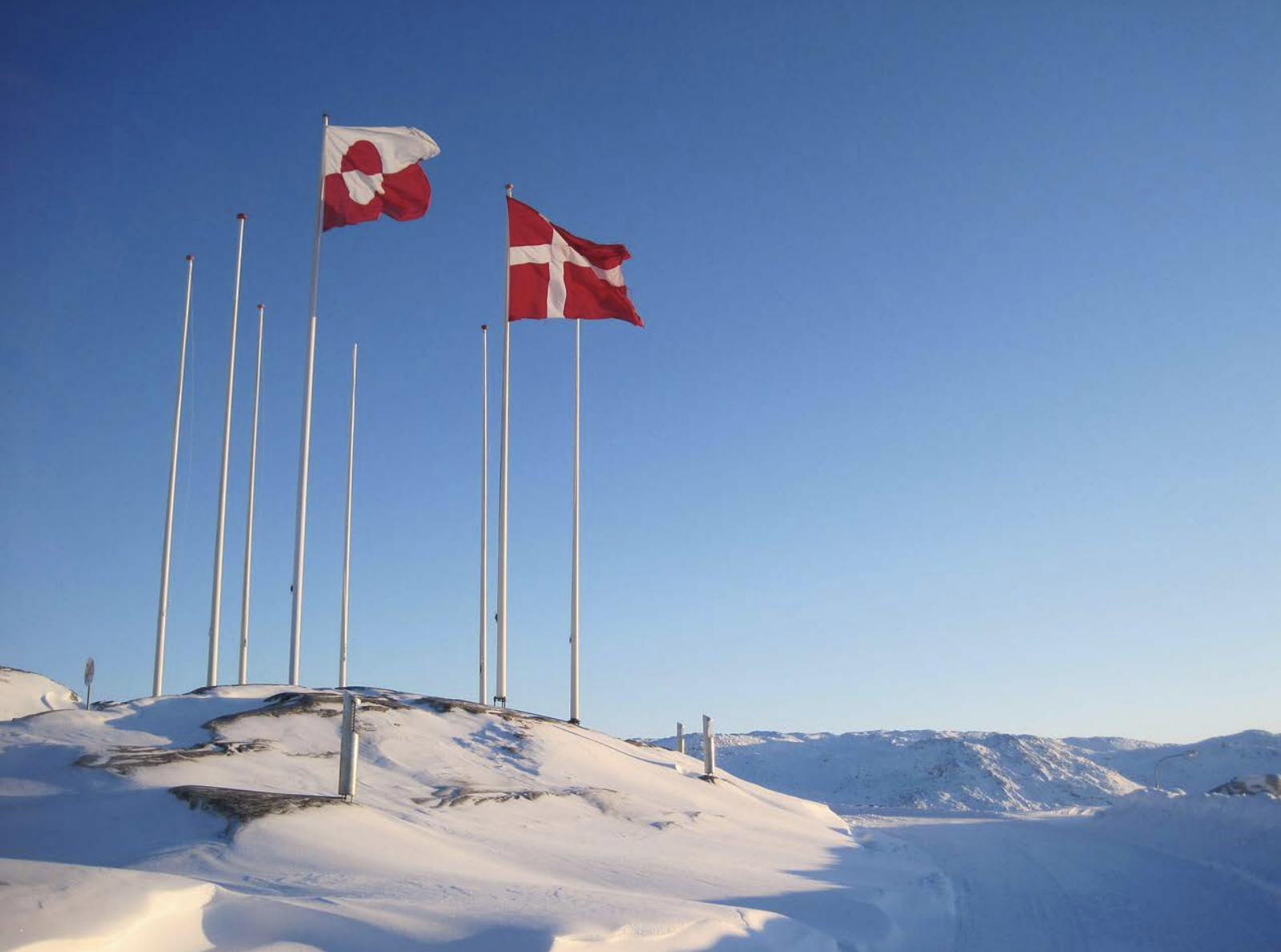
In January, the Trump administration bombarded the global stage with assertions that the United States should govern Greenland. US interest in the island dates back over a century, with officials recognizing the political, economic, and military advantage that Greenland could provide. However, annexing Greenland would be a significant violation of international norms, such as territorial integrity and sovereignty, and disrupt alliances that have existed for centuries, particularly between the US and European countries. President Trump has flooded the global arena with various claims alleging that the US rightfully deserves ownership over Greenland, but European pushback to these claims has remained lenient. Without question, the Trump administration’s attempts to acquire Greenland represent a clear violation of international norms. Thus, soft European reactions to Trump’s pursuits risk prolonging the issue and reaffirming the Trump administration’s deplorable, imperialistic actions. European leaders should pursue stronger, concrete reactions to counter unjust American tactics and uphold international law while preserving peaceful global cooperation.
Greenland’s Colonial History
Greenland’s history explains, in part, why the Trump administration believes the US should take control of the island, dating back to events occurring during and after World War II. After being in Dano-Norwegian ownership for around a century, Greenland became firmly cemented in Danish rule in the early 1800s [1]. The island supplied the Danish crown with raw materials, serving as a valuable colony to Denmark throughout the 19th and 20th centuries. In 1916, as part of an agreement that saw the acquisition of the Danish West Indies by the US, the US government affirmed Danish sovereignty over Greenland [2]. Although the US amicably worked with Denmark through the 1916 agreement, US officials had already laid out plans for potential Greenland acquisition [3]. Historians account for this early US interest through the potential geopolitical advantage that would be gained through controlling Greenland. Such plans never came to fruition, yet this kind of evidence indicates that US desire for Greenland has existed for over a century.
During World War II, Greenland played an important role in fortifying the American fight against Nazi forces. Greenland served as a fueling station for over 10 thousand Allied aircraft on their way to Germany and was a crucial point of reinforcement for extended airtime missions [4]. When Denmark came under Nazi occupation in 1940, US officials were concerned that Germany would also attempt to occupy Greenland, which would put the US in a geographically compromising position. Thus, the following year, US officials worked with the Danish ambassador to sign the “Defense of Greenland” pact [5]. The pact gave the US base rights and the responsibility to protect Greenland for the rest of the war. Following the war, US officials saw Greenland as a valuable military base with crucial geographical advantages, and in 1946, the US offered $100 million to the Danish for complete control over the island. Denmark swiftly rejected, but US involvement in Greenland continued through the Cold War.
Later, in the 1950s, the Soviet Union was pursuing aggressive military action all over the globe, and the US and NATO feared aggression in the Arctic as well. Following WWII, the US was the only country that could adequately protect Greenland against the Soviets, especially with Denmark severely weakened post-war. Thus, NATO officials pushed the US and Denmark to meet and advance the previous WWII pact. This formalized treaty, signed in 1951, involved a monumental expansion of US military operations on Greenland, particularly for missile surveillance purposes [6]. Initial treaty proposals by US officials severely diminished Denmark’s claim over the island, with barely any mention of Denmark at all. After many discussions, the treaty formally recognized Danish sovereignty over Greenland. This indicates that President Trump’s current proposed actions are in violation of this treaty.
US military presence and the contents of the 1951 “Defense of Greenland” treaty are in effect today, even with changing political relationships between Greenland and Denmark. Today, Greenland is under “home rule” and has been since 1979, meaning that it is a sovereign country with Denmark still responsible for its defense and foreign affairs [7]. Greenland’s system of home rule indicates that it is part of the Kingdom of Denmark but can manage its own internal affairs. Thus, Trump’s sentiments are not only in violation of Danish sovereignty but Greenland’s right to self-government as well.
Why Trump Wants Greenland
In January, President Trump spoke at the World Economic Forum in Davos, Switzerland, and harkened back to the events involving Greenland during World War II. He argued that Greenland should be under US control because of its defense of the island after Denmark was occupied by Nazi forces. He argued that the US “had” Greenland and “should have kept it” [8]. However, the Defense of Greenland treaty, to which he is referring, does not mean the US simply “had” the island. The US was given a responsibility by Denmark to protect the island, respecting sovereignty norms and preserving Danish rule over the island. Even though the treaty’s provisions remain in effect, a responsibility to protect Greenland and house military operations on the island does not indicate ownership. As such, President Trump’s argument there does not align with historical facts or treaty provisions. For the US, however, acquiring Greenland would be valuable for a multitude of reasons, accounting for the Trump administration’s adamant claims.
Greenland’s geographical position is particularly advantageous for military and economic reasons. Currently, the 1951 agreement signed between the US and Denmark allows the US to operate Pituffik Space Base on the island. The base is suitable for missile surveillance and testing, beneficial for both the US and NATO as a whole. Concerning the base, Greenland’s location in the Arctic is especially advantageous for early missile attack warning and is suitable for weapons testing [9]. Per the Defense of Greenland treaty, however, Article 1 states the following: “Thule Air Base is the only defense area in Greenland,” indicating that US military operations are restricted to the base [10]. Additionally, expansion of military operations is subject to discussions with Greenland’s home government and Denmark [11]. Thus, the US cannot unilaterally expand operations, and such operations can only be operated within the currently existing Putiffik Space Base. Greenland also lies in the Greenland-Iceland-United Kingdom (GIUK) gap, which has significant economic advantages. The gap is situated in the Atlantic Ocean and provides vessel passage, maritime regulation, and threat monitoring in the ocean [12]. This position is also adjacent to emerging shipping routes, representing a strategic and economic advantage.
According to the Arctic Institute, one of the Trump administration’s potential motivators for Greenland acquisition would be untapped natural resources [13]. Significant discussion has existed for some time regarding Greenland’s potential mineral reserves and natural resources. According to reports, Greenland is rich in oil and gas reserves, but its rare earth elements (REEs) would be particularly advantageous for the United States [14]. REEs are a group of elements and metals that are critical for the production of numerous items, like telephones, medical equipment, automobiles, and military equipment. They are essential and would cause a sudden stop in production if unavailable [15]. Currently, China is the leader in REE production, and although President Trump has made no explicit mention of Greenland’s REEs, officials within the Trump administration have spoken out regarding China’s current dominance. The Trump administration could be eyeing Greenland as a way to undermine China’s current advantage in this sector [16].
Trump’s Claims & European Response
While speaking at the World Economic Forum, Trump outlined potential outlets for the US takeover of Greenland and what would occur should there be any European pushback. Following his claims regarding American presence in Greenland during WWII, Trump alleged that the US does not get what it deserves as a member of NATO, noting that the US is “treated very unfairly” [17]. He clarified that the US would not use force to acquire Greenland but argued that force would make his territorial pursuits “unstoppable.” Although he ruled out using force, in January, President Trump threatened a number of European countries with tariffs should they push back against his territorial desires. He backed down from these threats after meeting with NATO Secretary General, Mark Rutte. President Trump noted that this meeting was very “productive” and that a framework for future plans regarding Greenland was established [18]. Even though Greenland was the central point of the meeting, no officials from either Greenland or Denmark were present. Discussing ownership of Greenland without any representatives from either Greenland or Denmark demonstrates President Trump’s disregard for international norms and his desire for power on the global stage.
In the face of continued threats from the United States, European countries have largely responded softly against the Trump administration, and President Trump’s actions have not yet been met with stern action. Regarding Trump’s initial remarks and threats, Denmark’s Prime Minister, along with several other European leaders, condemned President Trump’s actions, regarding them as unacceptable and inappropriate [19]. At a European leaders' summit in January, several leaders continued to speak out against President Trump’s territorial desires but maintained that Europe’s “transatlantic relationship” with the US should be preserved [20]. Beyond verbal condemnation, some European nations, like France, Germany, Norway, and Sweden, have deployed their own troops to Greenland—a move that signaled solidarity and recognition of Danish sovereignty [21]. Troop presence was not received well by the Trump administration, however, as it was responsible for the administration’s initial tariff threat against European countries [22]. Several European countries considered retaliatory tariffs against the US, but they have since backed down from these threats, preferring a de-escalation of the current conflict. Given that a US acquisition of Greenland would be a violation of international norms and an effective dismantling of the current world order, European pushback should be much stronger than it is now.
An absence of stronger pushback can be explained through Europe’s reliance on the US across a number of factors. For example, the US is the largest supplier of goods to Ukraine for their fight against Russia, and no other European military force can match that of the US. Ukraine’s President, Vladimir Zelensky, has even noted that the war cannot come to a close without US involvement [23]. European countries also rely on American nuclear capabilities for protection against aggressive Russian actions, and the US has many military strongholds throughout Europe. President Trump has exploited such reliance when making claims regarding Greenland. He has explicitly alleged that Greenland is under threat from Russian forces and made remarks that Denmark cannot protect the island accordingly. Regarding adequate protection for Greenland against alleged Russian threats, Trump noted the following: “Now it is time, and it will be done!!!” [24]. Here, President Trump provides no proof that Greenland is under a Russian threat, focusing instead on making bold claims to uphold America’s claim to the island. In making such remarks, Trump is exploiting the allied relationship the United States has with several European countries, notably Denmark, by alleging that Denmark has failed to protect Greenland. This is done in hopes to justify his territorial pursuits, which tremendously disrupts global order.
Normalizing Unjust Territorial Acquisitions
Forceful or transactional acquisition of Greenland by the US would violate international norms of territorial integrity and sovereignty, as Greenland is under Danish and home rule. According to Article 2 of Chapter 1 of the UN Charter, members of the UN are to respect the principle of sovereignty, indicating that member countries cannot infringe on another country’s right to self-governance [25]. An acquisition of Greenland by the US, especially against the wishes of Greenland’s citizens or Denmark, would be a clear violation of sovereignty and the standards of the United Nations. In addition, territorial integrity norms, indicating that a country’s borders cannot be altered or annexed by force, are also outlined in Article 2. If President Trump and his administration forcefully annex Greenland, another foundational norm would be broken.
In addition to dismantling the current international order, the Trump administration is eroding the US’s long-standing position as a preserver of territorial integrity and sovereignty, especially evident when considering the rhetoric regarding Greenland. Historically, the United States has condemned aggressive actions of countries like Russia in relation to violating territorial integrity norms, specifically concerning Ukraine. During the Biden administration, for example, the US strongly condemned Russia’s actions and specifically outlined moves as violating international law [26]. However, President Trump’s second term has not seen a major condemnation of Russian actions, and Trump has even gone as far as blaming Zelensky and Ukraine for starting the war [27]. This sharp reversal demonstrates the way that the Trump administration has shifted the United States’ position on many global issues, focusing instead on its own territorial and power pursuits. Such a shift in global diplomacy also hinders the relationship that the US has with its allies, particularly its allies in Europe.
Importance of Pushback & Potential Avenues
Current European measures to combat the Trump administration’s imperialistic tactics are not adequate and aim to de-escalate the situation rather than face the problem. For example, sending troops to demonstrate unity against the United States deters escalation but does not convey to the Trump administration that Europe is serious about protecting Greenland. Furthered by abandoned retaliatory tariffs against the US, Europe is afraid to face the Trump administration and adequately convince it that it will not falter regarding Greenland. The Trump administration will continue to pursue aggressive, unlawful actions toward acquiring Greenland if Europe does not pursue measures to stop them. Current strategies that avoid escalation are, of course, important, but if the Trump administration were to succeed in acquiring Greenland, the repercussions of such action would be catastrophic. Given that an acquisition of Greenland violates policies of the UN and NATO, alliances would immediately dissolve, and leaders around the world would pursue unlawful territorial expansion policies.
In addition to Greenland, President Trump has demonstrated imperialistic motives in a number of ways. In early January, President Trump ordered an operation to politically intervene in Venezuela and remove Nicolas Maduro, the Venezuelan President, from power. The operation went according to the Trump administration’s plans, as they were able to intervene and arrest Maduro under narco-terrorism charges [28]. Following Maduro’s removal from power, Trump repeatedly proclaimed that the US would rule Venezuela, effectively ignoring numerous international law provisions and Venezuela’s right to sovereignty. Similar to actions in Venezuela, the US is currently enduring a war alongside Israel against Iran. Dubbed “Operation Epic Fury,” the US and Israel targeted Iran’s missiles, nuclear facilities, and leadership, killing Iran’s Supreme Leader, Ayatollah Khamenei [29]. This action, once again, is under heavy scrutiny and questioning as to whether the US had the lawful right to alter a country’s leadership. Like in Greenland, President Trump continues to demonstrate a longing for control in every sector of the world.
To combat the Trump administration’s imperialistic rhetoric and prevent the collapse of international order, the EU should invoke the Anti-Coercion Instrument, which protects its members against coercion. The Anti-Coercion Instrument is a form of economic retaliation that the EU can invoke toward third-party countries that are economically coercing a member of the EU or the EU as a whole. The EU defines economic coercion as “a situation whereby a third country seeks to pressure…an EU member state into making a particular choice by applying, or threatening to apply, measures affecting trade or investment” [30]. By threatening tariffs against several European countries, the Trump administration’s actions could qualify as economic coercion; the decision would ultimately be in the hands of European Commission members. Per EU policy, evidence of coercion would be responded to by consulting with the coercing country to resolve the issue. However, in the case that the US is not compliant, full measures of the Anti-Coercion Instrument should be employed. Measures include severe trade restrictions and a halting of foreign direct investment. This kind of serious economic action demonstrates that European nations will not falter to President Trump’s deplorable demands regarding Greenland. As noted, European nations are reliant on the US in numerous areas, but the United States’s economy would be catastrophically devastated if met with the economic measures of the Anti-Coercion Instrument. Thus, to preserve international order, European nations must employ these strict measures in the face of attacks from President Trump.
Sources
[1] Mikkel Olesen. “Why Is Greenland Part of the Kingdom of Denmark? A Short History.” DIIS, October 9, 2025. https://www.diis.dk/en/research/why-is-greenland-part-of-the-kingdom-of-denmark-a-short-history.
[2] “USA’s Declaration on Danish Sovereignty of Greenland, 1916.” Aarhus University, November 24, 2025. https://nordics.info/show/artikel/declaration-from-usa-on-danish-sovereignty-of-greenland-1916.
[3] Dave Roos. “America’s Long History of Trying to Acquire Greenland.” HISTORY, February 5, 2025. https://www.history.com/articles/greenland-united-states-seward-cold-war.
[4] Roos, “America’s Long History of Trying to Acquire Greenland”
[5] Roos, “America’s Long History of Trying to Acquire Greenland”
[6] Dave Roos. “The 1951 Agreement Allowing US Military in Greenland.” HISTORY, January 15, 2026. https://www.history.com/articles/1951-agreement-that-allows-us-military-presence-in-greenland.
[7] Roos, “America’s Long History of Trying to Acquire Greenland”
[8] James Fitzgerald. “Why Does Trump Want Greenland and What Could It Mean for Nato and the EU?” BBC, January 21, 2026. https://www.bbc.com/news/articles/c74x4m71pmjo.
[9] Gabja Leclerc. “Greenland: Caught in the Arctic geopolitical contest.” European Parliament, October 2025. https://www.europarl.europa.eu/RegData/etudes/BRIE/2025/769527/EPRS_BRI(2025)769527_EN.pdf
[10]. “Defense of Greenland: Agreement between the United States and the Kingdom of Denmark, April 27, 1951.” Yale Law School - The Avalon Project, n.d. https://avalon.law.yale.edu/20th_century/den001.asp.
[11] Sasha Rogelberg. “Trump Already Has Open Door to Grow US Military Presence in Greenland Thanks to a Little-Known Cold War-Era Agreement between the US And Denmark.” Fortune, January 8, 2026. https://fortune.com/2026/01/08/trump-military-presence-1951-agreement-greenland-denmark/.
[12] Leclerc, “Greenland: Caught in the Arctic geopolitical contest.”
[13] Andreas Østhagen. “Trump & Greenland: Is There Logic in the Chaos?” The Arctic Institute - Center for Circumpolar Security Studies, January 8, 2026. https://www.thearcticinstitute.org/trump-greenland-logic-chaos/.
[14] Bent Mortensen. “View of the Quest for Resources – the Case of Greenland.” Jmss.org, 2013. https://jmss.org/article/view/58097/43720.
[15] Reuters Staff. “What Are Rare Earth Metals and Why Are They in Demand?” Reuters, February 28, 2025. https://www.reuters.com/markets/commodities/what-are-rare-earth-metals-why-are-they-demand-2025-02-26/.
[16] Matt Egan. “‘Completely Bonkers’: Trump’s Greenland Mining Dreams Collide with Reality.” CNN, January 12, 2026. https://www.cnn.com/2026/01/12/business/greenland-trump-venezuela-mining.
[17] Fitzgerald, “Why Does Trump Want Greenland”
[18] Maureen Chowdhury. “January 21, 2026 - Trump in Davos.” CNN, January 21, 2026. https://www.cnn.com/politics/live-news/trump-administration-news-01-21-26?post-id=cmkod3h4o00053b6pc71g0f5u.
[19] Fitzgerald, “Why Does Trump Want Greenland”
[20] Jorge Liboreiro. “EU Leaders Demand Respect from Trump after Greenland Crisis.” euronews.com, January 23, 2026. https://www.euronews.com/my-europe/2026/01/23/eu-leaders-demand-respect-from-trump-after-greenland-crisis-rattles-relationship.
[21] Benjamin Harris and Liana Fix. “Everything but Territory: Europe’s Response to Trump’s Greenland Threats.” Council on Foreign Relations, January 16, 2026. https://www.cfr.org/articles/everything-territory-europes-response-trumps-greenland-threats?utm_source=chatgpt.com.
[22] Jeanna Smialek and Amelia Nierenberg. “A Few Dozen European Troops in Greenland Set off Trump.” The New York Times, January 20, 2026. https://www.nytimes.com/2026/01/20/world/europe/europe-troops-greenland-trump.html.
[23] Joseph Ataman and Clare Sebastian. “Trump Is Crossing Red Lines. Why Doesn’t Europe Push Him Back?” CNN, January 22, 2026. https://www.cnn.com/2026/01/21/europe/analysis-trump-greenland-europe-pushback-latam-intl.
[24] Fitzgerald, “Why Does Trump Want Greenland”
[25] “Repertory of Practice of United Nations Organs — Codification Division Publications.” United Nations, June 30, 2023. https://legal.un.org/repertory/art2.shtml.
[26] “United with Ukraine.” United States Department of State, January 19, 2025. https://2021-2025.state.gov/united-with-ukraine/.
[27] Yang Tian. “Trump Blames Zelensky for Starting War Day after Massive Russian Attack.” BBC, April 15, 2025. https://www.bbc.com/news/articles/cg5q0mev07lo.
[28] Alex Brockwehl et al. “Making Sense of the US Military Operation in Venezuela.” Brookings, January 5, 2026. https://www.brookings.edu/articles/making-sense-of-the-us-military-operation-in-venezuela/.
[29] Hafsa Khalil. “What We Know about the Joint US-Israel Attack on Iran.” BBC, February 28, 2026. https://www.bbc.com/news/articles/cx2dyz6p3weo.
[30] “Protecting against Coercion.” EU, December 27, 2023. https://policy.trade.ec.europa.eu/enforcement-and-protection/protecting-against-coercion_en.
[31] Needpix.com. Greenland Denmark Flags. n.d.