
When Coercion Fails: The Humanitarian Cost of Persistent Economic Sanctions Policy in Cuba
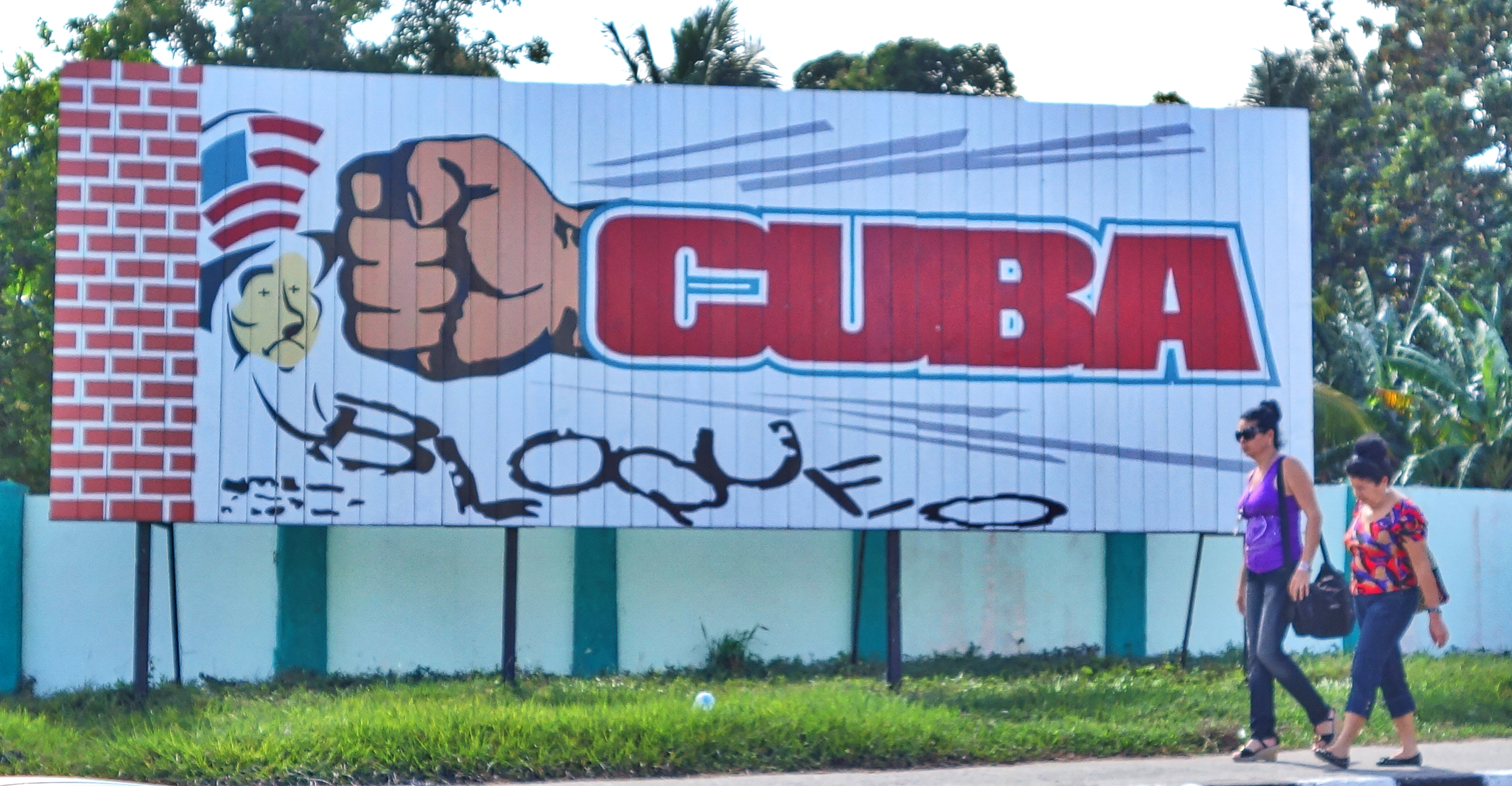
In 432 BCE, the Athenian Empire barred Megarian traders from its marketplaces in an attempt to cripple Megara's economy—the first recorded economic sanction. However, targeted, or “smart,” sanctions did not become prominent until the late 20th century [1]. Smart sanctions were first imposed on Iraq by the United Nations Security Council following its 1990 invasion of Kuwait, framing economic pressure as a nonviolent alternative to military intervention. UN Resolution 661 prohibited all states from importing Iraqi commodities and encouraged limits on exports to Iraq [2]. Though officially justified as tools of coercion intended to pressure governments into policy changes, sanctions today often serve the ulterior objective of overthrowing target regimes entirely.
Yet it is civilian populations, not targeted governments, that bear the cost. Economic sanctions have caused over 564,000 civilian deaths per year, a figure comparable to casualties in armed conflicts during the same period [3]. Thus, the humanitarian justification for sanctions collapses under scrutiny, with Cuba as the prime example. Since 1962, the United States has maintained a comprehensive trade embargo against the island—the longest-running unilateral sanctions regime in modern history [4]. Rather than inducing leadership change, the embargo legitimized the regime by allowing it to reframe external economic pressure as imperial aggression [5]. The embargo has provided ideological cover for successive generations of Cuban elites to justify political repression and the concentration of resources in the hands of the state. Therefore, the Cuban embargo demonstrates that economic sanctions, rather than functioning as precise instruments of political coercion, instead operate as tools of collective punishment that systematically degrade civilian welfare while reinforcing the authoritarian structures they claim to weaken. As the Cuban case shows, sanctions endure not because they work, but because they serve the sanctioning state's domestic political interests far more reliably than the humanitarian objectives they claim to serve.
The Ineffectiveness of Sanctions as Coercive Tools
The foundational premise of economic sanctions is that sustained economic pressure will compel a target government to alter its behavior [6]. In practice, this logic has rarely held. Authoritarian leaders are structurally insulated from coercive mechanisms because they do not require popular support to maintain power [7]. As a result, sanction-induced civilian suffering does not translate into political pressure on ruling elites as sanction theory assumes. In “Economic Sanctions Reconsidered,” Gary Clyde Hufbauer et al. found that sanctions achieve their stated goals in fewer than one-third of cases and succeed least often against authoritarian regimes, where leaders face no electoral accountability for the suffering they impose on their populations [8]. In the Cuban case, this failure compounds the fact that US objectives were never purely humanitarian but designed to punish and destabilize; a reality made explicit at various points across administrations [9]. The embargo has therefore simultaneously failed to coerce the Cuban government, harmed the civilian population it claimed to protect, and handed the regime a perpetual political weapon to justify its own repression.
Political scientists Abel Escriba-Folch and Joseph Wright found that sanctions between 1960 and 1977 more often destabilized personalist regimes through irregular transfers of power, coups, and revolts than through negotiated behavioral change [10]. This effect has nonetheless failed to materialize in Cuba, where the regime has endured the collapse of the Soviet Union in 1991, the transition from Fidel to Raúl Castro in 2008, and the transfer of power to Miguel Díaz-Canel in 2018, none of which were accompanied by seizures of power that the model would predict. Rather than fracturing the ruling coalition, decades of pressure have consolidated it, exposing the harmful logic of sanctions policy: When coercion fails against a successfully insulated regime, policymakers face a choice between abandoning their objectives or intensifying their methods.
Recent scholarly analysis has confirmed this pattern. A 2024 study on the political economy of sanctions found that Cuba's institutional reform emerged from internal adaptation rather than external coercion [11]. This finding suggests that Donald Trump’s intensified sanctions during his second term coincided with the continued concentration of power under Miguel Díaz-Canel, consistent with outcomes predicted by sanctions literature. As documented in Iraq, sustained economic pressure, covert destabilization, and diplomatic isolation failed to unseat Saddam Hussein, and it was this accumulated failure that the United States used to justify military invasion in 2003 [12]. The Cuban case has not reached that endpoint, but recent US threats of military intervention suggest this same logic is already shaping policy discourse surrounding the island [13].
Entrenchment of Authoritarian Structures and the Rally-Around-the-Flag Effect
Theorists Dursun Peksen and Cooper Drury found that, rather than weakening authoritarian regimes, sanctions often create conditions for their consolidation, as economic hardship allows leaders to exploit narratives of external aggression to justify repression [14]. In Cuba, Fidel Castro framed US economic pressure as evidence of imperial hostility toward Cuban sovereignty, converting economic harm into nationalist legitimacy [15]. The embargo, intended to isolate the regime, instead gave it a resilient narrative that has outlasted Castro himself.
Humanitarian Degradation as Political Leverage
The failure of sanctions to coerce ruling elites does not make them ineffective as pressure tools; it simply shifts their impact onto civilian populations. Declassified US government documents reveal that the original intent of the Cuban embargo was to induce “hunger, desperation, and the overthrow” of the Castro government by making conditions unbearable for ordinary Cubans, a strategy that consistently underestimates authoritarian governments' capacity to exploit suffering for political goals [16]. Following an official visit in November 2025, UN Special Rapporteur Alena Douhan documented widespread shortages of food, medicine, electricity, and water, warning of “severe consequences for the enjoyment of human rights, including the rights to life, food, health, and development” [17].
Nowhere have those consequences been more visible than in Cuba’s energy sector. Cuba depends on imported fuel for two-thirds of its energy supply and nearly 96 percent of its electricity generation [18]. Yet the US has moved beyond restricting its own trade to threatening tariffs on any third country that sells oil to the island—effectively cutting Cuba off from the global energy market [19]. As a result, blackouts have lasted up to 22 hours a day, with repeated total grid collapses since late 2024 [20]. The consequences reach directly into Cuban hospitals and delivery rooms: blackouts have forced the cancellation of surgeries and the spoilage of temperature-sensitive medicine [21]. Since 2018, Cuba’s infant mortality rate has risen from 4.0 per 1000 live births to almost 10 per 1000 as of 2025 [22]. The UN Special Rapporteur concluded that these measures are “suffocating the social fabric of Cuban society,” a finding in direct contradiction to the humanitarian justification the US has long used to defend the embargo [23].
Narrative Framing and the Justification of Geopolitical Objectives
The persistence of sanctions despite their documented failure suggests they often serve objectives beyond their stated humanitarian purposes. Sanctions operate as a narrative instrument, producing a public story about target states that justifies international hostility. Sanctioning itself designates a regime as illegitimate, requiring no formal ruling of specific wrongdoing. Research finds that sanctions justified by appeals to human rights appear legitimate and generate little backlash, regardless of whether they achieve their stated goals [24]. Therefore, leaders of sanctioning states frame coercive state policies as a moral alternative to war due to the lack of visible civilian casualties in the media.
In Cuba, this system has become entrenched over six decades. The reactivation of Title III of the Helms-Burton Act in 2019 granted US nationals the right to sue foreign companies that traffic in confiscated Cuban property, thereby severing the island from global capital markets [25]. Additionally, Cuba's placement on the State Sponsors of Terrorism list triggered secondary sanctions that deter international banks and NGOs from processing even humanitarian transactions [26]. As a result, Cuba no longer receives much of the vital funding it needs to sustain itself because few foreign banks are willing to do business with the island. Think tanks such as the Heritage Foundation and the Foundation for the Defense of Democracies have reinforced this framework in congressional testimony, framing any reconsideration of the embargo as sympathy for authoritarianism [27]. Cuban-American lobbying groups also sustain this framework, and their electoral influence has made reconsideration politically toxic for candidates of both major US political parties [28].
The structure of American media coverage also reinforces this dynamic. Reporting on the embargo’s effects on Cuba is consistently downplayed by mainstream media, which often attributes fuel and money shortages to an inefficient communist government [29]. As recently as October 2024, The New York Times published two stories that mentioned the US blockade, but only as something the Cuban government blames for the crisis [30]. It is without a doubt that there is blame to be placed on the Cuban government for its failures in managing Cuba’s energy crisis. However, it is disingenuous for The New York Times not to detail the extent of destruction the embargo has wrought on Cuban civilians. The result of such reporting is the creation of a domestic environment where American audiences are systematically more likely to attribute Cuban suffering to the nature of its government, rather than to the six decades of economic pressure their own government has applied. These conditions make it easier for the US to sustain harmful policies and harder for its residents to challenge them without appearing to defend the regime itself.
Solutions
The problem with sanctions lies not merely in their implementation but in their underlying logic. Sanctions regimes should shift toward conditional, multilateral frameworks coordinated through international bodies, with clear benchmarks for removal. This would reduce target governments' capacity to frame external pressure as imperial aggression, weakening the rally-around-the-flag dynamic sanctions have enabled. All sanctions regimes should additionally undergo mandatory humanitarian impact assessments. These must carry real consequences—if civilians bear the cost of a failing policy, the burden of proof should fall on those who continue it, not on those who challenge it.
This argument does not require minimizing the Cuban government's conduct; the ruling system has suppressed dissent and maintained a closed political system for over six decades. The evidence nonetheless points consistently toward the United States bearing primary responsibility for the material conditions of ordinary Cuban civilians. US tariff threats and the continuing embargo make it structurally impossible for third-party states to provide critical relief. The Cuban government has consistently leveraged external pressure for internal political gain. Still, that pressure reflects deliberate US foreign policy choices, and the Cuban government's domestic conduct does not put those choices above scrutiny. A policy that has failed to alter regime behavior while producing measurable humanitarian harm cannot be sustained on the grounds of the very conditions it has helped to create.
Sources
Image: Christian Lapie, “Cuba Embargo,” Flickr, December 5, 2014, https://www.flickr.com/photos/daumesnil/15835129260/in/photolist-q8ibf1-2jqS5Jd-Ddgjbh-bD8zpX-N3pgWU-UEYomk-24X8Ebm-b6G6Hg-bD95v8-FUmMUP-3aXH7Q-Fbp5MH-BvB8bW-2rCqaFv-ffZBGz-6oRmhH-29BGHFZ-iqTmiZ-BSr3LA-tyhABu-9AJjhu-2rHBKqw-2ktvyU4-qsAVMq-9AJjeh-2mBBQsE-zWT9bN-cRgmHC-2sff7YU-2rHEFd8-dM5WTZ-zdogBK-44989H-bgcr4k-mmugcT-NMaKkH-2iRDxJr-b3a7TH-2kVX2fZ-5jRgXM-bcz7De-2iAfYBy-bc7UaZ-4bCsp9-2pXoPS3-n9HDxx-7vx4Li-2rpWzw1-aXFPJH-aVZBTe/.
[1] Joy Gordon, “Smart Sanctions Revisited,” Ethics & International Affairs, September 2011, https://www.ethicsandinternationalaffairs.org/journal/smart-sanctions-revisited.
[2] United Nations Security Council, “Resolution 661,” UN Digital Library, August 6, 1990, https://digitallibrary.un.org/record/282067.
[3] Francisco Rodríguez, Silvio Rendón, and Mark Weisbrot, “Effects of International Sanctions on Age-Specific Mortality: A Cross-National Panel Data Analysis,” The Lancet Global Health, August 2025, https://www.thelancet.com/journals/langlo/article/PIIS2214-109X(25)00189-5/fulltext.
[4] “Cuba Embargoed: U.S. Trade Sanctions Turn Sixty,” National Security Archive, February 2, 2022, https://nsarchive.gwu.edu/briefing-book/cuba/2022-02-02/cuba-embargoed-us-trade-sanctions-turn-sixty.
[5] Donna Rich Kaplowitz, “Anatomy of a Failed Embargo: U.S. Sanctions Against Cuba,” Lynne Rienner Publishers, February 28, 1998, https://www.degruyterbrill.com/document/doi/10.1515/9781685851699/html?srsltid=AfmBOoqSUq_Evs8KM8AZ9-V7gEtc2ZAK74QRfGKJPujsH5Wbx9GO8kBk.
[6] Kaplowitz, “Anatomy of a Failed Embargo.”
[7] David Kuehn, Mariana Llanos, and Thomas Richter, “The Personalization of Political Power Revisited,” Democratization, September 27, 2025, https://www.tandfonline.com/doi/full/10.1080/13510347.2026.2636039#abstract.
[8] Gary Clyde Hufbauer, Jeffrey J. Schott, Kimberly Ann Elliott, and Barbara Oegg, “Economic Sanctions Reconsidered,” Peterson Institute for International Economics, July 18, 1985, https://cup.columbia.edu/book/economic-sanctions-reconsidered/9780881324129/.
[9] Abel Escribà-Folch and Joseph Wright, “Dealing with Tyranny: International Sanctions and the Survival of Authoritarian Rulers,” International Studies Quarterly, June 2010, https://academic.oup.com/isq/article-abstract/54/2/335/1794854.
[10] Hufbauer, Schott, Elliott, and Oegg, “Economic Sanctions Reconsidered.”
[11] Raul Rodriguez, “The Political Economy of Sanctions: The Case of Cuba,” The Routledge Handbook of the Political Economy of Sanctions, January 2024, https://www.researchgate.net/publication/377436042_The_Political_Economy_of_Sanctions_The_Case_of_Cuba.
[12] Esther Pan, “IRA Q: Justifying the War,” Council on Foreign Relations, February 2, 2005, https://www.cfr.org/backgrounders/iraq-justifying-war.
[13] The Associated Press, “Rubio Doubtful of Diplomacy with Cuba as Trump Raises New Threat of Military Action,” NPR, May 22, 2026, https://www.npr.org/2026/05/22/nx-s1-5830999/rubio-diplomacy-cuba-trump-military-action.
[14] Dursun Peksen and A. Cooper Drury, “Coercive or Corrosive: The Negative Impact of Economic Sanctions on Democracy,” International Interactions, 2010, https://digitalcommons.memphis.edu/facpubs/7111/.
[15] Andreas Pickel, “The End of a Failed Foreign Policy: The U.S.-Cuba System on the Threshold of a New Era,” American University, April 2015, https://www.american.edu/centers/latin-american-latino-studies/implications-normalization-pickel.cfm.
[16] “Cuba Embargoed.”
[17] Alena Douhan, “Enforcement and Recent Strengthening of U.S. Sanctions Deepen Hardships for Cuban Population,” UN Office of the High Commissioner for Human Rights, November 21, 2025, https://www.ohchr.org/en/press-releases/2025/11/enforcement-and-recent-strengthening-us-sanctions-deepen-hardships-cuban.
[18] Christopher Hernandez-Roy, Katherine Bliss, Andrew Friedman, David Michel, Zane Swanson, and Henry Ziemer, “Preparing for the Consequences of Collapse in Cuba,” Center for Strategic and International Studies, April 9, 2026, https://www.csis.org/analysis/preparing-consequences-collapse-cuba.
[19] Sebastian Suarez, “Cuba OFAC Sanctions (CACR),” Sanctions Lawyers, 2026, https://sanctionslawyers.net/economic-sanctions-programs/cuba/.
[20] Dave Sherwood, “Protests Flare Across Havana as Power Cuts Deepen amid US Blockade,” Reuters, May 13, 2026, https://www.reuters.com/business/energy/cuba-has-run-out-diesel-fuel-oil-amid-us-oil-blockade-minister-says-2026-05-14/.
[21] George Solis, Mary Murray, and Carmen Sesin, “In a Cuban Hospital, Patients and Doctors Are Hard Hit by Outages and Fuel Shortages,” NBC News, March 18, 2026, https://www.nbcnews.com/world/cuba/inside-cuba-hospital-outages-hard-hit-blackouts-rcna264184.
[22] Alexander Main, Joe Sammut, Mark Weisbrot, and Guillaume Long, “US Sanctions and the Sharp Rise in Infant Mortality in Cuba,” Center for Economic and Policy Research, April 27, 2026, https://cepr.net/publications/us-sanctions-and-the-sharp-rise-in-infant-mortality-in-cuba/.
[23] Douhan, “Enforcement and Recent Strengthening.”
[24] Baris Ari and Burak Sonmez, “Human Rights Violations and Public Support for Sanctions,” Journal of Peace Research, January 30, 2024, https://journals.sagepub.com/doi/10.1177/00223433231201450.
[25] Benoît Charrière-Bournazel, “Reactivation of Title III of the US Helms-Burton Act: What Are the Implications for International Companies Operating in Cuba?” International Bar Association, accessed October 30, 2026, https://www.ibanet.org/article/872A709E-49DE-4153-92C7-798FA9A88196.
[26] Alex Bare, “The Human Cost of Cuba’s Inclusion on the State Sponsor of Terrorism List,” Washington Office on Latin America, March 28, 2023, https://www.wola.org/analysis/human-cost-cuba-state-sponsor-of-terrorism-list/.
[27] Kim Holmes, “Keep the Embargo on Cuba,” The Heritage Foundation, June 23, 1995, https://www.heritage.org/report/keep-the-embargo-cuba.
[28] William M. LeoGrande, “Cuba’s Role in U.S. Presidential Elections,” Quincy Institute for Responsible Statecraft, May 22, 2024, https://quincyinst.org/research/cubas-role-in-u-s-presidential-elections/#.
[29] Michael Galant, “When Lights Go Out in Cuba, Media Blame Communism–Not U.S. Sanctions,” Fairness & Accuracy in Reporting, November 5, 2024, https://fair.org/home/when-lights-go-out-in-cuba-media-blame-communism-not-us-sanctions/.
[30] Galant, “When Lights Go Out.”