
War on Fear
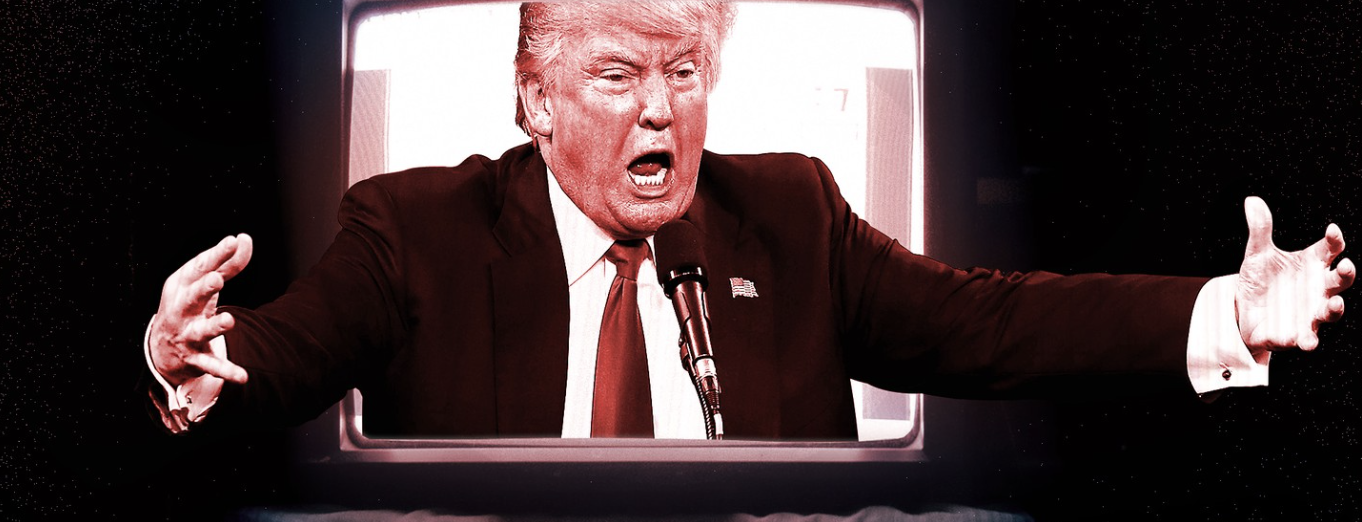
“It is better to be feared than to be loved.” Many know Machiavelli’s infamous words, but in the year 2025, as the National Guard rampages through public protests and ICE agents patrol neighborhoods, it seems as though these words are more present than ever. While fear has held a place in politics for centuries, its role in contemporary American politics is more than just a conversation– it’s the guide to power. President Donald Trump seems to be an expert in fear politics. His use of violent rhetoric in speeches steadily increased from 0.6 percent in 2015 to 1.6 percent between 2022 and 2024, despite falling rates of violence and crime at the time of these speeches [1]. However, he has learned from politicians of the past. It was Senator Arthur Vandenberg who said to President Harry Truman, while looking for a vote in support of containment policy in the early Cold War, that the only way to achieve this goal was to “scare the hell out of this country” [2]. This advice was followed decades later by President Bush in the War on Terrorism. In fact, it is Bush who truly encapsulates the mantra of Vandenberg in the aftermath of the 2001 terrorist attacks. As historical examples such as the Bush presidency have demonstrated, fear has been used as a strategic tool to garner support and increase unilateral power. This affinity to use fear as a rhetorical strategy can be better understood by the Uncertainty-Threat theory, which explains the tendency for perceived threats that are mitigated by predispositions for uncertainty to cause citizens to become vulnerable to anti-democratic actions of presidents to ease uncertainty. This framework can give insight into the actions of the Trump administration and the specific use of threatening rhetoric towards undocumented immigrants in order to effectively mobilize his supporters in his extensive immigration policies. It is imperative to confront this creation of threats through fear rhetoric to prevent the wrongful exploitation of public uncertainty for political goals of the executive.
Bush and 9/11
Bush entered September 2001 with an approval rating of 51 percent. Still, merely 18 days later, in the aftermath of the terrorist attacks that shook the nation, Bush broke records with the largest jump in approval ratings after a single event, reaching 86 percent approval—and later 90 percent, the highest approval rating of any American president—and a 35 percent increase [3]. It was not the event itself that was credited for the substantial increase in approval, but the reaction of the administration to alter American attitudes. Coined as the “rally ‘round the flag” phenomenon, this theory argues that during times of international crisis, Americans tend to rally behind their president as a source of national unity [4]. Because support for the president manifests through patriotism, it implies that opposition against the actions of the administration is, by nature, unpatriotic. This led Congressional opposition to Bush to decrease substantially for fears of public disapproval. This phenomenon is what Rocco refers to as “opinion leadership” [5].
With such strong support for the Bush administration, and the tendency to attack opposition as unpatriotic in the face of tragedy, the presidency had the opportunity to monopolize the national crisis into high Congressional support for legislation in the name of ‘national security’ [6]. What resulted was a series of legislation, most recognized by the PATRIOT Act of 2001, that took advantage of Bush’s high public approval and Congressional support, and implemented massive restrictions on immigration. While undocumented immigrants were not responsible for the September 11 attacks, the most detrimental outcome of the 2001 PATRIOT Act was the massive increase in deportations—mostly of Latinx immigrants—and the criminalization of civil violations committed by undocumented immigrants in efforts to aid the deportation process [7].
National Crises and the Presidency
While the 2001 crisis had a, albeit short-term, positive effect of support and unilateral power of the president, crises are not always to the advantage of the president in office [8]. The failures of the Vietnam War shot down approval ratings of President Lyndon Johnson and ultimately led him to not run for reelection [9]; the 1979 Iran Hostage Crisis notably led to the disapproval of President Jimmy Carter [10]; Bush remarkably flipped his support, once holding the highest approval of any U.S. president, to remarkably low—50 percent at the start of his second term and later down to 24 percent by the end of this term— in response to his actions in the Iraq War [11]; even Donald Trump faced the consequences of a presidential crisis with the COVID-19 pandemic, with analysis of national survey data indicating that Trump’s response to the pandemic directly impacted voter’s approval and contributed to his 2020 loss for reelection [12].
The success of the Bush administration in utilizing the national crisis to his advantage was his ability to manufacture the perception of a threat. Of course, the context of the terrorist attacks aided the perception of a threat by their own nature; however, the President’s rhetoric was able to maintain this perception through violent and fearful language, as best represented by the phrase he coined: War on Terror. On September 20, in an address to Congress, Bush declared a “war on terror” that would not end “until every terrorist group of global reach has been found, stopped, and defeated” [13]. This catchphrase would be the focus of America’s political rhetoric for the duration of the Bush presidency and beyond. The implications of the phrase were crucial to Bush’s creation of a threat. Scholars like Katie Rose Guest argued that in using this language, Bush declared war on an emotion of “intense fear” and could thus eternalize the American enemy of “terror” long after the justice of the September attacks was mended [14]. Creating an abstract threat allowed the administration to justify broad and extensive actions without needing defined motivations. This rhetoric had direct effects on American perceptions, with polling on the two ways following this broadcasted declaration showing 89 percent of Americans believing the U.S. “should take military action in retaliation for terrorist attacks [15]. Just this single phrase had the ability to trigger the fear of Americans and create a threat that was both elusive and everlasting, and extended wartime powers to the President in essentially any way he deemed fit. Rhetorical appeals to fear are imperative to fostering a perception of threat that can be beneficial to the presidential implementation of goals.
Uncertainty-Threat Theory
As discussed prior, the approval ratings and Congressional support for presidents in international crises can be methodologically supported by the “rally ‘round the flag” phenomenon and opinion leadership theory of Rocco’s 2009 research. The use of fear as a political tool is what seems to mitigate these different outcomes. The capitalization of fear through presidential rhetoric may contribute to the creation of a political environment that fosters unilateral executive power and heightened approval ratings from patriotic responses. This theory is best supported by the analysis of Uncertainty-Threat Theory. Michael Hogg developed Uncertainty-Threat Theory to explain how uncertainty motivates behaviors between in-groups and out-groups [16]. The theory has been developed substantially in the last two decades to understand certain political outcomes. Specifically, the state of self-uncertainty heightens anxiety and a need for order and defending one’s status that can be psychologically mended by groups “that emphasize a strong distinction between ‘us’ and ‘them’” [17]. One might recognize that this group identification is typical of populist political parties, which further research has supported– Hogg and his colleagues’ 2021 research demonstrated that self-uncertainty causes vulnerability to support of extremist and autocratic leaders and populist parties [18].
Uncertainty-Threat Theory can aid the explanation of many political phenomena, as demonstrated above. One of the most researched hypotheses of the theory is its association with anti-immigrant attitudes. Immigration contributes to feelings of ingroup anxiety and fears when uncertainty is high [19]. Research conducted by the Journal of Social and Political Psychology demonstrated a strong association between high self-uncertainty and support for anti-immigration policies and parties and increased nationalist attitudes [20]. What is most important about this research, however, is the mediator between the state of uncertainty and anti-immigration attitudes: threat perception. The perception of a realistic threat mediates the relationship between anti-immigration attitudes and Uncertainty-Threat theory [21]. When an already uncertain public perceives a threat, their behaviors are more likely to align with protectionist and nationalist attitudes, which have been shown to increase support for parties and candidates that support anti-immigration policies.
Contemporary Implications
The relationship between perceiving threats and anti-immigration goes beyond empirical research and is deeply integrated into contemporary political history. Approval for anti-immigration politics is associated with adverse periods in American history, where fear was central to the political landscape. In the period after World War II, the outbreak of the Korean War, and growing communist fears, the Red Scare dominated political fears and led to a growing nationalist attitude. One of the many outcomes of this political landscape was the largest deportation effort in American history, Operation Wetback. This immigration policy targeted Mexican Americans in Southwestern states like Texas and California and deported an estimated one million individuals, although this number is disputed, as many of these deportations were actually voluntary migrations [22].
What is observed time and time again in these scenes of American history is how national fears have continuously contributed to anti-immigration attitudes and policy outcomes, regardless of the relevance of immigrants to the fears of the nation. However, as the Uncertainty-Threat model theorizes, the fears of the nation, and ultimately the capitalization of these fears by presidential administrations, can psychologically mediate a reaction of anti-immigration attitudes and support for anti-immigration candidates in an attempt to mitigate the fears and uncertainty. Fear is a powerful tool to guide public attitudes. Psychology research has shown that when the public believes there is a threat to their life, their job, or their culture, there is a tendency to support strict immigration policies and anti-immigrant attitudes regardless of what perceived threat is at hand [23]. This is why fear politics have such a strong connection to immigration policies and why fear becomes so powerful in the hands of a presidency. By using this understanding of fear politics and its role in garnering support for anti-immigration policies, we can better understand the actions of the second Trump Administration.
The utilization of fear by the current president has been said to be unprecedented. Trump is among only six American presidents to deploy the National Guard since 1957, and the only one to do so in the last 30 years [24]. Trump’s populist sentiment has echoed threat language to his supporters– from campaign speeches in which he instills in his supporters that “they’re coming after you,” and social media posts attacking “radical left lunatics” who want to “destroy your life” [25]. Trump’s speeches have also been identified to have higher frequencies of violent rhetoric when coded for language with specifically violent meanings compared to that of all presidential speeches since 1991—not observed as language uses with violent connotations in context or insight violence without specifically violent vocabulary [26]. Additionally, while violent language has decreased over time as an overall trend, Trump’s use of violent vocabulary in speeches has increased substantially since his 2016 campaign: from 0.58 percent of his rhetoric in his 2016 campaign speeches, to 0.91 percent in 2020, and 1.21 percent in 2024 [27].
The rhetoric of the Trump administration has been consistent: hateful, threatening, and violent. It is no coincidence that support for his war on immigration has continued to rally endorsements from his followers. Unlike Bush, Trump does not have a historical tragedy to back his creation of a threat; instead, he must instill perceptions of threat through extensive and consistent rhetorical appeals to fear through fear and demonization of his enemies. The ability of threat perception to strengthen support for unilateral actions of presidents and anti-immigration attitudes has been supported through historical models of the Bush presidency and psychologically by Uncertainty-Threat research. The power of rhetoric to shape attitudes through the creation of threat is dangerous when combined with support for unchecked presidential authority. Trump has attempted to mirror the ambiguous and elusive threat of terror declared by the Bush administration twenty five years ago in his war on immigration that, as history has shown, can create a political environment susceptible to long-lasting and broad wartime powers with little need for realistic justification. It is imperative that the American public is aware of the implications of threat perceptions and its ability to manipulate attitudes in response to fear to arm against the anti-democratic authority that thrives in the face of public fears.
Sources
[1] Savin, Nikita & Treisman, Daniel. “Donald Trump’s Words.” National Bureau of Economic Research. October, 2024. https://www.nber.org/system/files/working_papers/w32665/w32665.pdf.
[2] E.J. Dionne. “Inevitably, The Politics Of Terror: Fear Has Become Part Of Washington’s Power Struggle.” Brookings. May 25, 2003. https://www.brookings.edu/articles/inevitably-the-politics-of-terror-fear-has-become-part-of-washingtons-power-struggle/
[3] Moore, David W. “Bush Job Approval Reflects Record ‘Rally’ Effect.” The Gallup. September 18, 2001. http://www.gallup.com/poll/4912/Bush-Job-Approval-Reflects-Record-Rally-Effect.aspx.
[4] Rocca, M. S. “9/11 and Presidential Support in the 107th Congress. Congress & the Presidency.” 2009. https://doi.org/10.1080/07343460903206305
[5] Rocca “Congress & the Presidency.”
[6] Rocca “Congress & the Presidency.”
[7] Massey, D. S., & Pren, K. A. “Unintended consequences of US immigration policy: explaining the post-1965 surge from Latin America.” Population and Development Review. 2012. https://doi.org/10.1111/j.1728-4457.2012.00470.x.
[8] Howell, William & Jackman, Saul & Rogowski, Jon. “The Wartime President: Executive Influence and the Nationalizing Politics of Threat.” Research Gate. January, 2013. https://www.researchgate.net/publication/317542687_The_Wartime_Presidency_Executive_Influence_and_the_Nationalizing_Politics_of_Threat1.
[9] “U.S. Involvement in the Vietnam War: The Tet Offensive, 1968.” U.S. Office of the Historian. https://history.state.gov/milestones/1961-1968/tet.
[10] “The Iranian Hostage Crisis.” U.S. Office of the Historian. https://history.state.gov/departmenthistory/short-history/iraniancrises.
[11] “Bush and Public Opinion.” Pew Research Center. December 18, 2008. https://www.pewresearch.org/politics/2008/12/18/bush-and-public-opinion/
[12] Clarke, H., Stewart, M. C., & Ho, K. “Did Covid-19 Kill Trump Politically? The Pandemic and Voting in the 2020 Presidential Election. Social science quarterly.” May 25, 2021. https://doi.org/10.1111/ssqu.12992.
[13] Bush, George W. “Address to Joint Session of Congress Following 9/11 Attacks”
American Rhetoric. September 20, 2001. https://www.americanrhetoric.com/speeches/gwbush911jointsessionspeech.htm.
[14] Ching, Bruce. “Echoes of 9/11: Rhetorical Analysis of Presidential Statements in the 'War on Terror.'” UDC Digital Commons. March 9, 2020. http://dx.doi.org/10.2139/ssrn.3551169.
[15] Ching “Echoes of 9/11.”
[16] Hogg, M. A. “Uncertainty-Identity Theory.” Sage Publications Ltd. 2012. https://doi.org/10.4135/9781446249222.n29.
[17] Takizawa, Ruri & Marx-Fleck, Stefanie & Gerlach, Alina & Grote, Gudela. “The Role of Uncertainty Mindsets in Shaping Diversity Attitudes and Their Downstream Effects on Commitment to Societal Change and Right-Wing Populist Voting.” Sage Journal. November 11, 2025. https://journals.sagepub.com/doi/full/10.1177/01461672251386487.
[18] Hogg, M. A., & Gøtzsche-Astrup, O. “Self-uncertainty and populism: Why we endorse populist ideologies, identify with populist groups, and support populist leaders.” Taylor & Francis Group. 2021. https://www.taylorfrancis.com/chapters/edit/10.4324/9781003057680-14/self-uncertainty-populism-michael-hogg-oluf-g%C3%B8tzsche-astrup.
[19] Alves, Sara & Pinto, Isabel & Marques, Jose. “The Terrible Unknown: How Uncertainty Fosters Nationalist and AntiImmigration Attitudes.” Journal of Social and Political Psychology. 2024. https://doi.org/10.5964/jspp.9953.
[20] Alves, Pinto, & Marques. “The Terrible Unknown.”
[21] Alves, Pinto, & Marques. “The Terrible Unknown.”
[22] Hernandez, Kelly Lytle. “Operation Wetback (1953-1954).” Immigration History. https://immigrationhistory.org/item/operation-wetback/.
[23] Padilla, R., & Petras, G. “Six presidents have deployed National Guard troops. Here's why.” USA Today. August 12, 2025. https://www.usatoday.com/story/graphics/2025/08/12/how-presidents-use-national-guard/85616830007/.
[24] Trump, Donald. “Donald Trump: Social Media Archive.” Roll Call. December, 2025. https://rollcall.com/factbase-twitter/?q=destroy%20&platform=all&sort=date&sort_order=desc
[25] Savin & Treisman, “Donald Trump’s Words.”
[26] Savin & Treisman, “Donald Trump’s Words.”
[27] Alves, Pinto, & Marques. “The Terrible Unknown.”
[28] Ball, Molly. “[Image]Donald Trump and the Politics of Fear.” The Atlantic. September 2, 2016. https://www.theatlantic.com/politics/archive/2016/09/donald-trump-and-the-politics-of-fear/498116/.