
Trade Partners to Tech Rivals
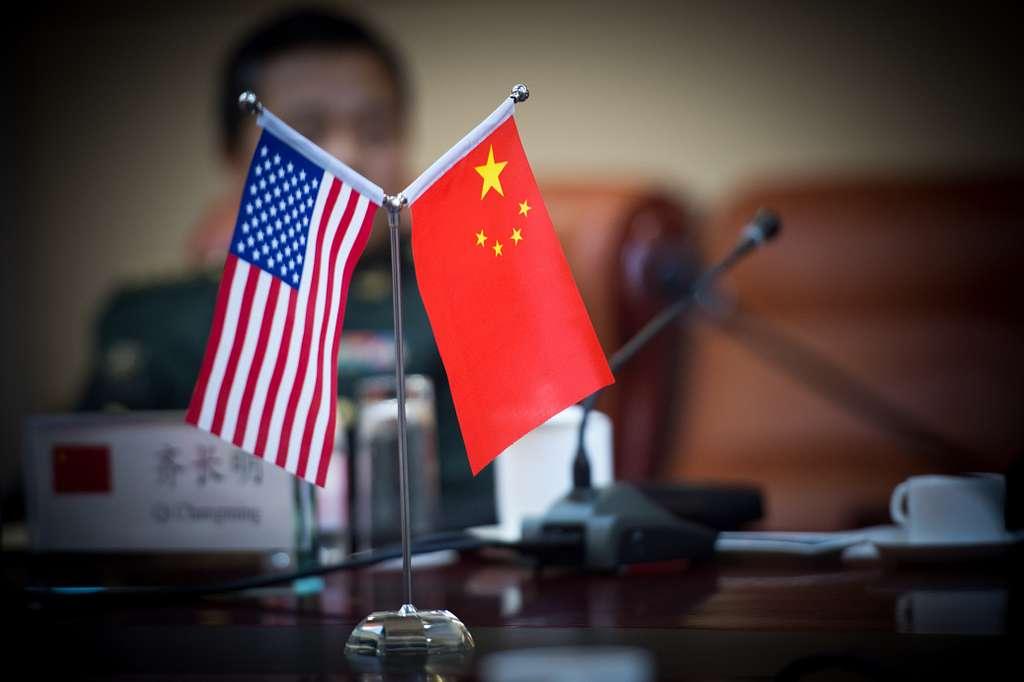
For decades, US-China relations have been defined by economic interdependence. American companies outsourced manufacturing to China, Chinese firms gained access to Western markets, and policymakers from both countries believed trade would promote stability [1]. However, that assumption has eroded rapidly. Today, artificial intelligence (AI) and militarization define the feud between the US and China. The US’ relationship with China has shifted from economic cooperation to strategic competition driven primarily by national security concerns. This shift will have detrimental consequences for the future of globalization as competition over the semiconductor and AI industries forces third parties to take sides.
The US and China used to be trade partners in semiconductors: silicon chips that power technology and help train AI models. However, as semiconductors become essential for economic and military power, US export controls target China's access to high-end semiconductors, reflecting a shift from free trade to market control. This shift was accelerated by supply chain vulnerabilities exposed during COVID-19, when semiconductor shortages crippled industries from automobiles to medical devices, revealing how dangerously dependent the US had become on foreign-manufactured chips [2]. The CHIPS and Science Act, passed in August 2022, reflects how industrial policy can accelerate this shift by reshoring production, fragmenting global supply chains, and forcing allied nations to choose sides in semiconductor sourcing. The act banned American companies from expanding manufacturing to China for ten years and provided incentives to companies that manufacture semiconductors domestically. Later, in October 2022, the US banned the sale of semiconductors to China without a license [3]. Because of how important semiconductors are to military technology, these restrictions go beyond simple economic competition—they reflect a concerted strategy to limit China's military development. However, the consequences of this new strategic competition extend beyond China. China currently supplies 30 percent of global semiconductor demand, meaning these restrictions will limit development for all countries that rely on Chinese chips. As a result, technology-reliant industries, from automobiles to healthcare, face supply delays and higher costs for producers.
The desire to produce dominant AI technology has also marked this shift from collaboration to competition, blurring the line between military power and innovation. According to the RAND Corporation, AI is expected to reshape military planning, logistics, and battlefield decision-making—a technology specially designed for defense, not to be confused with consumer generative AI like ChatGPT or Gemini [4]. As a result, both countries view AI as a strategic competition rather than a form of innovation that requires collaboration to optimize [5]. This competition is deepened by fundamental ideological differences in how each country approaches AI development. China's state-directed model—in which the government funds national AI champions, mandates data sharing with the state, and embeds “socialist core values” into its systems—is incompatible with the US’ market-driven, rights-based approach [6]. Brookings Institution notes that AI is actively elevating the competition between authoritarian capitalism and liberal democracy, making cooperation on shared standards or safety frameworks increasingly difficult [7]. Because leadership in AI could provide major economic and military advantages, both countries view dominance as strategically important, encouraging competition and distrust rather than collaboration.
This desire for a competitive advantage forces third-party countries to choose sides, breaking historically established global supply chains. This fragmentation makes manufacturing more expensive and prevents technological expansion in the long run by restricting advancement in the industry to a select few countries. According to the OECD, 90 percent of the semiconductor industry is located in five countries: Taiwan, South Korea, China, Japan, and the US. Competition urges Taiwan, Japan, and South Korea to choose one country to trade with. The CHIPS and Science Act illustrates how this works in practice: by offering subsidies exclusively to companies that manufacture domestically and avoid expanding in China, the US effectively pulls foreign firms and their home governments toward alignment with American trade policy, because there are clear economic incentives for picking one over the other [8]. However, the pressure to choose sides is risky for countries whose economies are heavily dependent on semiconductor technology: 57 percent of Taiwan's industry is in semiconductors [9]. If the US-China rivalry forces countries to choose sides, Taiwan could lose access to one of its biggest markets, drastically reducing economic output. This is especially consequential because semiconductors are the foundation of AI development—without access to high-end chips, countries are effectively locked out of the AI race entirely. More broadly, polarizing technology industries could have disastrous effects on the future of globalization. The OECD warns that technological fragmentation will lead to broken supply chains, skyrocketing costs, and slowing global innovation [10]. The IMF has warned that splitting into competing US- and China-led technology blocs could reduce global economic output by up to 7 percent—and up to 12 percent when technological decoupling is factored in—losses felt most severely by developing nations who lack the resources to build independent AI and semiconductor infrastructure [11]. While China or the United States might benefit from restricting the other country's expansion in the tech industry, inevitably, many countries will be cut off from the supply.
For the American consumer, increasing technological development to win an arms race against China for an AI-powered military would not actually be a win; it would directly result in a loss of power on the global playing field. While the immediate consequences seem to be purely economic, in the long term, the effects of choosing sides appear to be that nobody—including China, the United States, and the allies of both countries—actually gets what they want.
Sources
[1] Anshu Siripurapu, Clara Fong, and Noah Berman, "The Contentious U.S.-China Trade Relationship," Council on Foreign Relations, October 31, 2025. https://www.cfr.org/backgrounders/contentious-us-china-trade-relationship.
[2] Emily Cheng et al., "US-China Relations in the Age of Artificial Intelligence," Brookings Institution, March 9, 2022. https://www.brookings.edu/articles/us-china-relations-in-the-age-of-artificial-intelligence/.
[3] Gregory C. Allen, "Countering China's Challenge to American AI Leadership," Congressional testimony, Center for Strategic and International Studies, December 2, 2025. https://www.csis.org/analysis/countering-chinas-challenge-american-ai-leadership.
[4] Zachary Burdette, David Phillips, Jessica L. Heim, Edward Geist, David R. Frelinger, Caitlin Heitzenrater, and Karl Mueller, An AI Revolution in Military Affairs? RAND Corporation, 2025. https://www.rand.org/pubs/research_reports/RRA3091-1.html.
[5] Allen, "Countering China's Challenge."
[6] Lowy Institute, "United States, China or Russia: Who Writes the Moral Code for Artificial Intelligence?" Lowy Institute, 2025. https://www.lowyinstitute.org/publications/united-states-china-or-russia-who-writes-moral-code-artificial-intelligence.
[7] Cheng et al., "US-China Relations."
[8] “Economic Security in a Changing World,” OECD Publishing, September 11, 2025, https://www.oecd.org/en/publications/economic-security-in-a-changing-world_f7e023e5-en.html.
[9] “Economic Security in a Changing World.”
[10]“Economic Security in a Changing World.”
[11] “World Economic Outlook: A Rocky Recovery,” IMF Publishing, 2023, https://www.imf.org/en/Publications/WEO/Issues/2023/04/11/world-economic-outlook-april-2023.