
The Rise, Regulation, and Implications of Prediction Markets
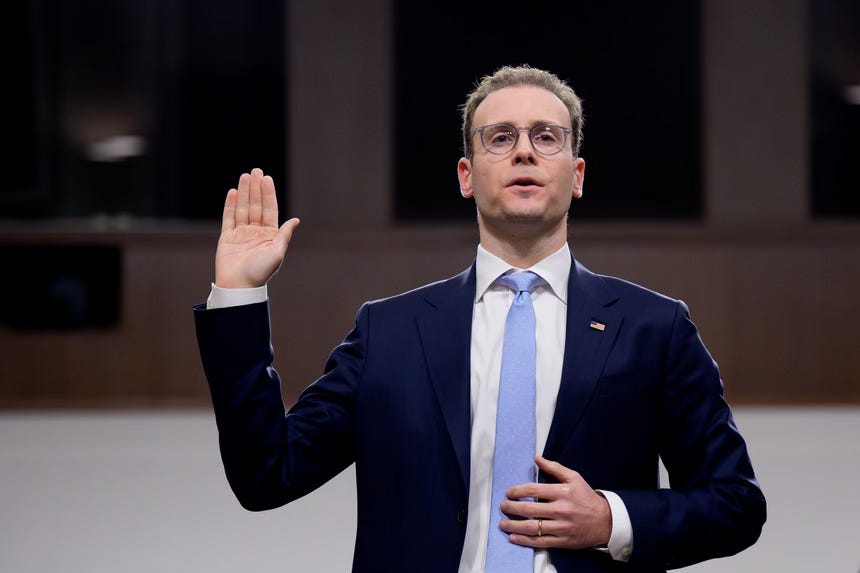
Prediction markets have evolved from niche academic experiments into mainstream forecasting tools across many domains, commanding media attention and many millions of dollars in trading volume worldwide. These markets allow anyone in the United States willing to provide some basic personal information the freedom to gamble on anything from what the announcer of the Lakers game will say in their broadcast to which world leaders will no longer be in office by the end of the year. The two major platforms, Kalshi and Polymarket, have become dominant names in the space. Both, however, have undergone rapid growth that has both outpaced and circumvented the legal frameworks meant to govern them. While prediction markets started as low-stakes academic forecasting tools, derivatives law, especially via Dodd-Frank, has given them a path into Commodity Futures Trading Commission (CFTC)-regulated financial markets. But under Trump, the CFTC has moved from restraining them to actively defending them, even as both platforms benefit from glaringly close proximity to the president’s family. That leaves Americans with a system marketed heavily to the average person where government action, elections, wars, speeches, and public decisions become tradable assets — with corruption, insider trading, gambling addiction, and incentive distortion baked in. In a world where every outcome can be priced and traded, motivations across society become muddied; the basic human instincts we rely on may be subjugated by the unforgiving, anticipatory logic of the market.
Background
Prediction markets trace their modern roots to the Iowa Electronic Markets (IEM), launched in 1988 by the University of Iowa as a research tool to forecast election outcomes, outperforming traditional polls in several cycles. Their initial legitimacy came from their academic focus and research goals, insulating them against regulatory scrutiny. Demonstrative of their academic focus, they also capped individual investments at 500 dollars, limiting the stakes. Over the course of the next few election cycles, the IEM consistently outperformed most polls [1]. The ability for the University of Iowa and other universities to participate in such research was reaffirmed by a no-action letter issued by the CFTC in 1992 [2].
The next major phase in the growth of prediction markets was its use in the Defense Advanced Research Projects Agency (DARPA) beginning in 2003. Government agencies have a vested interest in predictive power, particularly in major geopolitical events in certain regions around the globe. While this had some success, it faced bipartisan opposition throughout the early 2000s. However, it’s largely credited with bringing the concept of prediction markets to the masses [3]. In tandem with the DARPA use, minor early precursors to today's prediction market platforms began to pop up. A company known as HedgeStreet became the first contract market dedicated to event contracts — the type of contracts on prediction markets whose payoff is “based on a specified event, occurrence, or value” [4] — regulated by the CFTC. HedgeStreet later became North American Derivatives Exchange Inc. (Nadex) in 2009 before being acquired in 2022, now also doing business as Crypto.com [5].
Regulatory History
Starting with the IEM, it was clear that even academic prediction markets could fall under the jurisdiction of the CFTC, even if the Commission was not prepared to formally assert jurisdiction over prediction markets. In 1992, the CFTC issued a no-action letter to the IEM, stating that the CFTC would not recommend any enforcement action under the current circumstances [6]. The very need for the letter suggested that such markets would likely fall under their purview, but the letter was careful to not assert “jurisdiction or [describe] the potential parameters of the [CFTC’s] regulatory purview over the market” [7]. It notably did not exempt the IEM from potentially applicable state regulations.
Since then, the CFTC has served as the primary regulator of event contracts and prediction markets as a whole in the US. This position was strengthened in the aftermath of the 2008 financial crisis with the passage of the Dodd-Frank Act. This act added the modern statutory definition of the financial derivative known as a “swap” to the 1936 Commodity Exchange Act (CEA) and brought swaps under comprehensive CFTC regulation. In finance, swaps generally are exactly what they sound like — the exchange of cash flows or liabilities of underlying financial instruments. A common example is an interest rate swap, where for instance, one party agrees to pay the floating interest rate and another a fixed rate — an agreement that could be advantageous for both parties depending on their business needs [8].
The regulatory fight over swaps goes back to the rapid rise of electronic trading systems in the 1990s and the corresponding growth of the over-the-counter (OTC) derivatives market, where contracts are negotiated privately between parties rather than traded on a public exchange like the New York Stock Exchange. In 1974, when the CFTC was created in the Commodity Futures Trading Commission Act of 1974, the agency was given jurisdiction over all contracts “in the character of” futures contracts, and the law stated that such contracts must be traded on a CFTC-regulated exchange. As OTC derivatives massively grew in popularity with tens of trillions of dollars in notional value, legal uncertainty provided an extraordinary financial liability that could nullify such contracts [9]. In 1998, at the direction of Congress, the President’s Working Group on Financial Markets — which was established by executive order in 1988 and colloquially termed the “Plunge Protection Team” by The Washington Post in 1997 [10] — began a report they delivered the following year recommending that OTC derivatives largely be excluded from any regulation by the CFTC or SEC except in certain cases, reflecting the era’s faith that deregulation would fuel financial innovation, growth, and liquidity [11]. Congress largely heeded the advice and passed the Commodity Futures Modernization Act (CFMA) in 2000, explicitly designating many OTC derivatives traded between “sophisticated parties” — including credit default swaps which played a major role in the 2008 financial crisis (so much for sophisticated parties) — as beyond the purview of the CFTC and other regulatory agencies [12].
After 2008, the Dodd-Frank Act vastly broadened the codified scope of the CFTC’s regulatory reach, in part via the legal definition of a swap. Decisively for prediction markets, in the definition of a swap, they included events that may be “dependent on the occurrence, nonoccurrence, or the extent of the occurrence of an event or contingency associated with a potential financial, economic, or commercial consequence.” Beyond just this definition of a swap, this act as a whole transformed Wall Street in a number of ways. It added substantial regulatory frameworks across the board, from increasing transparency in the trading and clearing of derivatives to increasing the powers of the Federal Reserve [13].
Pertinent to prediction markets as well, Dodd-Frank also included a specific provision on event contracts, giving the CFTC authority, though not the obligation, to prohibit certain event contracts involving war, terrorism, assassination, gaming, unlawful activity, or similar matters when the Commission finds them “contrary to the public interest” [14]. This section arguably gives the CFTC the authority to prohibit the vast majority of event contracts under their purview, especially considering Kalshi where sports related contracts make up 90 percent of the trading volume [15].
Recent Regulatory Decisions
The modern rise of prediction markets has largely been thanks to recent regulatory policy and legal changes. The outcome of the OTC derivative reform that culminated in the Dodd-Frank Act ultimately leaves the CFTC with a strong legal argument for discretion in the regulation of prediction markets. After Dodd-Frank, they exercised this power repeatedly. For instance, Nadex (formerly HedgeStreet) was prevented from offering event contracts on elections in 2012 [16]. Through 2024, the CFTC generally maintained this posture, using their regulatory power to block a variety of event contracts from elections to sports.
A key development in the growth of modern prediction markets took place in September 2024. In September, the US District Court for the District of Columbia ruled in favor of Kalshi, vacating the CFTC’s order blocking Kalshi from offering contracts on congressional election outcomes. Importantly, at this point, the CFTC tried to block Kalshi — emblematic of the CFTC’s continuity in their regulatory attitude since 2012 [17]. The ruling was a watershed. It legitimized political event contracts while under CFTC jurisdiction and opened the door to a regulated but rapidly expanding domestic market on a wide variety of topics. Moreover, this was an important break from how the CFTC had long exercised its power from Dodd-Frank.
However, this decision represents an overly limited reading of the law. The court treated the event-contract provision in Dodd-Frank as a narrow list of specific prohibited subject matters in which the CFTC had the authority to conduct a public interest review if they choose to. Yet, Congress included an explicit catch-all for “other similar activity,” indicating clear concern about other gambling through futures markets. That phrasing suggests Congress wanted the CFTC to have flexibility to prevent socially harmful event contracts from evading regulation merely because they do not fit perfectly into one of their listed words.
After the ruling, the CFTC appealed to the D.C. Circuit for an emergency stay. They were denied in October, and the markets were allowed [18]. However, the case was never fully argued in the Court of Appeals; the CFTC dropped the case in May of 2025. The CEO and Co-founder of Kalshi Tarek Mansour said at the time that “Kalshi's approach has officially and definitively secured the future of prediction markets in America” [19]. The CFTC’s decision to drop the case is emblematic of a massive change in regulatory posture at the CFTC under President Trump.
A Changing CFTC
Since Trump took office, there has been a flurry of statements and decisions at the CFTC emblematic of this sharp change. Immediately after taking office, Trump appointed Republican Caroline Pham to be acting chair of the CFTC, known in part for voting against CFTC crypto enforcement action just months before and for her desire to put forth a new framework for prediction markets to operate easily [20]. Shortly thereafter, in February, in a CFTC announcement of a prediction market round table, Pham said, “Despite my repeated dissents and other objections since 2022, the current Commission interpretations regarding event contracts are a sinkhole of legal uncertainty and an inappropriate constraint on the new Administration…. The CFTC must break with its past hostility to innovation and take a forward-looking approach to the possibilities of the future” [21]. The Trump administration's new approach to prediction markets as of February 2025 couldn’t be clearer. Then, on December 22, 2025, Michael S. Selig was sworn in as chairman of the CFTC [22]. His public views on prediction markets and the direction he plans to pursue as chair of the CFTC are exactly in line with Pham’s. As recently as May 1, 2026, he released a letter to the editor in the Wall Street Journal replying to an opinion piece by Andy Kessler: “Gambling by Another Name.” Selig said this work “distorts reality.” He claimed the CFTC had complete authority over prediction markets, that they “provide significant benefits to individuals, businesses, and the broader economy” and that the CFTC will ensure their growth [23].
Beyond public statements, the CFTC made a series of regulatory decisions. In addition to dropping the appeal against Kalshi, in a January 2026 speech, Selig announced that the CFTC would withdraw a 2024 proposal to “prohibit political and sports-related event contracts,” during a speech praising cryptocurrencies, Trump, and the loosening of regulatory policies [24]. Moreover, instead of simply pulling back from regulating Kalshi and Polymarket, the CFTC has recently begun to take a more active stance in securing the future of such platforms. In February 2026, the CFTC announced that they had filed an amicus brief in North American Derivatives Exchange, Inc. et al v. The State of Nevada. In the announcement, Selig claimed that such lawsuits attempt to “undermine the CFTC’s sole regulatory jurisdiction over prediction markets.” In April, the CFTC sued Arizona, Connecticut and Illinois “to Reaffirm its Exclusive Jurisdiction Over Prediction Markets” [25]. A few days later, a federal judge barred Arizona from regulating prediction markets [26]. Later in April, the CFTC filed a lawsuit against New York and an amicus brief in Kalshi’s battle in Massachusetts [27]. Notably, Kalshi recently faced justices who appeared less than convinced by Kalshi’s argument that state gambling law couldn’t apply to prediction markets, questioning whether such restriction on states was Congress’s intention in Dodd-Frank [28].
Potential Corruption
Taken together, the regulatory posture of the CFTC towards prediction markets (and crypto) has undergone a severe shift under the Trump administration. After previously initiating lawsuits against prediction markets, the Trump administration’s CFTC has now opted to defend them. At one level, this can be defended as a legitimate pro-innovation turn in financial regulation. But the timing and political context make that defense much harder to accept at face value. Donald Trump Jr. became a strategic adviser to Kalshi in January 2025 [29] and later joined Polymarket’s advisory board after a Trump Jr.-backed venture-capital firm invested in the company [30]. President Trump’s original appointee for CFTC chair was Brian Quintenz, a member of Kalshi’s board who served on Crypto.com’s advising council [31]. The optics are glaring.
Moreover, the result is not simply a deregulatory shift. It is a federal agency protecting a rapidly growing industry in which the president’s family has visible business ties and an industry whose markets trade on government action itself. It fits entirely with a disturbing trend proved time and time again within the Trump administration, centered around enriching themselves and their backers [32]. Whether or not there is sufficient evidence to prove any kind of illegal quid pro quo, this regulatory approach leaves ample room for untraceable, unprovable profiteering by politically connected actors. As such, the government’s decision to shield those platforms from state regulation cannot be treated as neutral technocracy. The CFTC may call this a pro-innovation agenda, but in context it looks much more like political protection for a favored industry.
Insider Trading & Other Challenges
For prediction markets to be properly legislated and regulated, certain aspects of the markets must be addressed. Insider trading is one of the biggest. For prediction markets, this is something easy to understand on the surface, but uniquely hard to regulate and enforce. In publicly traded companies and in major financial institutions, there are generally strict legal frameworks that compartmentalize and limit the spread of insider information. However, regulating such a thing for prediction markets would be nearly impossible. Consider the example of a market on what will be said in a speech by a major politician. They may have speech writers, a number of advisors, close friends and family, and others who all have insight on specific topics they may focus on that the public lacks. Each of them may tell others, who cannot feasibly all be tracked and prohibited from profiting on their insider knowledge. As a country, we need to decide whether we can allow insider trading and corruption, which certainly happens in areas of the financial world, to be brought into the mainstream. If prediction markets are allowed to remain mainstream, this “insider trading” aspect of the markets will come with it.
There are recent, blatant examples of insider trading, made more frightening by the topics at hand. There were a number of high volume trades placed right before the US dropped the first strikes of the war in Iran, betting very profitably on the specific timing of the attack [33]. The White House has done little to combat this, issuing a weak statement weeks later banning its staff from trading on the platforms [34]. President Trump even said "The whole world, unfortunately, has become somewhat of a casino,” with an air of inevitability as if he couldn’t do anything about it [35]. However, perhaps most blatant of all was the soldier who made over $400,000 from wagering on when former Venezuelan President Nicolás Maduro would be removed from office. The soldier, who was involved in the operation, was then arrested under charges of unlawful use of confidential government information for personal gain, theft of nonpublic government information, commodities fraud, wire fraud, and making an unlawful monetary transaction [36]. If a soldier with highly classified top secret information is willing and able to use their insider knowledge to gamble, it is hard to fathom just how many others are as well. While said soldier is facing legal repercussions, in large part, he is the only one. In May, NPR reported that campaign staffers have admitted they place large bets on insider polling information before it's made public, saying they’d be foolish not to [37]. This is all not to mention the other quirks and loopholes to these event contracts. In France, a man used a blow dryer to warm a specific sensor at Charles de Gaulle Airport to record a reading of 22 degrees Celsius, about four degrees higher than the average temperature during the day. A single polymarket user profited 14,000 dollars from this result [38].
Conclusion
The combination of all these factors leaves us with a rapidly expanding phenomenon full of room for corrupt players, not to mention the variety of other risks that come with prediction markets. No matter the legal arguments, it has become abundantly clear that Kalshi and Polymarket are more than willing to market themselves as a platform where any American can gamble on anything. The sheer breadth of available bets on these apps makes it all the easier for Americans to get hooked on gambling — when they can gamble on anything, anywhere, anytime. As Americans, if we accept prediction markets, we need to accept that gambling addictions will become a bigger problem and need to work to combat that. We need to accept that the vast majority of traders on the platforms are unprofitable, and we need to accept that 77 percent of Polymarket profits go to 1 percent of the accounts [39]. We need to accept that while Kalshi and Polymarket don’t technically allow insider trading, the accuracy of their markets do benefit from it. As Robin Hanson, a professor who has been an advocate for prediction markets for forty years said: “You want them [insiders] trading” [40]. We need to accept that under the current framework there will be a market on everything, financializing everything. The result is not a more rational society nor is it capitalism coming along with its next great innovation. It is a society in which every action becomes a possible trade, every insider becomes a potential profiteer, and every public event becomes another opportunity for speculation.
We need to grapple with all this in the backdrop of a regulatory landscape that changed overnight under the Trump administration. While additional clarity would be beneficial, the CFTC has the power they need to make regulatory decisions about prediction markets. They could demonstrate a nonpartisan regulatory outlook, work with state attorneys general, and establish a framework for prediction markets — or an America with more minimal prediction markets — that is beneficial for Americans. For now, however, Kalshi, Polymarket, and all Americans have to live with this new phenomenon that is shrouded by the question of corruption, of motivation, and of all the unresolved problems that come with prediction markets.
Sources
[1] Stix, Gary. "When Markets Beat the Polls." Scientific American. March 2008. https://mason.gmu.edu/~rhanson/PAM/PRESS/ScientificAmerican-3-08.pdf.
[2] "Prediction Markets." Commodity Futures Trading Commission. https://www.cftc.gov/LearnandProtect/PredictionMarkets.
[3] Yeh, Puong Fei. "Using Prediction Markets to Enhance US Intelligence Capabilities." Studies in Intelligence 50, no. 4. Central Intelligence Agency, 2006. https://www.cia.gov/resources/csi/static/Prediction-Markets-Enhance-Intel.pdf.
[4] "Contracts & Products." Commodity Futures Trading Commission. https://www.cftc.gov/IndustryOversight/ContractsProducts/index.htm.
[5] "Designated Contract Markets: North American Derivatives Exchange, Inc." Commodity Futures Trading Commission. https://www.cftc.gov/IndustryOversight/IndustryFilings/TradingOrganizations/34536.
[6] "No-Action Letter to the Iowa Electronic Markets." Commodity Futures Trading Commission. 1992. https://www.cftc.gov/sites/default/files/files/foia/repfoia/foirf0503b002.pdf.
[7] "Concept Release on the Appropriate Regulatory Treatment of Event Contracts." Federal Register. May 7, 2008. https://www.federalregister.gov/documents/2008/05/07/E8-9981/concept-release-on-the-appropriate-regulatory-treatment-of-event-contracts.
[8] "Swap: Definition, Types, and Real-World Examples." Investopedia. https://www.investopedia.com/terms/s/swap.asp.
[9] Jickling, Mark. "The Commodity Futures Modernization Act (P.L. 106-554)." Congressional Research Service Report RS20560. February 3, 2003. https://digital.library.unt.edu/ark:/67531/metacrs9288/m2/1/high_res_d/RS20560_2003Feb03.pdf.
[10] "Working Group on Financial Markets." Wikipedia. https://en.wikipedia.org/wiki/Working_Group_on_Financial_Markets.
[11] President's Working Group on Financial Markets. "Over-the-Counter Derivatives Markets and the Commodity Exchange Act." U.S. Department of the Treasury. November 1999. https://home.treasury.gov/system/files/236/Over-the-Counter-Derivatives-Market-Commodity-Exchange-Act.pdf.
[12] "Commodity Futures Modernization Act of 2000." EBSCO Research Starters. https://www.ebsco.com/research-starters/politics-and-government/commodity-futures-modernization-act-2000.
[13] "Dodd-Frank Wall Street Reform and Consumer Protection Act." Federal Reserve History. https://www.federalreservehistory.org/essays/dodd-frank-act.
[14] "Event Contracts." Federal Register. June 10, 2024. https://www.federalregister.gov/documents/2024/06/10/2024-12125/event-contracts.
[15] "Prediction Markets, Sports Betting, and Legal Battles." The Athletic / The New York Times. March 9, 2026. https://www.nytimes.com/athletic/7075799/2026/03/09/prediction-markets-sports-betting-legal-battles/.
[16] "CFTC Issues Order Prohibiting North American Derivatives Exchange’s Political Event Derivatives Contracts." Commodity Futures Trading Commission Press Release 6224-12. 2012. https://www.cftc.gov/PressRoom/PressReleases/6224-12.
[17] KalshiEX LLC v. Commodity Futures Trading Commission, No. 1:2023cv03257 (D.D.C. 2024). https://law.justia.com/cases/federal/district-courts/district-of-columbia/dcdce/1:2023cv03257/261465/51/.
[18] Matthews, Laura. "US Federal Court Upholds Ruling Letting KalshiEX List Election Betting Contracts." Reuters. October 2, 2024. https://www.reuters.com/legal/us-federal-court-upholds-ruling-letting-kalshiex-list-election-betting-contracts-2024-10-02/.
[19] Matthews, Laura, and Chris Prentice. "CFTC Moves to Drop Appeal in Kalshi's Event Contracts Case." Reuters. May 5, 2025. https://www.reuters.com/markets/commodities/cftc-moves-drop-appeal-kalshis-event-contracts-case-2025-05-05/.
[20] Price, Michelle. "Acting US CFTC Chair Pham Pledges to Work with All Stakeholders." Reuters. January 20, 2025. https://www.reuters.com/markets/acting-us-cftc-chair-pham-pledges-work-with-all-stakeholders-2025-01-20/.
[21] "CFTC Announces Prediction Markets Roundtable." Commodity Futures Trading Commission Press Release 9046-25. February 2025. https://www.cftc.gov/PressRoom/PressReleases/9046-25.
[22] "Michael S. Selig, Chairman." Commodity Futures Trading Commission. https://www.cftc.gov/About/Commissioners/MichaelSelig/index.htm.
[23] Selig, Michael S. "WSJ Letter to Editor | Prediction Markets Aren't a New Vegas." Commodity Futures Trading Commission. May 1, 2026. https://www.cftc.gov/PressRoom/SpeechesTestimony/seligstatement050126.
[24] Selig, Michael S. "Opening Statement of Chairman Michael S. Selig." Commodity Futures Trading Commission. January 2026. https://www.cftc.gov/PressRoom/SpeechesTestimony/opaselig1.
[25] "CFTC Sues Trio of States to Reaffirm its Exclusive Jurisdiction Over Prediction Markets." Commodity Futures Trading Commission Press Release 9206-26. April 2026. https://www.cftc.gov/PressRoom/PressReleases/9206-26.
[26] "Judge Bars Arizona from Regulating Prediction Market Operators and Pauses Prosecution of Kalshi." Associated Press. April 2026. https://apnews.com/article/arizona-kalshi-criminal-charges-prediction-markets-gambling-bb7cef24be5bd0d444bba670d2e41ceb.
[27] "CFTC Sues New York Over Prediction Markets Amid Ongoing Efforts to Preserve Jurisdiction." Commodity Futures Trading Commission Press Release 9218-26. April 24, 2026. https://www.cftc.gov/PressRoom/PressReleases/9218-26.
[28] Raymond, Nate. "Massachusetts Top Court Appears Open to State Ban on Kalshi Sports Betting." Reuters. May 4, 2026. https://www.reuters.com/legal/government/massachusetts-top-court-appears-open-state-ban-kalshi-sports-betting-2026-05-04/.
[29] "Donald Trump Jr. Joins Kalshi as Strategic Advisor." Kalshi. January 2025. https://news.kalshi.com/p/donald-trump-jr-strategic-advisor.
[30] "Polymarket Secures Investment from Trump Jr.-Backed 1789 Capital." Reuters. August 26, 2025. https://www.reuters.com/business/polymarket-secures-investment-trump-jr-backed-1789-capital-2025-08-26/.
[31] Chakravarty, Rajashree. "CFTC Nominee Quintenz Seeks to Leverage Crypto Expertise." Banking Dive. June 10, 2025. https://www.bankingdive.com/news/cftc-nominee-brian-quintenz-seeks-to-leverage-crypto-expertise/750319/.
[32] "New Report Exposes the Trump Family's Multi-Billion Dollar Crypto Empire Fueled by Self-Dealing and Corrupt Foreign Interests." House Judiciary Committee Democrats. https://democrats-judiciary.house.gov/media-center/press-releases/new-report-exposes-the-trump-familys-multi-billion-dollar-crypto-empire-fueled-by-self-dealing-and-corrupt-foreign-interests.
[33] Sweet, Ken, and Christopher L. Keller. "Well-Timed Bets on Polymarket Tied to the Iran War Draw Calls for Investigations from Lawmakers." Associated Press. https://apnews.com/article/polymarket-kalshi-trump-iran-prediction-congress-d16d7bdf9a56cc1466b44baaf634aeeb.
[34] Chia, Osmand. "White House Bans Staff from Trading on Prediction Markets." BBC News. https://www.bbc.com/news/articles/cgld65x396go.
[35] Metzger, Brian. "Trump Says the World Has Become 'Somewhat of a Casino.'" Business Insider. April 2026. https://www.businessinsider.com/trump-prediction-markets-world-casino-2026-4.
[36] "U.S. Soldier Charged with Using Classified Information to Profit on Prediction Market Bets." U.S. Department of Justice. https://www.justice.gov/opa/pr/us-soldier-charged-using-classified-information-profit-prediction-market-bets.
[37] Garrett, Luke. "Campaign Staffers Tell NPR They Make 'Thousands' Betting on Their Own Candidates." NPR. May 7, 2026. https://www.npr.org/2026/05/07/nx-s1-5795891/prediction-markets-kalshi-polymarket-campaigns.
[38] Kennedy, Niamh, Lisa Courbebaisse, and Elina Baudier Kim. "France Investigates Suspected Tampering with Weather Sensors after Polymarket Bets." CNN. April 23, 2026. https://www.cnn.com/2026/04/23/europe/france-weather-sensor-polymarket-bet-intl-latam.
[39] McNair, Kamaron. "Gen Z and Millennials Are Driving Prediction Market Growth." CNBC. May 5, 2026. https://www.cnbc.com/2026/05/05/gen-z-millennials-prediction-markets.html.
[40] Roytburg, Eva. "Kalshi and Polymarket Are Racing to Ban Insider Trading. The Economist Who Built the Theory Behind Prediction Markets Says It's the Whole Point." Fortune. April 26, 2026. https://fortune.com/2026/04/26/prediction-markets-insider-trading-illegal-kalshi-polymarket-robin-hanson-economist/.