The Decline of Soft Power in U.S. Foreign Policy
Since the beginning of the second Trump administration, the United States Agency for International Development (USAID), the National Endowment for Democracy (NED), and the United States Agency for Global Media (USAGM) have lost 83 percent, 95 percent, and 25 percent of their funding, respectively [1, 2, 3]. Previously, the US government had used these three agencies to sponsor and direct civil society, media, and political advocacy initiatives across the Global South. While there are ongoing legal and political battles on behalf of these agencies to restore funding, the administration’s attempt to deprioritize them signals a trend away from the covert influence of public opinion and institutions abroad.
USAID was founded in 1961 with the purpose of advancing international development and foreign assistance. With a congressionally-allocated budget, it primarily conducted operations through two means, grants and direct contracts. Grants were awarded to non-governmental and non-profit organizations by Agreement Officers, entailing minimal coordination with USAID outside of application and renewal [4]. Direct contracts awarded to both for-profit and non-profit institutions were approved by Contracting Officers, often requiring further coordination with the agency in fulfilling the contract’s terms [5]. Until USAID was absorbed into the State Department in 2025, the President appointed the administrator and deputy administrator to then be confirmed by the Senate.
The NED, a de jure non-profit with funding almost entirely provided by the US government, similarly functions as a grant-giving institution. It has four core recipient organizations: the National Democratic Institute (NDI), which advocates for open societies; the International Republican Institute (IRI), which advocates for free market values; the Center for International Private Enterprise (CIPE), which advocates for business development; and the AFL-CIO Solidarity Center, which advocates for workers’ rights abroad [6]. A self-reproducing board of directors—composed of six current and former congresspeople, three state department officials, and five academics, among others—approves all grants with a two-thirds majority vote [7]. The NED’s grant application form requires applicants to state their organization’s “mission, size, geographical reach, professional and/or political character,” alongside disclosing their other sources of funding [8]. Considering that political character is only an optional category, these grants do not primarily function to directly push political lines, but to build bases and relationships in politically active organizations worldwide.
USAGM, meanwhile, oversees six “independent” media projects, such as Voice of America, Radio Liberty, and Middle East Broadcasting Networks [9]. While their CEO is nominated by the President and confirmed by the Senate, the federal government has little interference in the agency’s day-to-day operations. Of these three agencies, USAGM engages in the least ‘covert business’; instead of building behind-the-scenes influence within core social institutions, its operations are limited to disseminating pro-American messages through public channels.
Indeed, some recipients of USAID and NED grants actually contributed to media awareness, civic engagement, healthcare, and poverty alleviation. Likewise, some USAGM broadcasts and articles provided valuable, objective information to people who would not receive it otherwise. Alongside these “good deeds,” soft power agencies entrust themselves and their contractors with leverage over opinions and organizations abroad. In critical moments, these agencies have utilized this built-up power to dilute labor uprisings, distort facts, and even attempt regime change. Understanding the role of these institutions not as moral forces but systemic ones enables a stronger prediction of the effects of their cuts not only on immediate circumstances, but on long-term power dynamics. As soft power agencies have declined in influence, the US has turned to shows of hard power in Venezuela and Iran to maintain its place in the world hierarchy. Despite numerous tactical victories over the past three months, the substitution of soft power for hard power weakens the influence and respectability of the US in the rest of the world.
Cuba
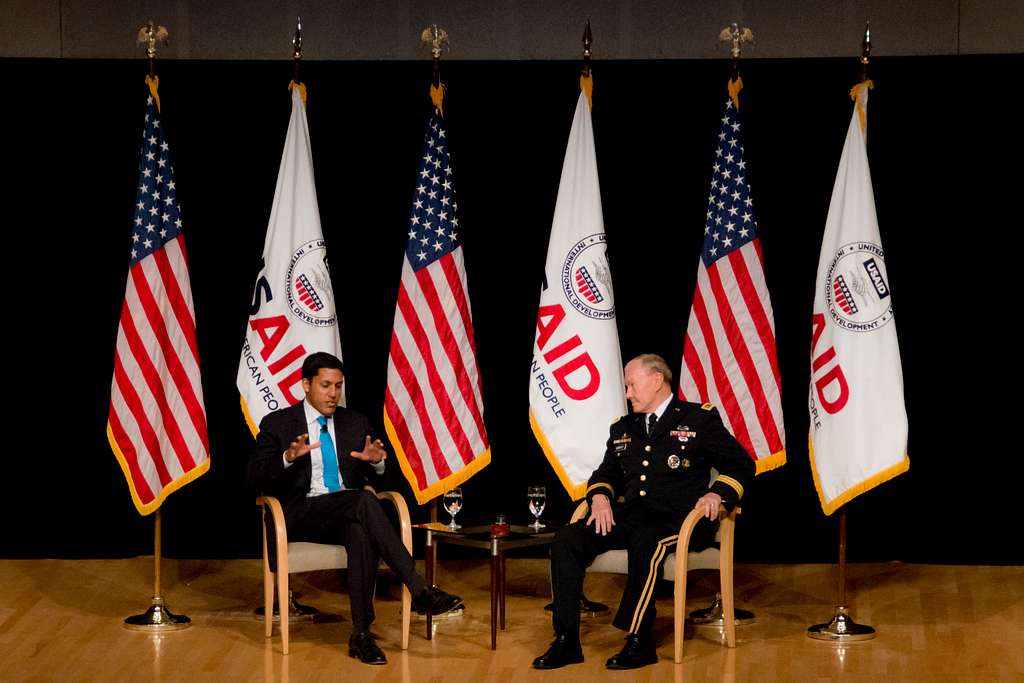
From 2010 to 2012, USAID proposed, funded, and oversaw the creation of Zunzuneo, a Twitter-style platform aimed at toppling the ruling Communist Party through spontaneous mass protests. Rajiv Shah, the administrator of USAID, stated that unlike most USAID contracts, the program was directly approved by Congress, displaying the belligerent undertones it carried from the beginning [10]. Through a web of private, for-profit telecom companies, the agency planned and funded the project while concealing its affiliation until after the platform discontinued operations [11]. While the Cuban government would have disallowed any platform with known ties to Washington, the covert nature of Zunzuneo’s government sponsorship enabled it to operate for two years.
The first phase of this project was not an immediate call to action, but rather a gradual attempt at base-building. Posts about non-controversial topics such as soccer, food, and weather popularized the app. With enough of a base, administrators disseminated a poll regarding politically sensitive figures, to which 100 thousand people responded with no knowledge that they would be rows in a USAID spreadsheet [12]. Only when Zunzuneo reached a critical mass of followers was the plan to “introduce political content aimed at inspiring Cubans to organize smart mobs” [13]. Ultimately, the project failed due to a combination of never reaching the intended follower base, funds drying up, and the Cuban government beginning to grow suspicious of the platform.
At the forefront of Zunzuneo, alongside many other USAID projects in Cuba, is the for-profit corporation Creative Associates International (CAI), run by the right-wing Bolivian emigrant Charito Kruvant. With expertise on the sensitive political situation, CAI “briefed on the nature and methods of the Cuban State Security services, safe travel to the island, elicitation techniques, and Cuban intelligence capabilities abroad” [14]. Meanwhile, it contracted the technical development of the platform to telecommunications company Mobile Accord [15]. However, when it came to the day-to-day workings of the project, the top overseeing official was a mere middle manager at USAID named Joe McSpedon. His LinkedIn profile says that during his time at USAID, he worked “in the Information and Design Lab, focusing on creative approaches for applying GIS and data collection/analysis/visualization,” as well as representing “USAID/OTI in high-level meetings with government officials and private sector leaders” [16]. Rather than that of an executive, his role as analyst and middleman directed the project toward its congressionally set goals, which it aimed to fulfill independently. With the ultimate failure of Zunzuneo, Creative Associates was only paid $11.2 million for all USAID operations in Cuba, showing the cost-effectiveness of soft power when compared to sumptuous defense contracts [17].
Iraq
Soft power agencies also operate in countries not governed by a hostile regime, such as post-invasion Iraq. Amidst poor economic conditions, Iraqi workers from Baghdad to Basra organized in unions and took part in general strikes. This was much to the dismay of Paul Bremner, the leader of the US occupation, who maintained Saddam Hussein’s prohibition on public sector unions, banned public advocacy for organized labor, and continued to arrest union leaders [19]. When these heavy-handed efforts failed to stop the tide of organized labor, the National Endowment for Democracy sponsored the Solidarity Center of the AFL-CIO with a $3 million contract—the most prominent federation of labor unions in the US—to “counter independent labor organizing by leftist groups like the Union of the Unemployed in Iraq” [20]. Specifically, they assisted and coordinated with the Iraqi Federation of Trade Unions, a more moderate organizational sect which “pleaded with trade union and Labour delegates not to support the call for an early withdrawal” [21]. While their efforts did not suppress Iraqi labor organizing, they made the dominant trends within it reconcilable with the US occupation’s existence and interests.
However, yielding to the NED and Bush administration did not come without pushback within various constituent organizations of the AFL-CIO. In 2004, the California Labor Federation (CLF)—the AFL-CIO’s state-level branch for California—passed a resolution stating that “AFL-CIO acceptance of NED funding for its solidarity work in Iraq may give the appearance, if not the effect, of making the AFL-CIO appear to be an agent of the US government and its foreign policies” [22]. Though the AFL-CIO was ideologically aligned with US foreign policy for decades before the NED was founded, grants to the Solidarity Center facilitated direct coordination/collusion in such a critical moment. Accordingly, the CLF resolution was largely ignored by national leadership, and NED money continued to flow into moderate, reconcilable labor unions. Coordination between the AFL-CIO Solidarity Center and the NED continued until 2025, when the Trump administration revoked its funding [23].
Alongside the politically oriented work of the NED, USAID contracted CAI to reconstruct and reform the postwar education system. The Geneva Center for Justice reports that the US-led coalition bombed 83 percent of Iraqi educational institutions, creating ample tasks for an agency claiming to specialize in humanitarian development [24]. Although building schools is certainly a noble deed, CAI’s new, homemade curriculum “removed any criticism to the US policy in the Middle East, as well as any reference to either the 1991 war or to Israeli policy in the occupied Palestinian territories” [25]. While some Americans joke that Chinese students are taught that “nothing happened in Tiananmen Square in 1989,” the messaging of the USAID/CAI curriculum in Iraq was hardly different.
Even when considering the circumstances, the administration of post-invasion Iraqi education led to a higher-than-expected level of illiteracy and backsliding [26]. CAI had airdropped the curriculum after five months of preparation, lacking proper investigation into the particularities and needs of Iraqi students. Yet instead of assigning the blame to incompetence, UIUC professor Kenneth Saltman argues that the company’s actions were intentionally engineered to shift “power and profit to the private sector and retain US control over Iraqi civil society” [27]. In contrast with the NED, which sought a foothold within already-existing institutions, USAID utilized original implements to influence social structure and public opinion, all under the guise of benevolently promoting development.
A Shifting From Soft To Hard Power
Contrary to the hard power of military force and economic compulsion, soft power is the influence exerted on foreign populations through the reformation and co-optation of ideology, media, and culture. By planning protests on social media, reshaping school curricula, or supporting moderate trade unions, soft power agencies discreetly encourage alignment with US foreign policy. Coined by political scientist and former undersecretary of Defense Joseph Nye at the dusk of the Cold War, it served as a cheaper and more socially acceptable means to maintain order in a unipolar world [28]. From a critical perspective, Filipino Marxist professor Roland Simbulan refers to it as the dynamic of control “between the now globalized, integrated market economy and the institutions that it has created to perpetuate itself” [29]. While the breadth of soft power is by no means limited to these agencies, they served as the intermediary between the government, private, and NGO sector, optimizing each of their respective advantages in advancing their mutual interests.
Although much of soft power agencies’ conduct is directed at influencing civil society or public opinion in favor of the US, not all of their beneficiaries strive for these goals. Some of them, indeed, have taken sides counter to that of the US foreign policy establishment. In 2013, NGO Monitor, a right-wing, Jerusalem-based nonprofit, criticized NED-funded outlets for reporting on apartheid policies and war crimes in Palestine [30]. In 2024, the right-wing Heritage Foundation condemned the NED for “promoting leftwing causes” and “suppressing conservative publishers” in countries where it operates [31]. However, as seen in both Cuba and Iraq, seemingly apolitical work can develop long-term structural power in ways force or compulsion could not. This power, shared between the agencies themselves and high-level contractors, grants the ability but not the mandate to trigger spontaneous action, disseminate pro-US narratives, or suppress opposing organizations if the situation calls for it.
Given the usefulness and previous successes of soft power agencies, it may seem irrational for a President to cut their funding. Some of these cuts—such as to the Labor Solidarity Center—are indeed consistent with Trump’s rhetoric in “de-woke-ifying” the government, pointing to personal bias rather than strategic thinking. However, other cuts—such as to the USAGM Office of Cuba Broadcasting—hindered efforts to destabilize governments against which the Trump administration has increased economic and military escalations [32, 33]. Accordingly, the reductions in soft power spending display not a shift in goals but a shift in the tactics by which the US asserts its power abroad.
Firstly, in tandem with the reduction of soft power spending, the Trump administration has increased the planned defense budget by 66 percent to $1.5 trillion [34]. Despite running on a platform of peace, he has already displayed this newly acquired hard power in Venezuela and Iran. Yet those who have lived through American campaigns in Iraq, Afghanistan, Bosnia, and Libya understand that US interventionism is far from a new development. What is principally different today is that military force power is no longer as complemented by the manipulation of institutions and public opinion as it was in the past. As soft power functions through attraction rather than compulsion, it fails when the product that it sells—US-led neoliberalism—declines in appeal with changing circumstances. Simbulan asserted in 2015 that internal “crises in legitimacy, in overproduction, and over-extension” in neoliberal institutions create the “need to justify a more aggressive assertion of global power” [35]. Since he made this prediction, the economic preeminence of US neoliberalism has been challenged by COVID-19, and the moral legitimacy of US authority has been challenged in Gaza. Soft power needs to appear as both just and desirable if it is to succeed in the long term; hard power does not.
Secondly, as Nye notes, the projection of soft power depends on the US’ own civil society as a model, such that unsettled internal contradictions could weaken its potency [36]. The influence of the NED over Iraq, for one, was compounded by the alliance—at minimum coexistence—of American union leadership with the foreign policy of the government. Nye remarks that during the Cold War, university protestors demonstrated compatibility by “singing Martin Luther King’s “We Shall Overcome,” not the communist “Internationale” [37]. Nowadays, US opposition is no monolith concerning compatibility with the foreign policy establishment; there are simultaneously actual communists in university plazas chanting “down with imperialism” alongside No Kings protestors marching to save USAID [38]. Yet the development of any significant incompatible opposition—especially one proclaiming solidarity with international struggles from Palestine to Venezuela—breaks the neoliberal monopoly of acceptable discourse in an open society. Moreover, the inevitable crackdown on this opposition, whether it be by the UCPD in Los Angeles or US Marines in Karachi, contradicts the “openness” and “freedom” from which soft power agencies draw their justification. Just as Saltman observed that soft power “‘democracy promotion’ projects contain elements of neoliberal ideology in that they conflate economic values and political values,” their effectiveness is diminished when political freedom does not automatically correspond with neoliberalism [40]. Soft power is effective when the entirety of an open society works within the frameworks of the status quo, and it is less effective when freedom includes the freedom of an incompatible opposition.
Soft power agencies were an integral element of US foreign policy for decades, fulfilling tasks that neither hard power nor private enterprise could accomplish alone. Under the guise of development and freedom, they have attempted regime change, manipulated school curricula, and diluted the energy of organized labor, among their ventures in other countries. As domestic contradictions intensify and international crises emerge, soft power agencies’ ability to influence international institutions and populations has declined independently of the size of their budgets. Yet far more important than the three agencies pulling the levers of soft power are the millions of people from Cuba to Iraq whose lives have been affected by it. It is not up to Trump, the NED, or CAI to airdrop “freedom and democracy” across the world, but to everyday citizens around the world to form their own opinions and shape their own institutions, realizing the potential of neither hard power nor soft power, but people power.
Sources
[1] Shyam Bishen. “USAID budget slashed by 83%, and other top health stories.” World Economic Forum, March 12 2025. https://www.weforum.org/stories/2025/03/usaid-cut-threatens-global-health-and-other-top-health-stories/.
[2] NED Communications Staff. “Statement on NED’s Funding Disruption and Program Suspsensions.” National Endowment for Democracy, February 25, 2025. https://www.ned.org/statement-on-neds-funding-disruption-and-program-suspensions/#:~:text=The%20National%20Endowment%20for%20Democracy,of%20the%20Endowment's%20total%20budget.
[3] Clayton Weimers. “USA: New funding for USAGM signals sustained bipartisan support for its crucial international journalism.” Reporters Without Borders, February 10, 2026. https://rsf.org/en/usa-new-funding-usagm-signals-sustained-bipartisan-support-its-crucial-international-journalism.
[4] “ADS Chapter 303: Grants and Cooperative Agreements to Non-Governmental Organizations,” United States Agency for International Development, October 1, 2024. https://humentum.org/wp-content/uploads/2025/02/ADS-303-1-1.pdf.
[5] “ADS Chapter 302: USAID Direct Contracting,” United States Agency for International Development, June 13, 2024.
https://humentum.org/wp-content/uploads/2025/03/ADS-302.pdf.
[6] NED Communications Staff, “Investing in Freedom: An Introduction to the National Endowment for Democracy.” National Endowment for Democracy, February 2, 2025. https://www.ned.org/investing-in-freedom-an-introduction-to-the-national-endowment-for-democracy/#.
[7] National Endowment for Democracy Staff, “Board of Directors.” National Endowment for Democracy, n.d. https://www.ned.org/about/board-of-directors/.
[8] National Endowment for Democracy Staff, “Apply For Grants.” National Endowment for Democracy, n.d. https://www.ned.org/apply-for-grant/en/.
[9] “Structure - USAGM,” United States Agency for Global Media. November 7, 2024. https://www.usagm.gov/who-we-are/organizational-chart/.
[10] Colin Lecher. “USAID Chief Defends ‘Cuba Twitter’ Program, Says It Had Congressional Approval.” Popular Science, April 3, 2014. https://www.popsci.com/article/technology/usaid-chief-defends-cuba-twitter-program-says-it-had-congressional-approval/.
[11] Desmond Butler, Jack Gilium, and Alberto Arce. “US secretly created ‘Cuban Twitter’ to stir unrest.” Miami Herald, September 8, 2014. https://www.miamiherald.com/news/nation-world/article1962295.html.
[12] Butler, “Cuban Twitter.”
[13] Butler, “Cuban Twitter.”
[14] Liz Conde Sanchez. “More revelations about US funding of subversion against Cuba,” Granma. May 12, 2021. https://www.granma.cu/pensar-en-qr/2021-05-12/mas-revelaciones-sobre-el-financiamiento-a-la-subversion-de-ee-uu-contra-cuba-12-05-2021-20-05-23.
[15] oAlan Macleod. “Creative Associates International (CAI): It’s Not Exactly the CIA, but it’s Close Enough.” Mint Press, August 13, 2021. https://www.mintpressnews.com/creative-associates-international-cai-its-not-exactly-the-cia-but-close-enough/278207/.
[16] Joseph McSpedon, LinkedIn https://www.linkedin.com/in/joseph-m-2b6786ab/.
[17] Conde Sanches, “Revelations About US Funding.”
[18] “Missile Interceptors by Cost.” Missile Defense Advocacy Alliance. https://www.missiledefenseadvocacy.org/missile-defense-systems/missile-interceptors-by-cost/.
[19] David Bacon. “Disunity Threatens Iraq’s Resistance to Occupation.” David Bacon. November 4, 2005. https://dbacon.igc.org/Iraq/2005disunity.html#:.
[20] John Quaccia. “National Endowment for Death Squads? The AFL-CIO and the NED.” Venezuela Analysis, December 21, 2004. https://venezuelanalysis.com/analysis/849/.
[21] Sami Ramadami. “Collaboration won’t buy Iraq’s freedom.” The Guardian, October 26, 2004. https://www.theguardian.com/politics/2004/oct/27/tradeunions.iraq.
[22] “Build Unity and Trust With Workers Worldwide.”California Labor Federation, July 13, 2004. https://www.labournet.net/world/0407/hirsch.html.
[23] Shawna Bader-Blau. “Exhibit C: Solidarity Center.” National Endowment for Democracy, March 6, 2025. https://www.ned.org/wp-content/uploads/2025/03/02ac-Exhibit-C-Solidairty-Center.pdf.
[24] Dirk Adriansens. “The Destruction of Iraq’s Education System.” Geneva International Center for Justice, March 14, 2013. https://www.gicj.org/iraq_conference_speeches/Dirk_Adriaensens_Presentation.pdf.
[25] Adriansens, “Destruction of Iraq’s Education System.”
[26] Adriansens, “Destruction of Iraq’s Education System.”
[27] Kenneth Saltman. “Creative Associates International: Corporate Education and Democracy Promotion in Iraq.” Routledge, Review of Education, Pedagogical, and Cultural Studies, 2006. https://www.casi.org.uk/discuss/2003/msg02179.html.
[28] Joseph S. Nye. “Soft Power.” Foreign Policy, no. 80 (1990): 153–71. https://doi.org/10.2307/1148580.
[29] Antonio Tujan Jr et al. “Lenin’s Imperialism in the 21st Century.” Institute of Political Economy, 2015. https://peoplesresearch.org/wp-content/uploads/2023/01/LII2C_English.pdf.
[30] NGO Monitor Staff. “The Negative Impact of US Government Funding for Mideast Political NGOs.” NGO Monitor, May 20, 2013. https://ngo-monitor.org/reports/due_diligence_and_accountability_the_negative_impact_of_u_s_government_funding_for_mideast_political_ngos/.
[31] Tim Meisburger. “The Undemocratic National Endowment for Democracy Needs Oversight and Reform.” The Heritage Foundation, August 6, 2024. https://www.heritage.org/global-politics/report/the-undemocratic-national-endowment-democracy-needs-oversight-and-reform.
[32] David Folkenfilk. “‘Bloody Saturday at Voice of America and other US-funded networks.” NPR, March 15, 2025. https://www.npr.org/2025/03/15/nx-s1-5329244/bloody-saturday-voiceofamerica-radio-free-asia-europe-trump-kari-lake#:~:text=According%20to%20NPR%2C%20Grant%20Turner%2C%20the%20former,activities%20that%20are%20not%20required%20by%20law.
[33] Reuters Staff. “Trump on Cuba: May or may not be a ‘friendly takeover.’” Reuters, March 9, 2026. https://www.reuters.com/world/americas/trump-cuba-may-or-may-not-be-friendly-takeover-2026-03-09/.
[34] Lauren Kahn. “Trump’s $1.5 Trillion Defense Budget Should Not Come as a Surprise.” Council on Foreign Relations, January 9, 2026. https://www.cfr.org/articles/trumps-15-trillion-defense-budget-should-not-come-surprise.
[35] Tujan et al., “Lenin’s Imperialism in the 21st Century.”
[36] Joseph Nye and Ralph Ranalli, “Professor Joe Nye coined the term ‘soft power.’ He says America’s is in decline under Trump.” Harvard Kennedy School of Government, April 8, 2025. https://www.hks.harvard.edu/faculty-research/policycast/professor-joe-nye-coined-term-soft-power-he-says-americas-decline-under#transcript.
[37] Nye and Ranalli, “America’s Soft Power is in Decline Under Trump.”
[38] Luke Garrett. “Protestors rally against Trump putting USAID workers on leave.” NPR, February 5, 2025. https://www.npr.org/2025/02/05/g-s1-46669/usaid-trump-stop-work-protest-rally.
[39] Idress Ali and Phil Stewart. “Exclusive: US Marines fired on protestors storming consulate in Karachi, officials say.” Reuters, March 2, 2026. https://www.reuters.com/world/asia-pacific/us-marines-fired-protesters-storming-consulate-karachi-officials-say-2026-03-03/.
[40] Saltman, “Creative Associates in Iraq.”