
The Argentine Bailout and the Populism Democrats Failed
In the midst of ever-changing tariff policies, mass deportations, and peace negotiations, the Trump Administration facilitated a major bailout of the Argentine economy. The bailout enabled the Argentine government to sell cheap soybeans to Chinese buyers, leaving American farmers in turmoil. Meanwhile, domestically, the Democratic Party failed to capitalize on this golden opportunity to speak out in defense of middle America. The minimal Democratic response to the bailout serves as a case study in the party’s aversion to economic populism and its longstanding inability to address the concerns of rural and working-class Americans.
The Bailout
The Trump administration’s $40 billion bailout of Argentina was crafted as an emergency intervention to stabilize the country’s deteriorating economy. Facing spiraling inflation and mounting debt obligations, Argentina sought international support to prevent a broader financial crisis. The U.S.-backed package, routed largely through international lending institutions, aimed to bail out Javier Milei’s government [1]. At the same time, Argentina has long been a cheap exporter of soybeans to China, directly competing with American farmers. Trump’s tariffs pushed China to shift away from purchasing American soybeans to buying Argentine and Brazilian soybeans. Argentina’s temporary removal of export tariffs accelerated this shift, prompting China to rapidly buy millions of tons of the crop [2]. Therefore, to U.S. farmers, the bailout represented the White House propping up a direct competitor just as their largest market vanished.
The Era of Strongly Worded Letters
With Republicans hesitant to deeply criticize the Trump Administration, the bailout created an opportunity for Democrats to clearly take a stand for rural Americans already struggling to make ends meet. Yet, instead of a coordinated effort amongst the party to frame the bailout as an addition to a laundry list of Republican actions harming the working class, the party responded sparsely with only muted objections. Consistent with their usual approach, 54 House Democrats sent a strongly worded letter demanding action and denouncing the bailout, Chuck Schumer gave a rousing two-minute 44-second speech on the Senate floor, and the House Financial Services Committee issued a press release and formal letters about the bailout [3, 4].
Only one Democrat broke with the pattern. Senator Elizabeth Warren, one of the party’s most prominent economic populists, proposed legislation intended to stop the move altogether. Her bill, titled the “No Argentina Bailout Act,” would stop the U.S. Treasury Department from providing any financial assistance to Argentina [5]. The bills emphasized that American resources should focus on domestic financial challenges, support U.S. farmers, and ensure American financial stability, rather than bail out foreign markets. The bill went nowhere following its referral to the banking committee.
Republicans controlling both chambers of Congress and the executive create structural limits for the Democrats, but that does not prevent them from shaping a public narrative. Even without the votes to block the bailout, they could have used hearings, media blitzes, and coordinated messaging to spotlight the disconnect between the G.O.P.’s foreign policy priorities and the economic realities facing Americans at home. Instead, their timid and disconnected response reveals the growing issue the Democratic Party has created for itself by shunning any progressive, populist economic message.
The Working Class Party Unraveled
Over the last 30 years, Democratic coalitions have become increasingly concentrated in high-population urban areas while their reach across rural and small-town counties has collapsed. In turn, Republicans continue to entrench themselves in rural America, which has undergone one of the most sweeping partisan realignments in modern political history. Donald Trump won over 90 percent of rural counties in both 2016 and 2020. The G.O.P. expanded that strength in 2024, turning vast swaths of rural territory red [6]. Republicans often win rural counties by 40–60 points. Such margins give the G.O.P. an enormous advantage in statewide races and the Electoral College. What is most concerning for Democrats is that light slippage in cities or suburbs can cost them entire states.
In the early 1990s, both parties routinely competed for hundreds of counties. By 2012, fewer than 10 percent of U.S. counties were considered competitive, and the number has continued to fall [7]. This decline has hardened the political geography of the country into Democratic cities versus Republican rural regions. As a result, Democrats fail to properly invest in political infrastructure in rural areas they view as unwinnable [8].
Schumer plainly stated this principle in 2016 when he noted that “for every blue-collar Democrat we will lose in western Pennsylvania, we will pick up two, three moderate Republicans in the suburbs … you can repeat that in … Ohio and Illinois and Wisconsin” [9]. Without a candidate like Barack Obama who can create coalitions across class, race, age, and region, that strategy cannot and has not worked.
It’s crucial to note this wasn’t just a strategy; it was policy. Beginning in the 1990s, Democrats tied themselves closely to the politics of free trade, pushing major agreements such as NAFTA and backing China’s entry into the W.T.O. Those deals delivered cheaper consumer goods and propped up corporations, but they also hit manufacturing towns and farm communities hard [10]. People in rural America saw their jobs disappear and their towns hollow out due to plant closures and supply chain shifts. In the early 2000s, Democrats cultivated relationships with Fortune 500 executives, Wall Street donors, and Silicon Valley leaders [11]. Democratic policy subsequently centered on innovation and tech industry growth rather than wages, labor, and antitrust policy.
The 2024 presidential election saw the culmination of corporate Democrats rejecting a populist message. Republicans, meanwhile, filled the vacuum with their own brand of populism relentlessly framed by the idea that elites were ignoring working Americans. The result was devastating: in 2024, the G.O.P. made historic gains among Latino, Black, and rural voters [12].
The shift was most pronounced in rural America. Trump won roughly 69 percent of rural voters, expanding his margin from 2020 and flipping additional counties that had remained narrowly Democratic in prior cycles [13]. Areas of Iowa, Ohio, Wisconsin, Michigan, and Pennsylvania, where Democrats once relied on staying competitive to cushion against urban turnout swings, moved heavily to the G.O.P. In rural Pennsylvania, Trump expanded his margin by double digits in several counties where Democrats had kept losses close as recently as 2012.
Exit polling from 2024 underscored how sharply voters split on the candidates’ economic arguments. A large majority said the economy was in bad shape, and those voters backed Trump by wide margins [14]. Harris struggled to gain traction, with her main message being an "opportunity economy” that provided no real substance. The economic ideas aimed directly at corporate behavior drew the most support for her—especially her calls to crack down on price gouging in the grocery sector. However, that populist note was never the centerpiece of her campaign and often took a backseat to business-friendly messages that assuaged her donor base. In a race defined by clear economic frustration from voters, her campaign lacked a clear theme.
Future Outlook
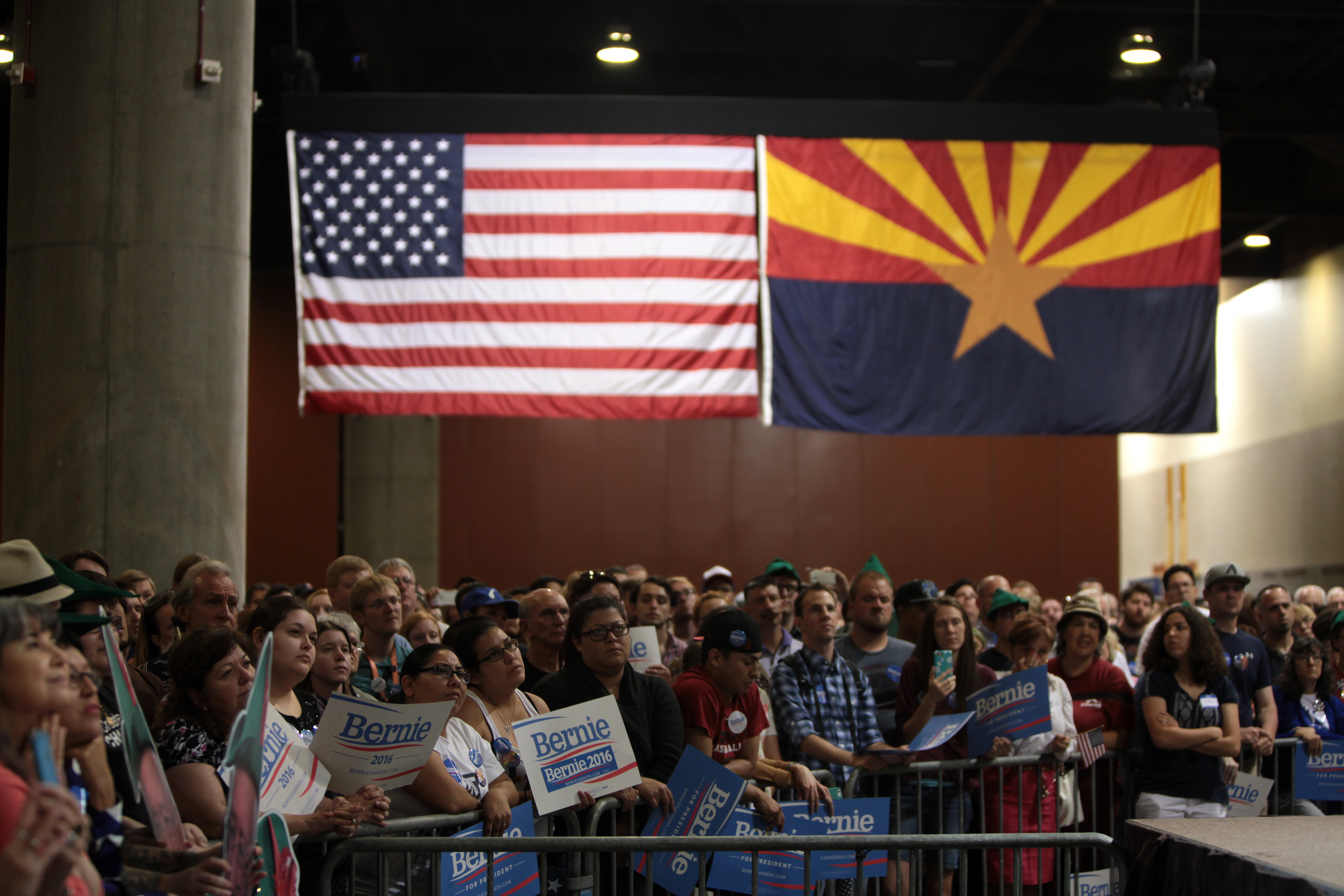
The 2028 elections will be the first test to see if Democrats can embrace a novel populist message. The roadmap is there. In 2016, Bernie Sanders demonstrated that a candidate armed with a clear economic message could mobilize swaths of working-class voters that mainstream Democrats had written off. His message of confronting Wall Street, corporate consolidation, low wages, and destructive trade deals resonated with rural and Rust Belt voters who felt abandoned during the Clinton-Obama era. As such, he accumulated wins in heavily white, rural counties in Michigan, Oklahoma, and West Virginia [15, 16].
The beginnings of this new wave are slowly taking shape, albeit with heavy corporate pushback. In New York City, Zohran Mamdani’s campaigns showed that left-populism could win across class and ethnic lines when framed around universal needs of affordability, healthcare, and childcare [17]. In the very rural areas where Democrats often struggle, Graham Platner has campaigned on a pro-worker and immigrant platform built around an anti-oligarch message. His messaging does not revolve around the same urban framing of New York City, but still utilizes the same core economic values.
As the 2028 cycle approaches, Democrats face a choice: continue appealing primarily to educated urban and suburban voters or rebuild a broad populist coalition that includes rural, working-class, and middle-class Americans. The winning strategy is the latter and can be composed in two ways.
First, actively show up in rural America. The occasional advertising campaign for selective campaigns that pique the interest of national Democrats will not cut it anymore. Democrats must rebuild from the ground up by supporting grassroots efforts and precinct development in addition to disseminating information through media that reaches rural voters.
Second, center every issue around a purely economic populist message. The broad talking points of an "opportunity economy” have not and will not reach voters. 2026, flowing into 2028, must include a platform built around aggressive antitrust enforcement, rural broadband and infrastructure, union protections, single-payer or near-universal healthcare, family affordability policies, and other policies that put people first. This would allow the party to build the narrative that Democrats are not bowing to corporate interests and have returned to the New Deal Democrats who fought for the working class.
The Argentine bailout was not just an isolated misstep by the Democratic Party. Consistently embracing globalization and prioritizing the urban electorate has resulted in unpopular policies, weak leaders, and frayed coalitions. The bailout controversy exposed what has long been true: Democrats have left millions of working and rural Americans behind. A party that once championed farmers and unions now only timidly criticized foreign aid that directly harmed American producers, because doing so more forcefully would require populist politics they no longer practice. Candidates like Mamdani and Platner have already shown that the appetite is there for policies that truly benefit the American people, but the path forward requires finally putting corporate neoliberalism in the rearview mirror for good.
Sources
[1] Lynch, David. J. “The U.S. Just Bailed out Argentina, Treasury Secretary Confirms.” The Washington Post. October 9th, 2025. https://www.washingtonpost.com/business/2025/10/09/argentina-receives-us-bailout/.
[2] FP News Desk. “Argentina Wins US-China Trade War with a $20 Bn Bailout and Soaring Soyabean Sale.” Firstpost. October 1st, 2025. https://www.firstpost.com/world/argentina-wins-us-china-trade-war-with-a-20-bn-bailout-and-soaring-soyabean-sale-13938403.html.
[3] Alabama Political Reporter Staff. “Rep. Sewell Leads 54 Democrats Asking for Answers on Argentina Bailout.” Alabama Political Reporter. October 22nd, 2025. https://www.alreporter.com/2025/10/22/rep-sewell-leads-54-democrats-asking-for-answers-on-argentina-bailout/.
[4] The Senate Democratic Caucus. “Leader Schumer Floor Remarks On Trump’s $20 Billion Bailout To Argentina Amid A Government Shutdown And Healthcare Crisis Here At Home.” The Senate Democratic Caucus. October 14th, 2025. https://www.democrats.senate.gov/news/press-releases/leader-schumer-floor-remarks-on-trumps-20-billion-bailout-to-argentina-amid-a-government-shutdown-and-healthcare-crisis-here-at-home.
[5] United States Committee on Banking, Housing, and Urban Affairs. “Warren, Colleagues Introduce Bill to Stop Trump’s Argentina Bailout.” United States Committee on Banking, Housing, and Urban Affairs. October 9th, 2025. https://www.banking.senate.gov/newsroom/minority/warren-colleagues-introduce-bill-to-stop-trumps-argentina-bailout.
[6] Benzow, August. “The Economic and Political Dynamics of Rural America.” Economic Innovation Group. January 10th, 2025. https://eig.org/rural-america/.
[7] DeSilver, Drew. “Electorally Competitive Counties Have Grown Scarcer in Recent Decades.” Pew Research Center. June 30th, 2016. https://www.pewresearch.org/short-reads/2016/06/30/electorally-competitive-counties-have-grown-scarcer-in-recent-decades/.
[8] Willbanks, Clinton and Michael E. Shepherd. “Texas in the Rear-View Mirror? How the Democratic Party Ignores Rural America and Underperforms in Elections.” Political Behavior. May 24th, 2025. https://doi.org/10.1007/s11109-025-10045-3.
[9] C-SPAN. “User Clip: For Every Blue-Collar Democrat We Lose…We Will Pick up Two…College-Educated Republicans.” C-SPAN. July 28th, 2016.. https://www.c-span.org/clip/public-affairs-event/user-clip-for-every-blue-collar-democrat-we-losewe-will-pick-up-twocollege-educated-republicans/5154759.
[10] Kaufman, Dan. “How NAFTA Broke American Politics.” The New York Times, September 3rd, 2024. https://www.nytimes.com/2024/09/03/magazine/nafta-tarriffs-economy-trump-kamala-harris.html.
[11] Jones, Sebastian and Marcus Stern. “The New Democrats: The Coalition Pharma and Wall Street Love.” ProPublica. October 25th, 2010. https://www.propublica.org/article/new-democrat-coalition.
[12] Hannah Hartig, Scott Keeter, Andrew Daniller, and Ted Van Green. “2. Voting Patterns in the 2024 Election.” Pew Research Center. June 26th, 2025. https://www.pewresearch.org/politics/2025/06/26/voting-patterns-in-the-2024-election/.
[13] Hannah Hartig et. al. “2. Voting Patterns in the 2024 Election.”
[14] CNN Staff. “Election 2024: Exit Polls.” CNN, November 5th, 2024. https://www.cnn.com/election/2024/exit-polls/national-results/general/president/0.
[15] The Boston Globe. “Oklahoma Democratic Primary.” The Boston Globe. n.d. https://apps.bostonglobe.com/election-results/2016/primary/democratic/oklahoma/.
[16] CNN Politics Staff. “Michigan Exit Polls.” CNN. March 8th, 2016. https://www.cnn.com/election/2016/primaries/polls/mi/dem.
[17] Rivard, Ry and Madison Fernandez. “Affordability, Affordability, Affordability: Democrats’ New Winning Formula.” Politico. November 5th, 2025. https://www.politico.com/news/2025/11/05/affordability-affordability-affordability-democrats-new-winning-formula-00637023.