
Sudan: More than a Civil War
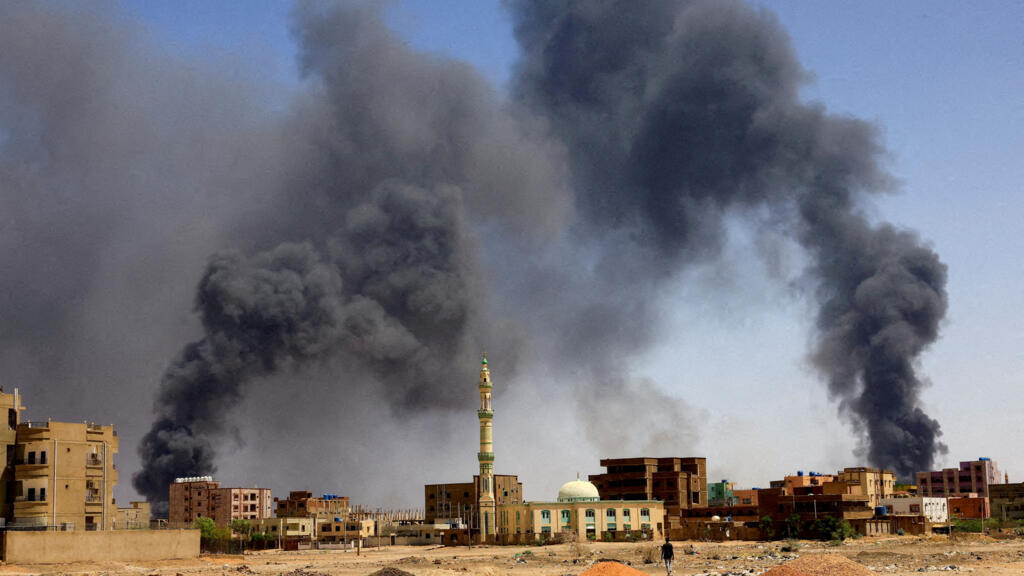
Anne Applebaum, a well-known writer for The Atlantic, characterized the war in Sudan as a nihilistic civil war between two power-hungry generals left to wreak havoc in the absence of a liberal order [1]. Concurrently, advocates have criticized the all-too-common attitudes that it is “just what happens in Africa”, a tragedy for which most outsiders have too much “compassion fatigue” to pay attention to [2]. Since April 2023, the struggle between the internationally recognized Sudanese Armed Forces (SAF) and paramilitary Rapid Support Forces (RSF) has killed upwards of 150,000, displaced 15 million, and resulted in countless massacres from Zamzam to El Fasher. Sudan and Genocide Watch have both accused the RSF of genocide of the Fur, Masalit, and Zaghawa ethnic groups as early as September 2023 [3,4]. In the face of these allegations, the United Arab Emirates (U.A.E.) has continuously provided weapons, funding, and mercenaries—themselves procured through intercontinental supply chains—to the paramilitary. As Emirati intervention in Sudan reshapes the balance of power throughout the entire Middle East, gold smuggled from RSF-controlled territory floods multinational markets. Although the war itself is confined within Sudan’s borders, international actors and networks have enabled it to become among the largest humanitarian crises of the century.
Out of the two warring parties, the RSF has committed atrocities far greater in both scope and scale, most notably during their recent takeover of the western city of El Fasher. Incorporated out of “Janjaweed” militias by former dictator Omar al-Bashir in 2013, the predominantly Arab paramilitary was initially deployed to suppress African rebel movements in the westernmost province of Darfur [5]. Bashir envisioned their purpose in “coup-proofing” his regime from a potential SAF mutiny, dividing military power between rival factions less likely to unite against him [6]. Indeed, this rivalry was quick to form, with reformists within the army in 2014 describing their RSF counterparts as “paid great incentives” while engaging in “banditry, rape, and cold-blooded killings [7].” While Bashir’s strategy ultimately failed with his overthrow and arrest in 2019, the animosity between the SAF and RSF continued as they split power in the post-revolution Transitional Military Council.
In the decade before fighting broke out in 2023, the RSF’s acquisition of gold mines and trade partnership with the U.A.E. catalyzed its expansion. Ever since deposits were discovered in Darfur in the early 2010s, the primary importer of Sudan’s gold exports––estimated at $16 billion a year—has been the U.A.E. [8,9]. In 2017, Bashir deployed the RSF to take control of Darfur gold mines from opposing militias, where their leader, Mohamed Hamdan “Hemedti” Dagalo, has since accumulated upwards of $7 billion mostly through his gold company Al-Junaid [10]. On top of the Emirates serving as the recipient of this gold, business was conducted through shell companies based in the Emirates, per documents released by Sudanese news publication Al-Bashoum [11].
Since at least 2019, the U.A.E. has supplied the RSF with advanced weaponry. While the first Janjaweed traversed the country on horses and camels, the modern RSF has imported quadcopter drones, long-range missiles, and Toyotas with mounted machine guns in their arsenal [12]. Additionally, U.A.E.-supplied weapons have caused significant infrastructural damage done to Port Sudan and Kassala—cities far beyond RSF-controlled territory [13]. While the war could have broken out with no external intervention—as the Janjaweed’s history shows that they have no aversion to conflict and genocidal violence—exchanges of gold for weapons facilitated by the U.A.E. dramatically increase the loss of life undertaken by the Sudanese people.
Alongside their role as an economic associate, the RSF has transformed into a formidable political and military partner of the U.A.E. and their allies. During the Yemeni civil war from 2015-2019, Hemedti had sold the services of 15,000 of his mercenaries to the Saudi-led coalition against the Houthis, where the Yemeni National Commission for Women specifically called them out for committing sexual atrocities [14, 15]. A year later, the U.A.E. reciprocated, utilizing its leverage over aid to lobby extensively for the interim, post-revolution Transitional Military Council to place Hemedti in a leadership position [16]. Outside of the U.A.E., the European Union hired the RSF for $200 million to act as border patrol, blocking migrants from Sudan and East Africa from reaching the Mediterranean Sea [17]. Yet as these temporary mercenary contracts were completed, the RSF was forced to venture into new markets for its services or face the possibility of disarmament. Sudanese scholar Magdi El Gizouli asserts that the paramilitary—essentially a business entity—had to “expand or die”, but had “nowhere to expand except by capturing the state. [18]” Unhindered involvement in foreign conflicts contributed to the unstable growth of the RSF that could only be neutralized through an all-out civil war.
As it assisted the RSF in seizing state control, the U.A.E. seeks to counter the “political Islamist” ideology of the Iran-led “Axis of Resistance” and prevent Sudan from joining it. Africa Confidential reports that as early as 2022, Emirati President Mohamed Bin Zayed al Nahyan was worried about the growing influence of Islamism in the Sudanese army a year before the war broke out [19]. However, these desires of the U.A.E. to curb this supposed Islamism in Sudan have implications in nearby countries as well, such as Palestine. In May 2025, prominent Emirati political analyst and close confidant of royal families Amjad Taha stated in the Jerusalem Post that the SAF—which receives military and diplomatic support from Iran—is the “Hamas of Africa” and must be defeated for the security of Israel [20]. From his perspective, losing Sudan to Iran’s influence would disrupt the regional balance of power, and endanger the crucial Red Sea in global commerce. Despite not mentioning the RSF in that article, Taha would later repost a tweet from Hemedti’s brother and RSF official Algoney Dagalo [21]. Though neither Taha’s nor Bin Zayed’s concerns should be uncritically accepted, they showcase that the consequences of a victory on either side would have geopolitical implications that extend far beyond the borders of Sudan.
As the regional interests of the U.A.E. align with those of the United States, they received minimal American pushback for their support of the RSF until October 2025. Moreover, under President Trump, the U.A.E. has emerged as a partner in the development of artificial intelligence, pledging to invest $1.4 trillion in the U.S. economy in the next ten years [22]. As tension in the U.S.-U.A.E. relationship could be detrimental to both America’s regional rivalry with Iran and technological rivalry with China, Trump has referred to them as a partner for peace, diluting their actual impact in prolonging the war [23]. Darfuri opinion columnist Mohammed Al-Hassan expressed that the U.S. criticism and sanctions directed at the Sudanese army were misplaced, given the far greater volume of the RSF’s crimes [24]. However, given the United States’ and Emirates’ mutual opposition to Iran, he understands that an SAF victory would not serve American geopolitical interests in the region.
While the U.A.E. is the only significant power to provide direct material support to the RSF, the supply chains of gold, weapons, and mercenaries extend far outside of its borders. The flow of gold smuggled from Sudan, for one, does not end in the markets of Dubai. In 2025, the U.A.E. itself exported $53 billion worth of gold up from a meager $28 billion in 2021, before the war [25, 26]. The primary buyers of this gold have been the United Kingdom, India, and foremostly Switzerland, which notably saw imports from the U.A.E. double in 2025 [27]. Instead of the international gold market losing Emirati “conflict minerals” often mined by the RSF, it has greatly rewarded it for its lucrative yet bloody intervention in Sudan.
While the U.A.E. possesses a small but expanding defense manufacturing sector, many of the weapons it provides the RSF are themselves imported on the international market. From the limited documentation of the RSF’s arsenal, experts have identified Chinese guided missiles and Israeli long-range artillery, with the former having been almost certainly transferred by the U.A.E. [28, 29]. After the paramilitary’s massacres in El Fasher, people around the world have started boycotts and protests against the U.A.E. [30]. While halting arms transfers to the U.A.E. would not immediately stop weapons shipments to the RSF, it could mitigate the militia’s long-term capabilities for infrastructural damage, alongside placing economic pressure on the Emirates to cease their support. Amidst these calls, however, American defense contractor Anduril entered a $200 million partnership with the U.A.E.’s state-owned EDGE Group to construct autonomous quadcopter drones for both nations’ arsenals [31]. Similar to the lack of reaction from the international gold market, continued Emirati partnerships with foreign weapons companies encourage rather than punish their conduct in Sudan.
The final international trend that shaped both the initial development and current disposition of the RSF is the worldwide market for paid mercenaries. Cameroonian scholar Achille Mbembe argues that the proliferation of privately operated militias in recent decades erodes states’ capacity to end political violence, particularly in Africa [32]. As mentioned previously, the initial expansion of the RSF was motivated by a market for mercenary services abroad in Yemen and the European Union. In this current war, the RSF itself has become quite dependent on training and support from Colombian mercenaries, later confirmed to have been contracted by a company in the U.A.E., illustrating the extent to which foreign soldiers-for-hire have become embedded in the conflict [33]. The de facto permissibility of mercenaries in the current world order has both warranted the previous expansion of the RSF and the foreign assistance they have received, further prolonging the conflict.
What Can Be Done?
Sudanese people have expressed mixed feelings about the ceasefire proposal advocated by the Quad of Egypt, Saudi Arabia, the United States, and the United Arab Emirates, perceiving it to grant concessions to the RSF. Sudanese satirical publication Al Bashoum mocked it as a sham and appeasement which the RSF immediately accepted [34]. Abdel Fattah Al-Burhan, the leader of the military, slammed it as “the worst proposal ever,” incapacitating the internationally recognized government while allowing the RSF to govern even after the atrocities in El Fasher [35]. He specifically called out U.S. advisor Massad Boulous as “an obstacle for peace,” further citing that any Emirati involvement in drafting a proposal solicits inherent bias.
Despite a lack of quantitative polling data, the reactions of residents in cities and towns that have changed hands since the war started display solidarity against the RSF. When the SAF liberated the entirety of Khartoum, news outlets reported celebrations among the citizens, such as a 56-year-old man who remarked, “The RSF looted, tortured, humiliated, lashed, and did every possible evil to us. I can’t believe they’re gone. We’ve come back from hell.’’ [36] Meanwhile, accounts of celebration of RSF takeovers have been extremely limited, occurring in cities deep within RSF territory, primarily of families of living and slain combatants [37].
Numerous Sudanese people, despite potential criticisms of the SAF and allied militias, see the removal of the RSF as a necessary step in the country’s future. Sudanese opinion columnist Yasir Arman feels that the vision of its Islamist faction does not include the entire population, and hinders national development despite nominal opposition to western influence [38]. As many of these Islamists draw from the “Kizan” of the oppressive Bashir regime, many citizens seek an end to military rule after the conclusion of the war. These criticisms of the SAF’s flaws, however, are certainly not in the same vein as those from the U.A.E. and RSF, but rather secondary contentions within a united front against them. El-Gizouli noted that the “common necessity of resisting the violent onslaught of the RSF” is the primary duty of all Sudanese [39].
While Applebaum noted the absence of international oversight as a factor in this war, there are ways in which it could be leveraged to serve Sudan [40]. Firstly, a complete halt of illegal gold exports to and from the U.A.E. could sever the RSF’s primary stream of income. Additionally, with enough taxable raw materials remaining in the country, a post-war government would be less compelled to make concessions to private individuals like Hemedti who wield economic influence. Secondly, the de facto abolition of mercenary services is crucial to limiting the power of non-state warlords like Hemedti. Despite a UN rule abolishing recruitment, use, training, and financing of mercenaries, the lack of enforcement in practice leaves much room for the industry to thrive from Sudan to Colombia to the U.A.E. [41]. As the UN has no power to enforce its own conventions, individual governments are responsible for curtailing the existence of mercenary activity within their respective countries. Without the possibility of smuggling gold or selling mercenary services, the systematic conditions that initially spawned the RSF would be pulled from the foundation of Sudanese and global society.
While the original division of the armed forces was set in place by Bashir, and the massacres of El Fasher’s civilians conducted by RSF commander Abu Lulu, international exchanges and geopolitical alliances have discreetly enabled the current war’s magnitude of violence and destruction. Emirati intrusions, with silent permission from the global community for two years of war, transformed the camels and horses of the Janjaweed into the kamikaze drones and machine-gun Toyotas of the modern RSF. Yet, far from the borders of the U.A.E., Swiss gold buyers, E.U. immigration officials, and U.S. diplomats seeking skewed ceasefire proposals have, in their own ways, contributed to the conditions that led to the onset and proliferation of the violence. Sudan is far from a hopeless or inevitable tragedy, but the result of privately-funded warfare generating billions of dollars, and geopolitical ambitions taking priority over human lives. From defeating the RSF, to restoring civilian rule, to rebuilding damaged infrastructure, there is certainly much work ahead in creating a prosperous Sudan. Yet many Sudanese remain hopeful for the road ahead. Youth activist Fatima Issa expressed that “the real solution must come from within, from the street, resistance committees, women, displaced people, and refugees, and from the voices that reflect the suffering of the Sudanese people." [42]
Sources
Photo by Mohammed Nureldin Abdallah, https://www.lemonde.fr/en/le-monde-africa/article/2025/04/16/sudan-a-victim-of-the-greed-of-foreign-powers_6740275_124.html
[1] Applebaum, Anne. “The Most Nihilistic Conflict on Earth.” The Atlantic. August 6th, 2025. https://www.theatlantic.com/magazine/archive/2025/09/sudan-civil-war-humanitarian-crisis/683563/.
[2] Tinsley, Rebecca. “The United Nations Fails Sudan, Again”. Genocide Watch. January 31st, 2025. https://www.genocidewatch.com/single-post/the-united-nations-fails-sudan-again.
[3] Gungor, Yasin. “Sudan accuses RSF of ‘genocide’, demands more than ‘expressions of concern’”. Anadolu Ajansi. December 10th, 2025.
https://www.aa.com.tr/en/middle-east/sudan-accuses-rsf-of-genocide-demands-more-than-expressions-of-concern/3766835#:~:text=Khartoum%20urges%20international%20community%20to,decisive%20measures%20to%20protect%20civilians.%22
[4] Michael, Maggie, and McNeil, Ryan. “RSF Arabs Kill Thousands In New Darfur Genocide”. Genocide Watch. September 22nd, 2023.
https://www.genocidewatch.com/single-post/rsf-arabs-kill-thousands-in-new-darfur-genocide-sudan
[5] Department for General Assembly and Conference Management. “Janjaweed Militias.” United Nations. September 15th, 2004.
https://unterm.un.org/unterm2/en/view/d5eb4654-b0ed-4f5c-894d-92a33e2d574d.
[6] Mahé, Anne-Laure. “The Security Apparatus and Political Transition in Sudan.” Institut de Recherche Stratégique de l’École Militaire
. September 5th, 2019. https://www.irsem.fr/storage/file_manager_files/2025/03/rp-irsem-78.pdf.
[7] Radio Dabanga Staff. “Sudanese Army Reformists Scorn RSF Militias.” Radio Dabanga. April 6th, 2014.
https://www.dabangasudan.org/en/all-news/article/sudanese-army-reformists-scorn-rsf-militias.
[8] Smith, Patrick. “Sudan: Hemeti and the $16bn annual gold exports to the U.A.E..” The Africa Report. January 12th, 2021. https://www.theafricareport.com/55662/sudan-the-central-role-of-the-gold-trade-in-its-politics/.
[9] Swissaid Staff. “United Arab Emirates: More Than Ever a Hub for Conflict Gold.” Swissaid. November 4th, 2025. https://www.swissaid.ch/en/media/united-arab-emirates-more-than-ever-a-hub-for-conflict-gold/.
[10] Abdelaziz, Khalil, Georgy, Michael, and Maya El Dahan. “Exclusive: Sudan militia leader grew rich by selling gold.” Reuters. November 26th, 2019. https://www.reuters.com/article/world/exclusivesudan-militia-leader-grew-rich-by-selling-gold-idUSKBN1Y01DQ/.
[11] Al-Bashoum. Facebook. September 10th, 2019. https://www.facebook.com/photo/?fbid=2118631605109308&set=pcb.2118631791775956.
[12] Donovan, Nick, Kent, Richard, and Mohamed Aboelgheit. “How the RSF Got Their 4x4 Technicals.” Global Witness. April 5th, 2020.
https://globalwitness.org/en/campaigns/conflict-resources/how-the-rsf-got-their-4x4-technicals-the-open-source-intelligence-techniques-behind-our-sudan-expose/
[13] Radio Dabanga Sudan Staff. “Renewed RSF drone strikes across Sudan.” Radio Dabanga Sudan. October 15th, 2025.
https://www.dabangasudan.org/en/all-news/article/renewed-rsf-drone-strikes-across-sudan.
[14] Neves, Yuri. “Saudi Arabia’s Sudanese Mercenaries in Yemen.” Georgetown University Security Studies Review. February 24th, 2019. https://georgetownsecuritystudiesreview.org/2019/02/24/saudi-arabias-sudanese-mercenaries-in-yemen/.
[15] Saba Yemen News Agency Staff. “National Commission for Women Condemns Woman’s Rape by Sudanese Mercenary.” Saba Yemen News Agency. April 29th, 2019. https://saba.ye/en/news534656.htm.
[16] Gallopin, Jean-Baptiste. “The Great Game of the U.A.E. and Saudi Arabia in Sudan.” Project of Middle East Political Science. https://pomeps.org/the-great-game-of-the-U.A.E.-and-saudi-arabia-in-sudan
[17] Enough Project Staff. “Border Control From Hell: How the EU’s migration partnership legitimizes Sudan’s militia state. Enough Project. April 6th, 2017. https://reliefweb.int/report/sudan/border-control-hell-how-eus-migration-partnership-legitimizes-sudans-militia-state.
[18] Gizouli, Magdi el. “Marketing War.” By Adam Benjamin. Phenomenal World. September 30th, 2023. https://www.phenomenalworld.org/interviews/magdi-el-gizouli/
[19] “Burhan lets the Islamists back in.”.Africa Confidential. May 12th, 2022. https://www.africa-confidential.com/article/id/13935/Burhan_lets_the_Islamists_back_in
[20] Amjad Taha and Eitan Neishlos. “Hamas’ next front? Sudan’s Islamist army and the African threat to Israel.” The Jerusalem Post. May 4th, 2025. https://www.jpost.com/opinion/article-852544
[21] Daglo, Algoney (@AlgoneyHD). 2025. “I was one of the admirers of Charlie Kirk and his Show, America has lost a brave and uncompromising voice. I extend my heartfelt condolences to his family…” Twitter. September 15th, 2025. https://x.com/AlgoneyHD/status/1967636112123322444/.
[22] Warner, Kelsey. “U.A.E. pledges $1.4 trillion investment in US.” Semafor. March 24th, 2025. https://www.semafor.com/article/03/24/2025/U.A.E.-pledges-1-trillion-investment-in-us-artificial-intelligence-semiconductors-energy.
[23] France 24 Staff. “Trump pledges to end Sudan war, marking major shift in US Stance.” France 24. November 20th, 2025. https://www.france24.com/en/africa/20251119-trump-pledges-to-end-sudan-war-marking-major-shift-in-us-stance.
[24] Al-Hassan, Mohammed Nour. “A Return To US Sanctions... An AccusationWithouIInvestigatioB Blatant Bias, and a Flagrant Violation.” Sudan UON Media. June 30th, 2025. https://sudanuonmedia.net/84241.
[25] MUNA Bulletin Staff. “U.A.E. Gold Exports Exceed $53 Billion in 2024-25.” MUNA Bulletin. July 4th, 2025. https://eng.munabulletin.com/muslim-world/news/1238.
[26] Bunker Group Staff. “Gold Export And Import in 2021.” Bunker Group. November 2nd, 2022. https://bunker-group.com/en/blog/gold-export-and-import-in-2021#:~:text=U.A.E..,purchases%20and%20sales%20in%20U.A.E..
[27] Soguel, Dominique. “As Sudan’s agony deepens, scrutiny sharpens on U.A.E. gold.” Swiss Broadcasting Corporation (SBC). November 5th, 2025. https://www.swissinfo.ch/eng/international-geneva/sudan-war-U.A.E.-gold-trade-geneva/90284839.
[28] Amnesty International Staff. “Sudan: Advanced Chinese weaponry provided by U.A.E. identified in breach of arms embargo – new investigation.” Amnesty International. May 8th, 2025. https://www.amnesty.org/en/latest/news/2025/05/sudan-advanced-chinese-weaponry-provided-by-U.A.E.-identified-in-breach-of-arms-embargo-new-investigation/.
[29] Abdul, Kazim. “Israeli artillery seen with RSF forces.” Military Africa. October 7th, 2023. https://www.military.africa/2023/10/israeli-artillery-seen-with-rsf-forces/.
[30] Joshi, Shradda. “Activists call for U.A.E. boycott over its backing for the RSF in Sudan.” Middle East Eye. April 21st, 2025. https://www.middleeasteye.net/news/activists-call-U.A.E.-boycott-sudan-rsf.
[31] Anduril Industries Staff. “EDGE Group and Anduril to Form U.A.E.-US Joint Venture to Develop Autonomous Systems”. Anduril Industries. November 12th, 2025. https://www.anduril.com/news/edge-group-and-anduril-to-form-U.A.E.-us-joint-venture-to-develop-autonomous-systems.
[32] Mbembe, Achille. “Necropolitics.” Public Culture. January 1st, 2003. https://warwick.ac.uk/fac/arts/english/currentstudents/postgraduate/masters/modules/theoryfromthemargins/mbembe_22necropolitics22.pdf
[33] The Sentry Staff. “Sudan Mercenaries Linked to Business Partner of Top U.A.E. Bureaucrat.” The Sentry. November, 2025. https://thesentry.org/reports/sudan-mercenaries-rsf-U.A.E.-bureaucrat/.
[34] Al Bashoum. “من أجل عشرات الأجانب وبعض الكلاب والقطط وزجاجات …” Facebook. October 27th, 2025. https://www.facebook.com/B3SHOM/posts/pfbid02TpVMrAJai6UHf4YqpguQ3AUoPsk86a2K6jZu1nwycLZzAse2hiUkcNeEaxaxj5jUl?.
[35] Al Mayadeen Staff. “Burhan slams US envoy, rejects U.A.E. role in Sudan mediation”. Al Mayadeen. November 23, 2025. https://english.almayadeen.net/news/politics/exclusive--burhan-slams-us-envoy--rejects-U.A.E.-role-in-sudan.
[36] Amin, Mohammed. “‘We’ve come back from hell’: Sudanese jubilant after army retakes Khartoum from RSF.” Middle East Eye. March 27th, 2025. https://www.middleeasteye.net/news/sudanese-jubilant-after-army-retakes-khartoum-rsf-militia.
[37] Darfur24 Staff. “Citizens Celebrate After RSF Partially Seizes Control of El Fasher”. Darfur24. October 27th, 2025. https://www.darfur24.com/en/2025/10/27/citizens-celebrate-after-rsf-partially-seizes-control-of-el-fasher/.
[38] Arman, Yasir. “Sudan’s democratic movement grapples with war, a new world order”. Sudan Tribune. October 23rd, 2025. https://sudantribune.com/article/306313.
[39] El Gizouli, Magdi. “Schemers of Sudan: not over, not just yet.” Still Sudan. April 22nd, 2025. https://stillsudan.blogspot.com/2025/04/schemers-of-sudan-not-over-not-just-yet.html.
[40] Applebaum, Anne. The Most Nihilistic Conflict on Earth.
[41] “International Convention against the Recruitment, Use, Financing, and Training of Mercenaries." United Nations. December 4th, 1989. https://www.ohchr.org/en/instruments-mechanisms/instruments/international-convention-against-recruitment-use-financing-and.
[42] Amin, Ramadan. “The hopes of Sudan’s youth in 2026: A complete end to the war and a fully civilian state.” Radio Dabanga Sudan. December 31, 2025. https://www.dabangasudan.org/en/all-news/article/the-hopes-of-sudans-youth-in-2026-a-complete-end-to-the-war-and-a-fully-civilian-state