
Performative Governance in Indonesia’s August 2025 Protests
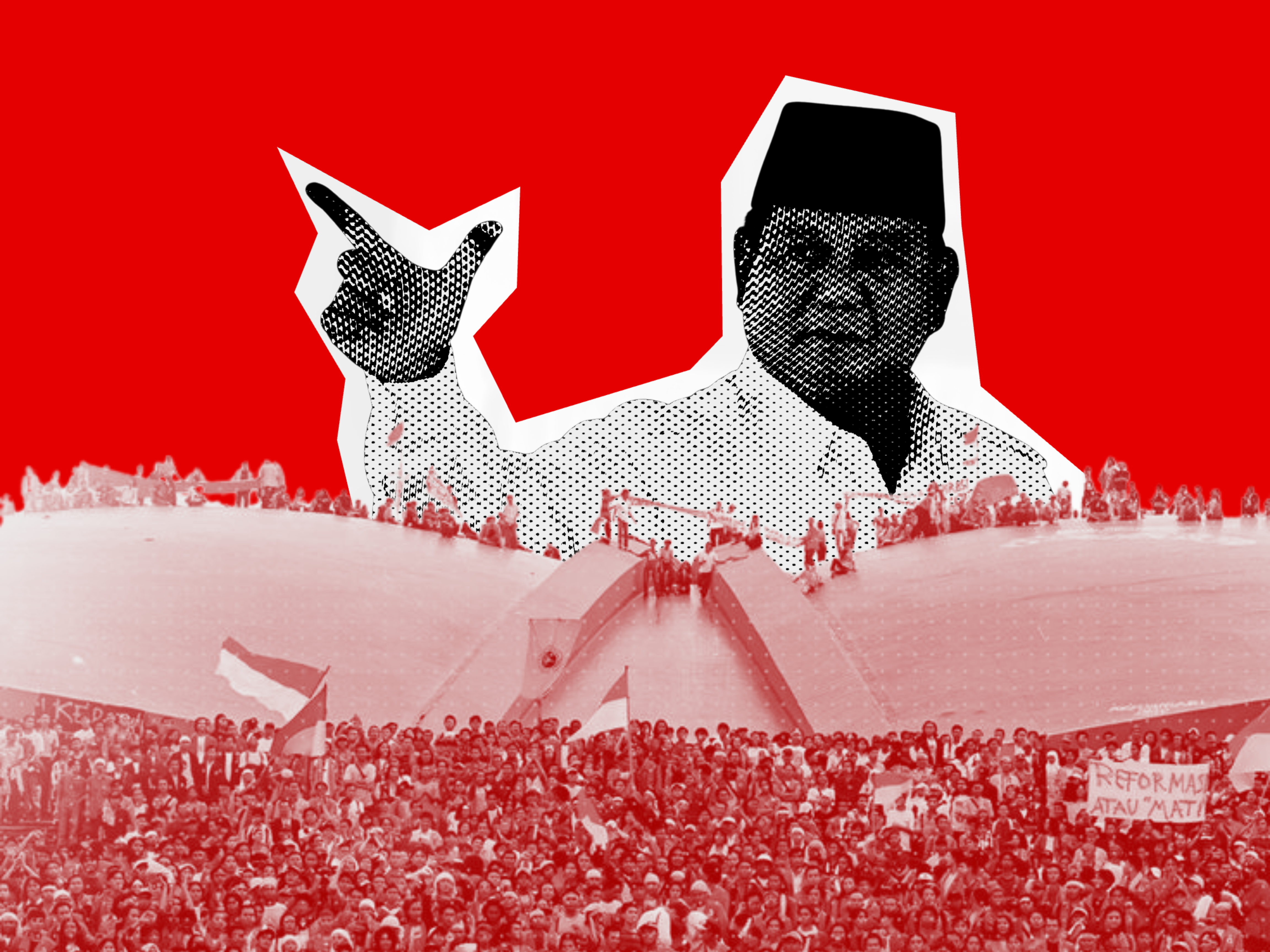
In August 2025, Indonesia’s parliament proposed increasing the housing stipend for politicians to approximately $3,000 USD per month, 10 times the minimum wage in Jakarta [1]. Amid budget and subsidy cuts, rising living costs, higher property taxes, and public-sector layoffs, the proposal drew widespread criticism for prioritizing the interests of parliamentarians and elected officials over public needs. Demanding accountability, transparency, and economic justice, what followed was a barrage of riots and escalation fueled by both economic grievances and a widened class divide between Indonesia’s ruling elites and average citizens [2]. Unfortunately, fears of insurrection claims and persecution weakened protest momentum in the country, and the government acknowledged only a handful of grievances with symbolic agreements or short-term promises that had minimal impact.
In examining the outcomes of the August 2025 anti-government mass dissent in Indonesia, weaknesses emerge in the government's commitments to addressing protesters' grievances, raising concerns about its performative commitment to democracy and the country’s broader democratic backsliding. As corruption and dynastical politics continue to undermine these commitments, their institutionalization creates a self-perpetuating cycle of symbolic compliance that buries substantive reform. Therefore, given the deep entrenchment of illiberal control within local oversight institutions, independent third-party actors should serve as checks and balances to strengthen accountability mechanisms needed to address public grievances fully.
Authoritarian Pasts & Authoritative Presents
Despite being considered a democratic state today, Indonesia holds authoritarian precedents in its early sovereign development, many of which have become influential legacies in its bureaucracies today.
In Indonesia, the rule of former President Suharto remains a defining example of the country’s historical authoritarianism. With a background in the Indonesian security forces during the Japanese occupation and later as a major general in the newly formed national military after independence, his iron-fisted rule emerged in the aftermath of a failed coup [3]. During his presidency from 1967 to 1998, Suharto consolidated his power through a military-dominant government that centralized his authority and undertook major political and economic restructuring known as the New Order [4].
His foundation of governance came from an Indonesian-coined political ideology called Pancasila which promoted values like a monotheistic perspective on religion, human rights, equality, social justice, consensus-based democracy, and national unity [5]. Nevertheless, under the guise of the betterment of the country, Suharto leveraged the ideology’s vague terms to pursue his own agenda and labeled his critics and dissenters as anti-Pancasila, casting them as traitors to the state [6]. This was evident during his anti-Communist purge, when he blamed the Indonesian Communist Party (PKI) for the coup attempt to remove former President Sukarno [7]. When rising fears of Communist popularity threatened his hold on power, he dissolved the PKI and later used the military to set on an anti-Communist purge, killing as many as a million Indonesians [8].
While Suharto remains a controversial figure in Indonesia’s past, his legacy continues to shape the country’s bureaucracy and governance. In particular, parallels emerge between Suharto’s approach to dissent and that of current President Prabowo Subianto. In 2024, Prabowo reinstated the practice of “dwifungsi” or dual function, which permits active military personnel to serve concurrently in civilian government while retaining military command—previously institutionalized under Suharto [9]. As an indirect byproduct of this militarized-bureaucracy shortcut, Prabowo can also consolidate military and civilian power to efficiently suppress dissent, including protests. This dynamic became evident during the August 2025 protests, when Prabowo authorized the deployment of the Indonesian National Armed Forces (TNI) to suppress unrest, resorting to more militarized measures and thereby overshadowing the authority of other law-enforcement institutions, including the National Police (Polri) [10]. While Prabowo has taken a more acknowledging stance by reversing the housing stipend proposition, the reliance on authoritative protest-curbing practices reflects a preference for control rather than the democratic norms of constructive public engagement.
Dynastical Politics & Intragovernmental Alliances
Shaped by precedents of authoritarian power, Indonesian political actors prioritize aligning with those in power and cautiously managing opposition rather than upholding competitive democracy. While this may reinforce political stability, the extension creates party alliances and, particularly within Southeast Asia, dynastic politics among families that help sustain informal understandings or “toxic alliances” among themselves to ensure the mutual continuance of their own powers [11].
An example of this relationship exists in the current Prabowo government, particularly through Vice President Gibran Rakabuming Raka. At age 36, Gibran became the youngest vice president in the country’s history following a controversial 2023 decision that permitted candidates under 40 to enter the presidential race only if they previously held an elected regional position [12]. Anwar Usman—the former Chief Justice of the Constitutional Court and Gibran’s uncle—directly influenced the court proceedings that allowed Gibran to enter the candidacy pool. [13]. In fact, it was President Joko Widodo, Gibran’s father and Anwa’s brother-in-law, who appointed him to the judicial seat [14]. With a nepotistic network entrenched in both the executive and judicial branches, such rulings and policies are ensured to protect familial interests and consolidate power [15].
With multiple political dynasties, parties, and actors operating within the same bureaucratic sphere, relations are strategically negotiated to ensure each retains power. This relationship further evolves into alliances over time, fostering a non-competitive democracy. While abandoning their political commitments and values in pursuit of staying in power may appear counterintuitive, such pragmatism reflects the legacy of authoritarian governance that many Indonesian politicians accept as a compromise. This pattern is evident in the changed relationship between Prabowo and Widodo. Early in his career, Prabowo challenged Widodo in the 2014 and 2019 presidential elections and even contested the legitimacy of the 2014 results [16]. Despite this heated rivalry, Prabowo later joined Widodo’s administration as Minister of Defense during the second term [17]. With Gibran as his vice president, Prabowo retains political power with the highest executive position, even if it means compromising or consolidating political agendas with a former family foe.
However, this does not mean that political stances fully converge. Instead, political actors shift alliances based on the strength and popularity of leaders or groups determined during elections. In a parliamentary system, forming coalitions is a move to outmaneuver rivals and gain a majority of votes for political advantage. However, there has never been a clear party majority outside of Suharto’s authoritarian period [18]. As such, for legislation to pass, parties depend on coalitions to carry the votes over the majority threshold.
This toxic alliance in which actors depend on each other’s votes incentivizes opposition parties to join government coalitions for patronage rather than to provide checks and balances. In doing so, political elites engage in such arrangements to share power, minimize volatility, and maximize benefits, which, in turn, allows the ruling party to pass legislation as it sees fit so long as it secures the support of a parliamentary majority through appeasement—for example, by introducing a new housing stipend for all members of parliament.
Yet, if Indonesia’s political system is heavily determined by alliances, why is it that the people cannot collectively form a new political party to challenge the status quo? Indonesia’s strict party-formation requirements significantly raise the cost of entry and discourage plans from moving forward [19]. Over time, such dynastic politics and alliances evolve into “party cartelization,” where many of Indonesia’s political actors deliberately weaken opposition by pre-determining election outcomes for a desired candidate [20].
Lobbying & Corruption
On top of shared-power interests, lobbying incentivizes public-private partnerships that sustain parliamentary members in power at the expense of government-ensured privileges for interest groups.
Similar to party alliances, parliamentary members maintain transactional relationships with non-governmental parties. For many Indonesian businesses and the tycoons, the outcomes of presidential and parliamentary elections will determine their agendas based on how unrestrictive the new government is with their business decisions [21]. By sponsoring election campaigns, such endorsements help broaden public presence and electoral support. In exchange, once an endorsed candidate takes office, groups can leverage their established relationship to secure government-ensured privileges or advance their agendas. During the COP30 climate conference, Indonesia faced criticism for inviting pro-fossil-fuel lobbyists who echoed opposition to stringent carbon regulations, earning the satirical “Fossil of the Day” label for the perceived hypocrisy between its paradoxical climate rhetoric [22]. Thus, these lobbying efforts shift focus toward business-oriented privileges that can impede politicians’ commitments to actually address the people’s grievances.
Nevertheless, lobbying efforts take time and investment in candidates. Consequently, corruption becomes a quicker route that enterprises can choose by illicitly funding politicians to address their issues. In the absence of an instrumental opposition that can ensure checks and balances, the line between lobbying and corruption has become very blurry. This creates an easy incentive to cross into corrupt territory to advance business goals and gain political advantage.
The case of politicians accepting bribes disguised as lobbying efforts is not an uncommon occurrence in Indonesia, and only high-profile cases are truly brought to justice as a means to legitimize their haphazard commitments [23]. For example, a corruption case involving Indonesia's state-owned oil and natural gas corporation Pertamina, which cost the state an estimated $11 billion USD due to poor crude oil management, led authorities to prosecute top executives and investigate the Ministry of Energy and Mineral Resources [24]. Yet, despite these high-profile actions, practices such as bribing law enforcement remain pervasive [25]. This lack of anti-corruption oversight prompts parties to engage in petty corruption and progressively gamble on higher-stakes abuses, knowing that the odds of evading accountability remain in their favor.
However, it is important to note that Indonesia’s parliament previously held up norms against corruption. In 2001, the People’s Consultative Assembly (MPR) impeached and removed former President Abdurrahman Wahid following allegations of misuse of state funds and after he attempted to dissolve the country’s legislative body [26]. Nevertheless, given the new political climate shaped by the 2024 elections, it remains uncertain whether similar accountability mechanisms would function as effectively under today’s consolidated elite alliances.
National Industrial Investments
It is through these lobbying efforts and investments that private interest groups incentivize the Indonesian government to pursue large industrial projects in the pursuit of hegemony over the country’s development. As an emerging market, Indonesia’s economic development depends on national initiatives that promise growth, such as infrastructure, education, and healthcare [27]. While these investments offer long-term developmental benefits in principle, they also divert funding away from other government programs, such as public welfare, toward initiatives that better serve the interests of lobbyists and politicians [28]. As such, many fail to address public grievances such as Indonesia’s job insecurity and poverty at its provincial and local levels [29].
The government’s decision to construct Indonesia’s new capital, Nusantara, enters the debate over whether directing public funds toward an ambitious infrastructure project is a prudent use of national resources. Since 2022, the relocation of Indonesia’s capital from Jakarta to Nusantara has been driven by concerns about land subsidence and severe overpopulation, pushing for sustainable infrastructure systems through eco-smart cities [30]. Yet, spending tens of billions of dollars, the project raises questions about opportunity costs amid persistent social and economic needs [31]. While proponents argue that Nusantara alleviates Jakarta’s overpopulation and flooding pressures, the design of the new capital is also with the government’s security and administrative control in mind. Situated on Borneo near Indonesia’s geographic center, Nusantara symbolically reinforces the state’s vision of centralized oversight across the archipelago. Amid ongoing unrest in Indonesia’s eastern regions, where separatist insurgencies in Papua continue to challenge state authority, Nusantara can hold more oversight and control over politically unstable districts [32].
Borneo’s sparse population further reinforces Nusantara’s isolation. Although counterintuitive to a city’s urbanization, the new capital addresses security concerns from the August 2025 protests. Particularly, many riots escalated where demonstrators set fire to a parliamentary building, while others looted politicians’ homes to expose their lavish lifestyles [33]. By situating Nusantara far from Java’s population centers, policymakers reduce the likelihood that large crowds can physically confront the government in the short term, making collective protest more difficult and costly. Crucially, the capital city has the potential to grow into another metropolis, like its predecessor, Jakarta, where such growth can carry the risk of producing a population capable of overcoming collective action problems and publicly confronting the government. However, limited primarily to government buildings and residences, its recent downgrade to a purely political capital demonstrates that the current infrastructure can sustain only bureaucratic operations [34]. Consequently, significant public urban growth—and, by extension, collective political mobilization to address grievances—is unlikely in the short term.
Third-Party Checks & Balances?
Considering the depth of illiberal entrenchment that persists in Indonesia’s governance, introducing third-party actors as accountability mechanisms can curb weak oversight and abuses of power. These mechanisms could take several forms, such as allowing international or domestic non-governmental organizations to audit government institutions or participate in bureaucratic processes such as election vote-counting. However, this can only function credibly alongside a strong and independent judiciary, in which the government is held accountable for shortcomings.
A comparative example comes from Mexico, where its National Electoral Institute (INE) operates independently of the executive branch to oversee elections and ensure electoral and campaign transparency [35]. By restricting any political interference from the government, the INE has strengthened public trust and reduced opportunities for incumbent manipulation [36]. A comparable institution in Indonesia—granted autonomy, enforcement capacity, and legal protection—could address persistent party cartelization by establishing electoral rules on coalitions and party registration requirements. For example, lowering barriers and associated costs to party formation can expand political participation and help diversify Indonesia’s parliament from entrenched coalitions.
While recent events have placed the INE under scrutiny, each country’s democratic context remains distinct, and Mexico’s current challenges do not necessarily predict similar outcomes in Indonesia. As Indonesia transitions toward autonomous checks and balances, increased transparency can enable the public to play a more active role in politics.
The Future of Indonesia
As Indonesia approaches its 2029 presidential and parliamentary elections, the prospect of President Prabowo securing a second term appears increasingly possible with the lack of a vocal opposition. His administration’s current trajectory reflects continued democratic backsliding, as political families and entrenched alliances seek to preserve power through coercive strategies like lobbying, party cartelization, and corruption. These dynamics further intensify as elites promote large-scale national industrial projects that divert attention and resources away from the public’s most pressing grievances.
While proposing an autonomous governing body replicating the INE would constitute a major departure from Indonesia’s political status quo, such a reform remains largely theoretical and untested in practice. This approach would likely face strong resistance from political elites reluctant to relinquish their hold on power. Nevertheless, Indonesia must confront its lingering authoritarian legacies through concrete institutional efforts at democratization. As the August 2025 protests demonstrated, public distrust in the government only continues to grow as officials fail to address persistent mismanagement enshrined in a performative facade of democracy.
Sources
[1] Ewe, Koh, and Astudestra An. “Indonesian MPs Get Extra Allowance Weeks after Angry Protests over Perks.” BBC News, October 14, 2025. https://www.bbc.com/news/articles/cly4gwr20wzo.
[2] Niniek Karmini, and Achmad Ibrahim. “Fifth Day of Protests in Indonesia after Delivery Rider Allegedly Run over by a Police Vehicle.” AP News, August 29, 2025. https://apnews.com/article/indonesia-students-protests-2b4ad65b836a3b38b6a037b2f45cb309.
[3 Robert Cribb. “Indonesia 1965: The Attempted Coup and the Rise of Suharto.” The Strategist, September 29, 2015. https://www.aspistrategist.org.au/indonesia-1965-the-attempted-coup-and-the-rise-of-suharto/.
[4] Tim Lindsey. “From Bamboo Hut to Billionaire: How One Man Ended up Escaping Poverty to Rule a Nation.” Abc.net.au, August 20, 2021. https://www.abc.net.au/news/2021-08-21/suharto-giant-of-modern-indonesia-legacy-violence-corruption/100391484.
[5] Min Seong Kim. 2024. “Agonizing Pancasila: Indonesia’s State Ideology and Post-Foundational Political Thought.” Journal of Political Ideologies, October, 1–23. doi:10.1080/13569317.2024.2408230.
[6] Ken Ward. “Soeharto’s Javanese Pancasila.” In Soeharto’s New Order and Its Legacy: Essays in Honour of Harold Crouch, edited by Edward Aspinall and Greg Fealy, 2:27–38. ANU Press, 2010. http://www.jstor.org/stable/j.ctt24hc65.9.
[7] Cribb, “The Attempted Coup and the Rise of Suharto.”
[8] “Indonesia, 1965-1966,” Holocaust Museum Houston, July 24, 2023. https://hmh.org/education/indonesia-1965-1966/.
[9] Lamb, Kate, and Ben Doherty. “In Prabowo’s Indonesia, the Military Is Quietly Creeping Back into Civilian Life.” The Guardian, August 28, 2025. https://www.theguardian.com/world/2025/aug/28/indonesia-president-prabowo-subianto-military-civilian-affairs.
[10] Muhammad Fauzan Malufti. “Indonesia’s Unrest Revives Fears over Military’s Expanding Role.” The Diplomat, September 8, 2025. https://thediplomat.com/2025/09/indonesias-unrest-revives-fears-over-militarys-expanding-role/.
[11] “Strange — and Estranged — Political Bedfellows in Southeast Asia.” East Asia Forum, June 15, 2025. https://eastasiaforum.org/2025/06/16/strange-and-estranged-political-bedfellows-in-southeast-asia/#:~:text=In%20Brief,that%20could%20undermine%20ASEAN%20unity..
[12] Argama, Rizky, and Violla Reninda. “Indonesia’s Constitutional Court Ruling Fuels Conflict of Interest Concerns: Political Dynasties on the Rise?” Center for Indonesian Law and Policy Studies, February 15, 2024. https://www.pshk.or.id/blog-id/indonesias-constitutional-court-ruling-fuels-conflict-of-interest-concerns-political-dynasties-on-the-rise/.
[13] Feri Amsari. “‘Uncle’ Usman’s Legal Crusade against Constitutional Court a Threat to Rule of Law?” Indonesia at Melbourne, September 3, 2024. https://indonesiaatmelbourne.unimelb.edu.au/uncle-usmans-legal-crusade-against-mk-a-threat-to-rule-of-law/.
[14] Amsari, “Uncle Usman’s Legal Crusade.”
[15] Yoes C. Kenawas. “It Takes Two to Tango: Why Dynastic Politics Is on the Rise in Indonesia.” Indonesia at Melbourne, October 21, 2024. https://indonesiaatmelbourne.unimelb.edu.au/it-takes-two-to-tango-why-dynastic-politics-is-on-the-rise-in-indonesia/#:~:text=On%2020%20October%202024%2C%20Indonesia's,side%20of%20the%20electoral%20market..
[16] Walden, Max, and Erwin Renaldi. “‘Strange and Historic’: Indonesia Left with Tiny Opposition as Prabowo’s Party Joins Jokowi Coalition.” ABC Australia, October 19, 2019. https://www.abc.net.au/news/2019-10-20/jokowi-prabowo-friends-again-after-bitter-election/11606424.
[17] Jamie Fullerton. “‘Dark Day for Human Rights’: Subianto Named as Indonesia’s Defence Minister.” The Guardian, October 23, 2019. https://www.theguardian.com/world/2019/oct/23/indonesia-joko-widodo-appoints-arch-rival-as-defence-minister-prabowo-subianto.
[18] Thomas Pepinsky. “Indonesia’s Election Reveals Its Democratic Challenges.” Brookings, January 12, 2024. https://www.brookings.edu/articles/indonesias-election-reveals-its-democratic-challenges/.
[19] Kuipers, Nick, and Eve Warburton. “The Price of Representation in Indonesia.” New Mandala, July 19, 2024. https://www.newmandala.org/the-price-of-representation-in-indonesia/.
[20] Dan Slater. “Party Cartelization, Indonesian-Style: Presidential Power-Sharing and the Contingency of Democratic Opposition.” Journal of East Asian Studies 18, no. 1 (January 15, 2018): 23–46. https://doi.org/10.1017/jea.2017.26.
[21] Ahmad Syarif Syechbubakr. “Indonesian Tycoons: Donation Strategy for the 2024 Election.” Indonesia at Melbourne, October 18, 2023. https://indonesiaatmelbourne.unimelb.edu.au/indonesian-tycoons-donation-strategy-for-the-2024-election/.
[22] Hans Nicholas Jong. “Indonesia Labeled ‘Fossil of the Day’ for Echoing Industry Talking Points at COP30.” Conservation News, November 18, 2025. https://news.mongabay.com/2025/11/indonesia-labeled-fossil-of-the-day-for-echoing-industry-talking-points-at-cop30/.
[23] Salma. “Pragmatism, Greed, and Systemic Failures: Deep-Rooted Causes of Corruption in Indonesia.” Universitas Gadjah Mada, March 25, 2025. https://ugm.ac.id/en/news/pragmatism-greed-and-systemic-failures-deep-rooted-causes-of-corruption-in-indonesia/.
[24] Salma, “Pragmatism, Greed, and Systemic Failures.”
[25] Salma, “Pragmatism, Greed, and Systemic Failures.”
[26] Rajiv Chandrasekaran. “Legislature Set to Oust Indonesian President.” The Washington Post, July 23, 2001. https://www.washingtonpost.com/archive/politics/2001/07/23/legislature-set-to-oust-indonesian-president/1db4e633-17c2-4fb2-ac0a-a1ccb4a9c399/.
[27] Koenen, Erik, and Ben Simpfendorfer. “Indonesia’s New Era of Economic Growth and Opportunities.” Oliverwyman.com, 2025. https://www.oliverwyman.com/our-expertise/insights/2024/sep/indonesia-new-era-of-economic-growth-opportunities.html.
[28] “Indonesia’s Urban Story Exhibit.” City Form Lab, 2016. https://cityform.mit.edu/projects/indonesia-s-urban-story-exhibit.
[29] Andreyka Natalegawa. “Indonesia Protests amid Economic Anxieties and Police Violence.” Csis.org, 2025. https://www.csis.org/analysis/indonesia-protests-amid-economic-anxieties-and-police-violence.
[30] Bryan Pietsch. “Why Indonesia Moved Its Capital to a Jungle Hundreds of Miles Away.” The Washington Post, August 16, 2024. https://www.washingtonpost.com/world/2024/08/16/nusantara-indonesia-capital-jakarta/.
[31] Arpan Rachman. “Indonesia Is Still Moving Its Capital to Nusantara despite Rising Public Opposition.” Global Voices, October 30, 2022. https://globalvoices.org/2022/10/30/indonesia-is-still-moving-its-capital-to-nusantara-despite-rising-public-opposition/.
[32] Jason MacLeod. “The Struggle for Self-Determination in West Papua (1969-Present) | CNCR.” CNCR, March 9, 2022. https://www.nonviolent-conflict.org/struggle-self-determination-west-papua-1969-present/.
[33] Erwin Renaldi. “Looters Ransack MPs’ Houses, Taking Luxury Watches, Bags and Even Cats.” ABC Australia, September 2025. https://www.abc.net.au/news/2025-09-02/indonesian-mps-houses-looted-amid-jakarta-protests-over-perks/105722932.
[34] Amy Peacock. “Indonesia’s New Capital City Nusantara Downgraded to Political Capital.” Dezeen, December 12, 2025. https://www.dezeen.com/2025/12/12/nusantara-political-capital-construction-indonesia/.
[35] Dylan McNally. “Mexico’s National Electoral Institute: Ensuring Fair Elections at the Local Level.” Rice University’s Baker Institute for Public Policy, June 30, 2014. https://www.bakerinstitute.org/research/mexico-ensuring-fair-elections-local-level.
[36] McNally, “Mexico’s National Electoral Institute.”