
Latino: Through the Eyes of the Brazilian Immigrant
“In my high-school English language class in São Paulo, our teacher Agnaldo once raised the question of whether Brazilians saw themselves as “Latino” or not. After some lively discussion, Agnaldo informed us that, in the U.S., we would be seen as Latinos. This came as a surprise to many of my classmates, specifically the white and well-off ones who, given their European heritage, rejected the “Latino” label. It also acted as a harbinger for the realization they would receive when they arrived in the United States. It was nothing new to me, however, as a Brazilian with dark skin.” [1]
\r\n\r\n
\r\n\r\n
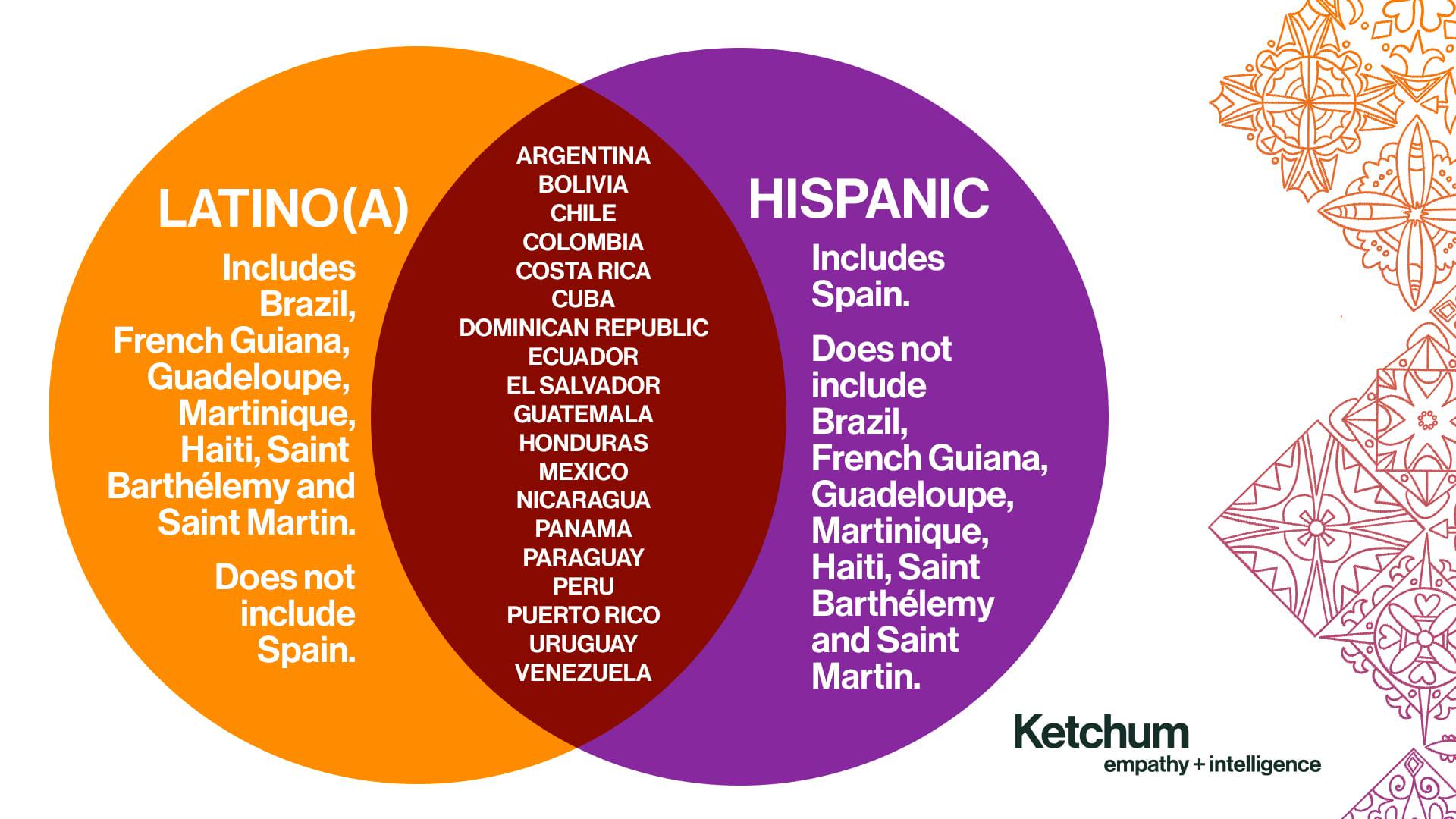
The Hispanic-Latino identity is the largest minority identity in the United States and continues to grow and shape the identity of the nation [2]. However, the Latino identity is complex and contested by many. The US government legally defines “Latino” as synonymous with the “Hispanic” definition, despite having different cultural and academic spheres. Due to the inconsistent definition of the term “Latino,” many non-Hispanic Latinos fall out of the ‘prototypical’ Latino categorization and often face disparities in representation and face identity conflicts. The Brazilian American diaspora exemplifies this conflict in the US; not included in the legal definition as Portuguese-speakers, but not identifying with the strict racial categories of the US. The identity conflict of the Brazilian immigrant community, and more broadly non-Hispanic Latinos, can be comprehended with a foundational understanding of Brazilian racial categorizations, and an understanding of US ethnic definitions of “Latino.”
\r\n\r\n
\r\n\r\n
The Brazilian Interpretation of Race
\r\n\r\n
The ambiguous and fluid nature of race in Brazil is vital to the conversation of the Brazilian-American diaspora. With a similar colonial history as beneficiaries of the Trans-Atlantic Slave trade, the United States and Brazil share similar demographics of African and European descendants [3]. However, Brazil’s system of racial classification drastically differs from that of the United States. Racial ideology in Brazil is formed on the basis of miscegenação, or race mixture. Juxtaposing the strict segregation and exclusion that characterized the racial anthropology of the US, Brazilian racial constructs have historically existed on a continuum of branco (white), moreno (brown), and preto (black), rather than a binary system [4]. However, Brazilians often argue that there is not much emphasis put on these categorizations as compared to the United States.
\r\n\r\n
\r\n\r\n
Most staggeringly compared to the North American norms, racial intermarriage has been highlighted as a symbol of Brazilian racial harmony and has been used as evidence for 20th century arguments against the presence of racial discrimination in Brazil [5]. What is uncovered by a closer look, however, is what sociologist Edward Telles refers to as the “twin pillars” of racial ideology in Brazil: whitening and racial democracy. While racial democracy promoted intermarriage as a great fight against racism, elites used intermarriage to counter concerns for a majority black population by essentially “whitening” the population over generations [6]. This led to two general truths: a national identity tied to the moral superiority of a ‘welcoming’ and intermixed racial demographic with an ambiguity of categorization contrary to the strictly segregated northern nations, in addition to a hierarchy that benefits and expands the white population to promote their perceived superiority.
\r\n\r\n
\r\n\r\n
The Brazilian Diaspora
\r\n\r\n
As the epigraph at the beginning of the article illustrates, the Brazilian immigrant population is not a monolith in identity. The racial hierarchy briefly constructed prior is influential for white Brazilian immigrants to the US, who may believe they are above the label of “Latino.” In fact, in a comprehensive study by sociologist Dr. Rebecca Anna Schut comparing Mexican and South American immigrants on variables of identification, Brazilian immigrants were 92 percent less likely than Mexican immigrants to identify as “Hispanic, Latino, or Spanish origin” on the American Community Survey (more commonly referred to as the Census) [7]. In this case it is easy to make the claim that the Brazilian immigrant diaspora identify as white. However, Brazilian immigrants are the only national group in this study to vary more than 7 percent from the Mexican-born immigrants of reference [8]. Countries like Argentina, with 97 percent of their demographic identifying as European descent, and Uruguay, with 93 percent of their demographic identifying as European descent, both only vary by less than 5 percent on their likelihood to report “Hispanic, Latino, or Spanish origin” [9,10].
\r\n\r\n
\r\n\r\n
A clerical error in US Census coding helped uncover why this discrepancy exists. Census coders typically removed Brazilians and other non-Hispanic individuals from the “Hispanic or Latino” group when reviewing Census data. However, an accidental oversight in 2020 left Brazilians who were marked “Hispanic or Latino” in the Census report. The number of Brazilians in the US that are marked “Hispanic or Latino” increased from an average of 15,000 to 416,000 in just one year, making up 70 percent of the estimated Brazilian population in the US [11]. This remarkable increase highlighted a misrepresentation of Brazilian-Americans; Brazilians are not considered to be Hispanic or Latino according to the federal definition of this census categorization, despite this self-identification. The most contemporary law characterizes the label “Hispanic or Latino” as those who “identify themselves as being of Spanish-speaking background and trace their origin or descent from Mexico, Puerto Rico, Cuba, Central and South America, and other Spanish-speaking countries,” which explicitly excludes Brazil as a Portuguese-speaking country [12]. The reports on the Schut study cannot distinguish those Brazilians who selected “Hispanic or Latino” and were then removed as per American Census guidelines, as opposed to those who did not select this category at all. Nonetheless, evidence from the above studies shows that Brazilians overwhelmingly tend to self identify as this category.
\r\n\r\n
\r\n\r\n
The History of ‘Latino’
\r\n\r\n
The Latino identity is difficult to construct. While US law defines “Hispanic or Latino” with a singular definition of having ancestral ties to a Spanish-speaking country, many could argue that this definition erases the Latino identity. The Nixon administration first introduced the term Hispanic to refer to people from Spanish-speaking countries and was implemented into the next US census [13]. Alternatively, the term Latino was recognized by the US government to identify those with mixed European, Black, and Native identities of Central and South American countries [14]. Notably, both of these pan-ethnic terms are not racial categories but cultural or ethnic groups.
\r\n\r\n
\r\n\r\n
The Latino definition does clearly encompass non-Spanish speaking countries, like Brazil. In fact, the definition of Latino arguably describes the Spanish and Portuguese legacy of miscegenação that characterized the racial sentiment of the post-colonial and post-slavery periods. The term Latino gained favor over Hispanic around the 1990s, in an attempt to decenter Spanish colonialism and began to appear on US government documents alongside Hispanic [15]. Nonetheless, as mentioned prior, the legal definition of Hispanic or Latino still only included the Hispanic definition, not Latino [16]. Despite common interpretations of the Latino identity as inclusive of all Latin peoples, US law and subsequently US census reports do not adequately represent Latino people outside of the Hispanic definition.
\r\n\r\n
\r\n\r\n
The Consequences of Misrepresentation
\r\n\r\n
In a study of Hispanic-Serving Institutions (HSI) conducted in 2026, a small sample of Brazilian Students at East Coast HSI campuses were interviewed on their experiences as: their identity as Brazilian; their feelings toward the terms Hispanic, Latino, and Latinx; and their feelings of inclusion or exclusion in a HSI [17]. Hispanic-Serving Institutions were established through the Higher Education Act, defined as “not-for-profit colleges and universities where at least 25% of the full-time equivalent undergraduate enrollment is Hispanic” [18]. The institutions that obtain this label of a ‘Hispanic Serving Institution’ are granted access to specific funding to aid in the recruitment, academic development, and graduation success of Hispanic students including scholarships and grants for students [19].
\r\n\r\n
\r\n\r\n
While in name this does not seem to be related to Brazilian students, as they do not identify as Hispanic, there are many factors that dilute the line between Hispanic and Latino. Firstly, to meet the requirements of an HSI, educational institutions present self-reported demographic information from enrolled students who select the (inseparable) “Hispanic/Latino” identification, which would in effect include students who identify as ‘Latino’ not just Hispanic. Additionally, the 2021 Executive Order 14045 that established the White House initiative to grant funding to Hispanic Serving Institutions notably interchanges the two identities throughout the order, with direct mentions of “Hispanic and Latino students” [20]. These issues demonstrate the mismatch of terms colloquially and academically (as discussed prior) to its legal definition in the US. Students can mark “Hispanic/Latino” to represent their Latino identity, but they will not have access to many of the opportunities that HSIs can distribute to their Hispanic students because they are not Hispanic.
\r\n\r\n
\r\n\r\n
The issue lies in the lack of representation of non-Hispanic Latino students receive in HSIs. The 2026 study found that Brazilian students reported being excluded from educational and financial opportunities (like scholarships) available to HSIs, do not feel represented by the Hispanic label, and lack access and representation to the culturally-relevant opportunities and support that HSIs provide to Hispanic students [22]. Students reported feeling "disappointed" in the lack of Brazilian acknowledgement, as well as “shame” and “invisible” as non-Hispanic Latinos [23]. Despite being included in the demographic requirements for HSI qualifications, Brazilian students were underrepresented and not included in the financial and community support intended by HSIs [24]. While this study is not comprehensive, the perspectives of Brazilian students in HSIs is crucial to beginning to unpack the disconnect of non-Hispanic Latinos and the defining terms of US institutions as research hopefully continues to study this disconnect and underrepresentation.
\r\n\r\n
\r\n\r\n
Hispanic Serving Institutions are without doubt regarded to serve Hispanic students; it is not the point of this article to argue whether or not Brazilian and other non-Hispanic Latinos should or should not be included in the servingness of these federally backed initiatives. Instead, there must be a consistency in terms that take into account cultural identification in the Latino community.
\r\n\r\n
\r\n\r\n
Conclusion
\r\n\r\n
The feeling of belongingness and self-identification of many Brazilians into the Latino category, a uniquely American term, often mirrors Brazilians’ perception of their role in the racially separatist United States and Americans’ perception of Brazilians. Due to Brazilian language surrounding identity, an emphasis on nationality over race and ethnicity, many of the Brazilian diaspora struggle to find an identity that fits the United States’ categorization. While they often don’t feel connected to racial categorizations, the panethnic term of “Latino” is in many ways uninclusive of non-Hispanic Latinos in resources and culture. The juxtaposing racial interpretations in Brazil and the US illustrates the disconnect that many Brazilian immigrants feel with strict categorizations of racial and ethnic identities in the US. While the terms Hispanic and Latino are consistently regarded as interchangeable on government documents, they have important implications for non-Hispanic Latinos in representation and identification. The deviation of both colloquial and academic interpretations from official government definitions is undoubtedly a conflict of adequate representation.
\r\n\r\n
\r\n\r\n
While research is extremely limited in regards to this question, it is an important question to ask. The implications of this dilemma reach beyond the Brazilian-American diaspora, into various multi-racial and multi-ethnic communities in the US like Afro-Latinos, Caribbeans, and other non-Hispanic Latinos. There is a lack of scholarly information regarding the inclusion or exclusion of non-Hispanic Latinos in institutions and opportunities meant to serve the Hispanic/Latino population in the US. However, there is information about misrepresentation, mismatched definitions, and a feeling of underrepresentation and exclusion from Brazilians in the US. This illustrates the incompetence of US legal ethnic categorization in cultivating culturally-competent recognition of various immigrant communities. While it cannot be said a straightforward solution to these cultural and identity disconnects, it is clear that a better understanding of immigrant communities is increasingly important to the United States as these communities continue to grow in size and recognition, to best support these communities in their challenges, provide funding to create efficacy and equal opportunities for underrepresented groups, and uplift the diverse cultural and ethnic groups that make up the United States. It is crucial to continue to delve into the inconsistencies and misrepresentations of outdated, often intrinsically exclusionary identity categorizations to better understand our populations and how to best represent them.
\r\n
Sources
[1] Leão, Gabriel. “Brazilian Latinoness and the Pursuit of Cultural Identity in the US.” Latino Rebels. April 25, 2022. https://www.latinorebels.com/2022/04/25/brazillatinos/.\r\n[2]“Latinos & Latinas in the US.” n.d. National Museum of the American Latino. https://latino.si.edu/learn/latino-history-and-culture/latino-history/latinos-latinas-us.\r\n[3] Telles, E. “Race in Another America: The Significance of Skin Color in Brazil.” Princeton University Press. August, 2004. \r\n[4] Telles “Race in Another America.” \r\n[5] Telles “Race in Another America.”\r\n[6] Telles “Race in Another America.”\r\n[7] Schut R. A. “‘New White Ethnics’ or ‘New Latinos’?: Hispanic/Latino Pan-Ethnicity and Ancestry Reporting among South American Immigrants to the United States.” International Migration Review. 2021. https://doi.org/10.1177/0197918321993100.\r\n[8] Schut R. A. “‘New White Ethnics’ or ‘New Latinos.”\r\n[9] US Department of State, Archived Content. “Argentina 11/06.” Bureau of Public Affairs. 201. https://2009-2017.state.gov/outofdate/bgn/argentina/76765.htm.\r\n[10] US Department of State, Archived Content. “Uruguay 12/06.” Bureau of Public Affairs. 2017. https://2009-2017.state.gov/outofdate/bgn/uruguay/87539.htm.\r\n[11] Passel, Jeffrey S., and Jens Manuel Krogstad. “How a Coding Error Provided a Rare Glimpse into Latino Identity among Brazilians in the U.S.” Pew Research Center. 2023. https://www.pewresearch.org/short-reads/2023/04/19/how-a-coding-error-provided-a-rare-glimpse-into-latino-identity-among-brazilians-in-the-u-s/.\r\n[12] Public Law 94-311 94th congress 1976 https://uscode.house.gov/statutes/pl/94/311.pdf.\r\n[13] Delgado-Romero, E. A., Manlove, A. N., Manlove, J. D., & Hernandez, C. A. (2006). Controversial issues in the recruitment and retention of Latino/a faculty. Journal of Hispanic Higher Education.\r\n[14] Delgado-Romero, E. A., Manlove, A. N., Manlove, J. D., & Hernandez, C. A. (2006). \r\n[15] Patino, M., Gómez, E., & Pinckney, H., IV. (2025). Historical and Sociolinguistic Insights for Recreation Researchers: Understanding the Terms and Evolution of Hispanic, Latino, and Latinx. Leisure Sciences, 1–14. https://doi.org/10.1080/01490400.2025.2514237\r\n[16] Public Law 94-311 94th congress 1976. https://uscode.house.gov/statutes/pl/94/311.pdf.\r\n[17] López, M., Salinas, C., Jr., & Botello, R. (2026). “Hispanic-Serving Institutions are Brazilian-shaming Institutions”: Brazilian Students’ Meaning Making of Servingness and Belongingness. Belonging, 2(1), 58-77.\r\n[18] “Hispanic-Serving Institutions - HACU.” 2025. HACU. April 21, 2025. https://hacu.net/research/hispanic-serving-institutions/.\r\n[19] Claybourn, Cole. 2024. “U.S. News & World Report: Hispanic Serving Institutions—What to Know.” US News. https://www.usnews.com/education/best-colleges/articles/hispanic-serving-institutions-what-to-know.\r\n[20] Federal Register. 2021. “White House Initiative on Advancing Educational Equity, Excellence, and Economic Opportunity for Hispanics,” September 16, 2021. https://www.federalregister.gov/documents/2021/09/16/2021-20165/white-house-initiative-on-advancing-educational-equity-excellence-and-economic-opportunity-for.\r\n[21] Passel, Jeffrey S., and Jens Manuel Krogstad. “How a Coding Error Provided a Rare Glimpse into Latino Identity among Brazilians in the U.S.” \r\n[22] López, M., Salinas, C., Jr., & Botello, R. (2026). “Hispanic-Serving Institutions are Brazilian-Shaming Institutions.”\r\n[23] López, M., Salinas, C., Jr., & Botello, R. (2026). “Hispanic-Serving Institutions are Brazilian-Shaming Institutions.”\r\n[24] López, M., Salinas, C., Jr., & Botello, R. (2026). “Hispanic-Serving Institutions are Brazilian-Shaming Institutions.”