
Keir Starmer and the Personality Politics of Trumpism
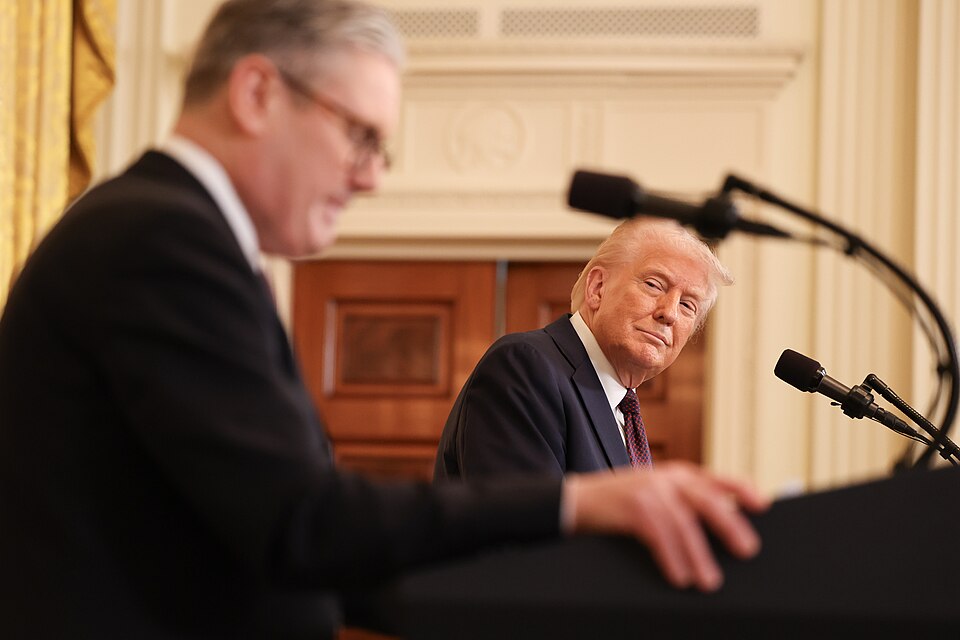
Since becoming President of the United States in January 2025, Donald Trump has dramatically reshaped American foreign policy. Trump has aggressively wielded tariffs against other countries, sparing not even longtime American allies from his efforts to remake the global economic order. He has mused about annexing Canada and declared that the U.S. would “get” Greenland [1]. Many of the beneficiaries of Trump’s second-term foreign policy have been nations ruled by his ideological allies — often right-wing populist strongmen. The Trump administration struck a deal with Nayib Bukele’s El Salvador to accept deported immigrants and approved a $20 billion economic bailout of Javier Milei’s Argentina. Simultaneously, it has pressured and threatened countries with left-wing governments. The Trump administration halted aid to Gustavo Petro’s Colombia after Petro criticized U.S. strikes on boats in the Caribbean, accused of carrying drugs, and it imposed 50 percent tariffs on Luiz Inácio Lula da Silva’s Brazil in an attempt to stop the prosecution of the right-wing former President Jair Bolsonaro [2]. This trend might suggest that Trumpist foreign policy is, at its core, ideologically motivated. Yet, the relationship between Trump’s America and Keir Starmer’s United Kingdom offers a poignant counterargument to this theory. Trump himself described Starmer, a member of the center-left Labour Party, as “slightly more liberal than I am” [3]. At the same time, he has repeatedly praised the British leader, brushing over political differences that he would deem insurmountable in other leaders. The unique bond between Trump and Starmer resulted from Starmer’s purposeful courtship of the American president, leveraging Trump’s personal affinities and business interests. The outcome has been a strengthening of U.S.–U.K. relations that creates a model for other countries to both understand and benefit from Trump’s foreign policy, emphasizing the personality politics central to Trump’s political decision-making.
Starmer was elected prime minister after over a decade of Conservative Party governance, including Britain’s 2020 withdrawal from the European Union (E.U.). Starmer pledged to deepen British cooperation with the E.U., seeking economic benefits, but said he was “not choosing” between Europe and America after Trump began taking a more hard-line stance against the E.U. on trade issues [4]. While other Western politicians, upset by Trump’s seeming disregard for longstanding American alliances, publicly criticized him, Starmer dismissed such actions as “performative” and unhelpful in fostering good relations [5]. Trump similarly praised Starmer, saying the two had a “very good relationship” even before Trump’s inauguration [6]. Starmer built on his relationship with Trump by leveraging his personal and business interests. During their first meeting in Washington, Starmer delivered a handwritten letter by King Charles III inviting Trump to a second state visit in the U.K., which Starmer said was “unprecedented” for a U.S. president. Starmer’s invitation and the subsequent visit used Trump’s adoration for the British royal family — which Trump attributes to his Scottish-born mother and her admiration of pageantry — to gain favor [7, 8]. Several months later, in July 2025, Starmer benefitted from Trump’s extensive family business interests when, during a personal visit, Trump invited Starmer for talks at the multiple golf courses the U.S. president owns in Scotland [9]. Starmer’s then-foreign secretary, David Lammy, also hosted U.S. Vice President J.D. Vance at a country estate in England, where the two bonded and developed a friendship in spite of what Vance called their different political beliefs [10].
Starmer’s relationship with Trump allowed him to influence Trump’s decision-making and form a united front on key foreign policy issues, especially relating to the wars in Ukraine and Gaza. Early in Trump’s presidency, during attempts to negotiate an end to the Russia–Ukraine war, Trump abandoned longstanding American military support for Ukraine. In February 2025, he held a contentious meeting at the White House with Ukrainian President Volodymyr Zelenskyy. During the meeting, Trump berated Zelenskyy, accusing him of being unappreciative of U.S. support and unreceptive to Trump’s efforts to end the war, which led Zelenskyy to leave Washington without signing a planned U.S.–Ukraine agreement on mineral resources. In the aftermath, Starmer, as well as French President Emmanuel Macron, used their goodwill with Trump to convince him to maintain support for Ukraine’s war effort. Starmer also served as the direct model for a foreign leader seeking a stronger relationship with Trump, using his experience courting Trump to advise Zelenskyy on how to avoid another contentious meeting [11]. When Zelenskyy made his eventual return to the White House, he was much more cordial, even dressing in a suit to please Trump’s fashion sensibilities [12]. In return, Trump pledged “very good protection” for Ukraine against a future Russian attack [13]. Meanwhile, Trump grew increasingly critical of Russian President Vladimir Putin and came to support Starmer’s position that Ukraine could militarily recover its lost territory with European support [14, 15]. He also eventually agreed to impose punitive sanctions on Russia for resisting peace efforts after months of threatening penalties [16]. Another benefit of Starmer’s close bond with Trump came later in 2025 when Western nations were coordinating a push to recognize Palestinian statehood in response to Israel’s war in Gaza. Starmer’s Britain was one of several countries to recognize the State of Palestine in September 2025, a move which the United States opposed. However, Trump merely dismissed Starmer’s decision as “one of our few disagreements” [17]. Trump’s reaction demonstrated that Starmer’s close bond with Trump gave him the flexibility to break with the U.S. on key issues. In contrast, Trump condemned Canadian Prime Minister Mark Carney’s identical announcement of recognition, saying it would make reaching a trade agreement with the country “very hard” [18].
Starmer’s close relationship with Trump also afforded the British prime minister numerous domestic political benefits. A key initial success in Starmer’s courtship of Trump was the announcement of a trade agreement between the U.S. and the U.K. in May 2025. The deal was the first reached between the U.S. and another country since Trump’s sweeping worldwide tariffs were enacted. Starmer secured favorable concessions from Trump on several key issues, and the mere existence of a trade deal allowed him to argue domestically that his careful balance between the U.S. and Europe had advanced British foreign policy interests [19, 20]. The agreement similarly benefitted Trump, who has made his image as a “dealmaker” central to his domestic political persona [21]. Furthermore, Starmer won assurances from Trump that the U.S. would stand by AUKUS, a nuclear-powered submarine agreement between Australia, the United Kingdom, and the United States [22]. Starmer received another domestic victory relating to his proposed British handover of the Chagos Islands — an Indian Ocean archipelago containing the joint British–American military base on Diego Garcia — to Mauritius. Lawmakers in the right-wing British opposition had criticized the deal, which includes a 99-year British lease on Diego Garcia, as counter to British national interests. However, Starmer convinced Trump to support the handover, quelling some domestic right-wing opposition [23].
Starmer’s success in courting his ideologically-opposite American counterpart also benefits him domestically, where the prime minister has dwindling approval ratings. British opinion polls show a surge in support for Reform U.K., a right-wing populist and anti-immigration political party led by longtime Trump ally Nigel Farage, that now surpasses support for Starmer’s Labour Party [24]. Farage has cultivated alliances in the U.S., including in Trump’s inner circle, hoping to capitalize on the rise of Trump’s populist movement to fuel his own political ambitions [25]. Nevertheless, Trump has maintained a strong relationship with Starmer, a domestically unpopular liberal politician, and offered Starmer’s Britain concessions that confer upon the prime minister domestic political benefits. In other countries, meanwhile, Trump has been unafraid to intervene in domestic politics. For instance, in the 2025 Polish presidential election, Trump publicly endorsed the right-wing opposition candidate Karol Nawrocki, who then narrowly defeated his liberal opponent [26]. This incongruence would be illogical if Trump’s foreign policy were entirely ideological, aimed at promoting a global right-wing populist movement. Such a theory does not account for Trump’s praise of Starmer, a counterexample made especially striking by the British opposition’s active endeavors to tie itself to Trump’s image in rhetoric to boost popularity. The Conservative Party, for instance, proposed the creation of an immigration agency to conduct deportations of illegal immigrants, directly modeled after Trump’s use of U.S. Immigration and Customs Enforcement during his second presidency [27]. Farage pledged that if elected prime minister in the next general election, he would “make Britain great again,” directly adopting the signature slogan of Trump’s American populist movement [28]. Trump’s decision to not openly embrace his popularity among the British opposition demonstrates that his foreign policy doctrine is not purely ideological, but instead primarily driven by Trump’s personal relationships with foreign leaders.
As world leaders seek to manage Donald Trump’s America, the successes of Keir Starmer create a framework through which his decision-making can be rationalized. Starmer’s strong bond with his trans-Atlantic counterpart undercuts the narrative that Trumpist foreign policy is best understood as a coherent ideological project aimed at elevating right-wing populists and punishing liberals. Instead, Trump rewards loyalty and personal chemistry, reciprocating Starmer’s praises and offering concessions he rejected for other leaders. The president himself is aware of his personalistic policies. Alongside Starmer during the Group of 7 (G7) Summit in Canada in June 2025, Trump responded to a reporter’s question about the U.S.–U.K. trade agreement. Britain would be spared from any future U.S. tariffs under his administration, Trump said, because “I like them — that’s their ultimate protection” [29]. His words reveal the logic behind his actions, detailing a system of rewards and punishments built around personal favor which Starmer has learned to navigate and the rest of the world must confront.
Sources
[1] Spetalnick, Matt, John Geddie, and Lili Bayer. “Trump’s first 100 days: America First president is overturning world order.” Reuters. April 28th, 2025. https://www.reuters.com/world/us/trumps-first-100-days-america-first-president-is-overturning-world-order-2025-04-27/.
[2] Nicas, Jack. “The ‘Donroe Doctrine’: Trump’s Bid to Control the Western Hempishere.” The New York Times. November 17th, 2025. https://www.nytimes.com/2025/11/17/world/americas/trump-latin-america-monroe-doctrine.html.
[3] “Remarks With Prime Minister Keir Starmer of the United Kingdom After Signing the United States of America–United Kingdom Economic Prosperity Deal and an Exchange With Reporters in Kananaskis, Canada.” The American Presidency Project. June 16th, 2025. https://www.presidency.ucsb.edu/documents/remarks-with-prime-minister-keir-starmer-the-united-kingdom-after-signing-the-united.
[4] Whannel, Kate. “UK not choosing between US and EU, says Starmer.” BBC News. February 3rd, 2025. https://www.bbc.com/news/articles/c3e1wnvkzeyo.
[5] Landler, Mark. “Britain’s Roller-Coaster Ride to a Trade Deal With Trump.” The New York Times. May 9th, 2025. https://www.nytimes.com/2025/05/09/world/europe/uk-trade-deal-tariffs-trump-starmer.html.
[6] Osborne, Samuel. “Trump praises Starmer for doing ‘very good job’.” Sky News. January 26th, 2025. https://news.sky.com/story/trump-praises-starmer-for-doing-very-good-job-so-far-and-plans-to-call-him-within-24-hours-13296872.
[7] Landler, Mark. “With a Letter From King Charles, Starmer Was Welcomed Into Trump’s Court.” The New York Times. February 28th, 2025. https://www.nytimes.com/2025/02/28/world/europe/trump-starmer-king-charles.html.
[8] Tawfik, Nada. “Status, opulence, Diana - Trump’s 70-year affection for UK royals.” BBC News. September 17th, 2025. https://www.bbc.com/news/articles/cx27jrv73pxo.
[9] Mason, Chris. “Trump visit provides Starmer with invaluable access.” BBC News. July 28th, 2025. https://www.bbc.com/news/articles/cdrkj4nvy22o.
[10] Whannel, Kate. “Faith, family and fishing: The unlikely bond between JD Vance and David Lammy.” BBC News. August 8th, 2025. https://www.bbc.com/news/articles/czr68vde7nvo.
[11] Santora, Marc and Mark Landler. “After Days of Coaching, Zelensky Seeks a Path to Trump’s Good Graces.” The New York Times. March 5th, 2025. https://www.nytimes.com/2025/03/05/world/europe/ukraine-zelensky-trump.html.
[12] Schube, Sam. “‘I Love It’: Zelensky’s Suit Sends a Message in Washington.” The Wall Street Journal. August 18th, 2025. https://www.wsj.com/style/fashion/zelensky-suit-trump-meeting-designer-meaning-d13fd558.
[13] Hutzler, Alexandra. “Key takeaways from Trump and Zelenskyy’s meeting, pivotal talks with European leaders.” ABC News. August 19th, 2025. https://abcnews.go.com/Politics/key-takeaways-trump-zelenskyys-oval-office-meeting-discuss/story?id=124751645.
[14] Stacey, Kiran and Pippa Crerar. “Trump turns fire on Putin and lauds UK in press conference with Starmer.” The Guardian. September 18th, 2025. https://www.theguardian.com/us-news/2025/sep/18/trump-turn-fire-on-putin-and-lauds-uk-in-press-conference-with-starmer.
[15] Comeford, Ruth and Anthony Zurcher. “Kyiv can win all of Ukraine back from Russia, Trump says.” BBC News. September 24th, 2025. https://www.bbc.com/news/articles/c07vm35rryeo.
[16] Erlanger, Steven. “Europe’s Persistence in Supporting Ukraine Is Bearing Fruit.” The New York Times. October 24th, 2025. https://www.nytimes.com/2025/10/24/world/europe/europe-ukraine-russia.html.
[17] Shear, Michael D., Shawn McCreesh, Stephen Castle, and Richard Pérez-Peña. “Trump and Starmer, Skirting Differences, Praise Each Other in U.K.” The New York Times. September 18th, 2025. https://www.nytimes.com/2025/09/18/world/europe/trump-starmer-britain.html.
[18] Stasiuk, Yurii. “Trump says Canada’s Palestinian move is new trade deal stumbling block.” Politico. July 31st, 2025. https://www.politico.com/news/2025/07/31/donald-trump-warns-canada-trade-deal-palestinian-statehood-00486386.
[19] Landler, “Britain’s Roller-Coaster Ride to a Trade Deal With Trump.”
[20] Shalal, Andrea, Alistair Bell, and Andrew Macaskill. “Trump, Starmer hail limited US-UK trade deal, but 10% duties remain.” Reuters. May 8th, 2025. https://www.reuters.com/world/europe/us-britain-expected-announce-tariff-deal-thursday-2025-05-08/.
[21] Primack, Dan and Dave Lawler. “Trump’s dealmaker image hits a wall.” Axios. June 12th, 2025. https://www.axios.com/2025/06/12/trump-deals-trade-ukraine-gaza-iran.
[22] Landler, Mark. “Starmer Picks Up Trump’s Papers, and 2 Small Political Wins.” The New York Times. June 17th, 2025. https://www.nytimes.com/2025/06/17/world/europe/trump-starmer-trade-uk-g7-summit.html.
[23] Piper, Elizabeth. “Trump says he is likely to accept UK deal on Chagos Islands.” Reuters. February 27th, 2025. https://www.reuters.com/world/trump-says-he-is-likely-accept-uk-deal-chagos-islands-2025-02-27/.
[24] Wheeler, Caroline. “Poll predicts clear Reform majority and historic Labour defeat.” The Times. September 27th, 2025. https://www.thetimes.com/uk/politics/article/mrp-polling-reform-majority-labour-next-general-election-bzt5mpmn6.
[25] Tharoor, Ishaan. “In Washington, Farage builds on right-wing alliance with Trump.” The Washington Post. September 5th, 2025. https://www.washingtonpost.com/world/2025/09/05/farage-reform-trump-uk/.
[26] Gera, Vanessa. “Nawrocki’s win turns Poland toward nationalism and casts doubt on Tusk’s centrist government.” Associated Press. June 2nd, 2025. https://apnews.com/article/poland-presidential-election-karol-nawrocki-80a99eeb7a2f3ae64260a9263e7028ee.
[27] McKelvie, Geraldine. “Tories pledge to create immigration taskforce modelled on Trump’s Ice.” The Guardian. October 4th, 2025. https://www.theguardian.com/politics/2025/oct/04/tories-to-pledge-to-create-immigration-taskforce-modelled-on-trumps-ice.
[28] Tharoor, “In Washington, Farage builds on right-wing alliance with Trump.”
[29] Landler, “Starmer Picks Up Trump’s Papers, and 2 Small Political Wins.”
Image: File:Starmer-Trump Bilateral 2025-02-27-20-42.jpg - Wikimedia Commons. February 27, 2025. https://commons.wikimedia.org/wiki/File:Starmer-Trump_bilateral_2025-02-27-20-42.jpg.