
International Law isn’t Dead, Yet
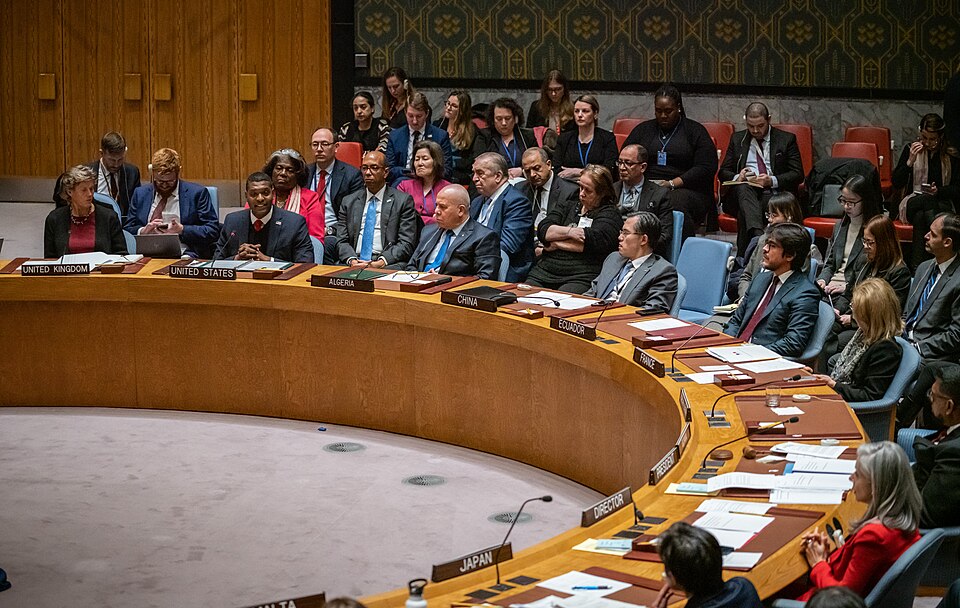
The events of early 2026 seemed to have provoked some familiar obituaries for the international legal order. The US military’s abrupt abduction and extraction of Venezuelan President Nicolás Maduro on January 3 appeared to shatter the foundational norms of state sovereignty [1]. Concurrently, the recent conflict in Gaza, characterized by staggering civilian casualties and prolonged diplomatic paralysis, demonstrated the grave limitations of international humanitarianism [2]. For many political analysts and casual observers, these crises may have been the last straw on the post-1945 international legal framework.
This opinion, however, misinterprets the fundamental nature of international law. It mistakenly equates the international legal framework with some variation of law enforcement able to carry out its goals through coercion, expecting it to directly restrain powerful states from committing violence. Nonetheless, international law was never designed to operate as a global sovereign. Rather, it is a political framework of contestation. A closer look at the global reaction to recent crises shows that international law remains the primary method through which states coordinate behavior, justify their actions, and bring reputational costs. Even when it fails to prevent specific breaches and atrocities, this framework still prevents the world from descending into the total anarchy that defined the first half of the twentieth century.
The Question of Sovereignty
The January 3 operation in Venezuela was, in legal terms, a textbook violation of Article 2(4) of the United Nations (UN) Charter’s prohibition on the use of force and the duty to respect territorial integrity [3]. In the Security Council’s 10085th meeting, Venezuela’s representative warned that “if the kidnapping of a Head of State, the bombing of a sovereign country and the open threat of further armed action are tolerated or downplayed, the message sent to the world is a devastating one — namely, that the law is optional and that force is the true arbiter of international relations” [4]. International law scholars across Europe reached similar conclusions. Professor Marc Weller at Cambridge University called the raid a “fundamental breach of international law” that could drag the world back towards a 19th‑century order of open gunboat diplomacy [5].
Washington provided different responses. The rhetoric used by US officials framed it as a “law-enforcement operation” to apprehend “two indicted fugitives,” while also drawing an analogy to the 1989 capture of the Panamanian President Manuel Noriega [6]. Domestically, observers cited the Ker-Frisbie doctrine, under which US courts retain jurisdiction even when the government abducts defendants from abroad through controversial means [7]. While Maduro and his lawyer have referred to his head-of-state immunity from prosecution, the US—along with many of its allies—has long denied the legality of Maduro’s presidency after Venezuela’s heavily disputed election in 2018. In other words, the US sought to convert a severe breach of sovereignty into an especially aggressive form of criminal law enforcement.
This strategy directly ran into the international legal order that Washington nominally defends. A joint statement by Brazil, Chile, Colombia, Mexico, Uruguay, and Spain expressed “deep concern and rejection” of “unilateral military actions carried out on Venezuelan territory,” explicitly identifying them as violations of the prohibition on the use and threat of force and on interference with sovereignty [8]. Brazil’s President, Luiz Inácio Lula da Silva, went further, calling the bombing and capture “an extremely serious affront to Venezuela’s sovereignty” and “in flagrant violation of international law” [9].
On the other hand, close partners of the US adopted similar language. Denmark’s ambassador reminded the council that Article 2(4) is a “foundational principle” and that “the inviolability of borders is not up for negotiation,” warning that the raid set a “dangerous precedent” [10]. France’s foreign minister also stated that, regardless of Maduro’s record, the method “contradicts the principle of non‑use of force, which is foundational to international law”. Domestic debate in Paris turned on whether President Emmanuel Macron had undermined France’s diplomatic doctrine by initially celebrating Maduro’s fall [11]. The European Union (EU) high representative, for his part, repeated the Union’s view that Maduro “lacks the legitimacy of a democratically elected president” while stressing that combating transnational crime “must be addressed…in full respect of international law and the principles of territorial integrity and sovereignty” [12].
Although none of these rhetorics reversed the raid or returned Maduro to Caracas, the US position and its critics all treated the UN Charter, head-of-state immunity, and treaty commitments as the only legitimate vocabulary in which to argue. The US did not claim a right to topple foreign leaders at will, but instead tried to reframe an act of force as a more unusual type of extradition. States that condemned the operation did so by insisting that the charter’s rules on force and sovereignty still apply, including against a permanent Security Council member. Hence, the core of the dispute was about what the law allows and where it applies, not whether the law exists.
The Law of War
The war in Gaza presented a different rupture. Since October 2023, the Security Council has repeatedly considered resolutions calling for an “immediate, unconditional and permanent” ceasefire, the release of hostages, and the lifting of restrictions on humanitarian aid. On multiple occasions, 14 of 15 council members voted in favor, while the US stood alone in casting a veto, often citing insufficient condemnation of Hamas or concern that a ceasefire would “embolden” the group [13]. By late 2025, this pattern had left the council largely paralyzed in the face of a war that had killed tens of thousands of Palestinians and pushed Gaza into some of the worst humanitarian crises of the 21st century [14].
This paralysis reflects a structural flaw in the current system: with the veto power granted to the five permanent members, any one of them can block action regardless of the level of global consensus. Yet even within this deadlock, law remained central. Draft resolutions reaffirmed obligations under international humanitarian law, denounced “indiscriminate and disproportionate attacks,” and demanded compliance with the duty to ensure “rapid and unimpeded” humanitarian access. When these efforts failed, states and UN officials turned to other legal forums. The International Criminal Court opened investigations into alleged war crimes by both Hamas and Israeli officials, and prosecutors issued arrest warrants for senior leaders on both sides [15]. South Africa brought a genocide case against Israel in the International Court of Justice. UN human rights bodies also deplored Israel for using starvation as a method of warfare and highlighted that blocking aid can itself amount to a war crime [16].
Israel and its allies relied on the same body of law to defend their conduct. In an extended interview aimed at foreign audiences, an Israel Defense Forces (IDF) legal adviser explained that proportionality does not mean matching casualty counts but weighing “expected incidental…harm to civilians” against “the military advantage anticipated from the attack” [17]. The adviser emphasized that military rules require IDF commanders to assess this before strikes, with legal advisers participating directly in targeting processes, and that hospitals lose their special protection if armed groups use them for military purposes. Israeli legal think tanks have published explainer pieces on the principles of distinction and proportionality, arguing that Israel may prioritize soldiers’ lives as long as civilian harm is not “excessive,” and justifying attacks on “dual‑use” facilities [18].
Human rights organizations have challenged those claims in equally legal debates. Human Rights Watch investigated specific strikes on hospitals and reported no evidence that would deprive those facilities of their protected status, concluding that certain attacks were “indiscriminate and disproportionate,” violating international humanitarian law [19]. Other scholars have argued that Gaza exposes “the limits and dangers” of the proportionality rule itself, noting that Israel has repeatedly cited proportionality while accepting civilian‑to‑combatant death ratios that many observers regard as indefensible [20]. In legal terms, these critics contend that Israel’s conduct cannot be reconciled with existing frameworks, and indeed, they demanded more rigorous enforcement through sanctions and arms embargoes.
Even Israel’s principal patron has framed its pressure out of concern for Israel’s breach of international law. In April 2024, President Joe Biden told Prime Minister Benjamin Netanyahu that continued US support depended on “specific, concrete steps” to reduce civilian harm and protect aid workers, calling recent strikes “unacceptable” [21]. A State Department report to Congress later concluded that it was “reasonable to assess” that Israel used US weapons “in ways inconsistent with international humanitarian law,” even as the administration stopped short of declaring clear violations [22]. The report also expressed “deep concerns” that Israeli actions had “contributed significantly” to the obstruction of humanitarian aid. Consequently, the intense debates surrounding the conflict demonstrate that although the laws of war are frequently strained, they continue functioning as the framework through which modern conflicts are fought and challenged.
Reputational Costs
Because there is no global police force, international law depends on less tangible mechanisms: reputation, reciprocity, and political isolation. States’ reactions to the Maduro abduction show that those mechanisms are still working. A survey of global responses notes that governments from Brazil to Denmark and Slovakia described the raid as an “unjustified, illegal, and unprovoked act of war” and warned that failing to condemn it would make future unlawful interventions harder to challenge [23]. Slovakia’s prime minister argued that if Washington’s action in Venezuela is not denounced as “consistent with attitudes to the war in Ukraine,” legal arguments against Russia’s invasion will look “pharisaical” [24]. Exemptions for the US weaken the credibility of the entire edifice.
Reciprocity is even clearer in the older laws of war. The Geneva Conventions’ protections for prisoners of war (POWs) rest in part on the expectation that the enemy will match humane treatment. Commentaries on the third Geneva Convention describe reciprocity as “pivotal” in persuading states to respect POW rights, particularly in conflicts where each side holds significant numbers of captives [25]. Diplomatic immunity operates on the same logic: states shield foreign envoys from prosecution in the expectation that their own diplomats will receive comparable protection abroad [26].
The Maduro case makes this consideration even more explicit. Legal analysts warn that if the United States normalizes cross‑border kidnappings of foreign leaders based on domestic indictments, it invites other governments to do the same to American officials [27]. That prospect is one reason Justice Department guidance itself notes that Alvarez‑Machain‑style operations “sparked concerns about potential violations of foreign sovereignty, territorial integrity, and criminal law,” and urges prosecutors to weigh diplomatic fallout carefully [28]. Reciprocity does not guarantee restraint, but it creates a persistent fear that today’s convenient exception will become tomorrow’s exploitability.
International Order in Everyday Life
Headline crises obscure the vast domains where international law functions with little drama. Global air travel depends on the 1944 Convention on International Civil Aviation, which created the International Civil Aviation Organization and set common rules for navigation, safety, aircraft registration, and overflight rights [29]. All major aviation states participate, and commercial flights cross multiple jurisdictions every day based on standardized understandings of airspace sovereignty and “freedoms of the air” codified in treaties.
Maritime trade rests on a similar infrastructure. The UN Convention on the Law of the Sea defines territorial seas, exclusive economic zones, and navigation rights, guaranteeing all states, including landlocked ones, freedoms of navigation and overflight beyond coastal waters while giving coastal states defined resource and enforcement rights [30]. Container ships, tankers, and undersea cables move through these zones every day according to predictable rules about innocent passage and hot pursuit.
Similarly, the International Telecommunication Union—now a UN specialized agency—develops technical standards for everything from radio spectrum allocation to broadband protocols [31]. Its treaty framework and “recommendations” underpin how national regulators and private operators assign frequencies and build interoperable networks. As a matter of fact, international law and order shape the world as we see and experience it today.
In conclusion, the Maduro operation and war in Gaza show both the erosion and continuity of the post-1945 legal order. While sometimes violated outright, the post‑war order transformed war from a recognized instrument of policy into a formally outlawed practice, enforced by networks of treaties, sanctions, and reputational costs [32]. That transformation never promised perfect compliance, but still created a world in which even manifest violators feel compelled to wrap their actions in legal narratives. The US insists a cross‑border raid is a form of extradition; Israel insists massive urban bombardment meets proportionality tests. Indeed, these actions cannot be carried out without at least the façade of legality, and this requirement in and of itself already prevents much worse actions from being carried out.
International law today is not a coherent referee standing above politics but rather the terrain on which states conduct political struggles over sovereignty, security, and justice. In that sense, it remains very much alive. The real danger is not that law has vanished, but that great powers are normalizing exceptions that gradually hollow out the norms they still cite. If that trend continues, the world will not wake up one morning in complete anarchy, but will drift further toward a system where legal language survives while its constraining force drains away.
Avoiding that outcome requires states, especially those with the most power, to accept that the rules they invoke against opponents bind them as well. The reaction to the Maduro raid and the mounting criticism of Israel’s actions in Gaza show that many governments and civil societies are still willing to impose the political cost. As long as that remains true, international law is damaged, contested, and deeply imperfect—but not dead.
Sources
[1] United Nations Security Council, "United States Action in Venezuela Puts Sovereignty of States, International Law at Stake, Many Speakers Tell Security Council," Press release SC/16271, January 5, 2026, https://press.un.org/en/2026/sc16271.doc.htm.
[2] Al Jazeera, "How Has the UNSC Voted Since the Beginning of Israel’s War on Gaza?," November 21, 2024, https://www.aljazeera.com/news/2024/11/21/how-has-the-unsc-voted-since-the-beginning-of-israels-war-on-gaza.
[3] Charter of the United Nations, June 26, 1945, 1 U.N.T.S. XVI.
[4] United Nations Security Council, "United States Action in Venezuela."
[5] Marc Weller, "The US Capture of Venezuela’s Maduro: An International Legal Analysis," University of Cambridge, January 7, 2026, https://www.cam.ac.uk/research/news/the-us-capture-of-venezuelas-maduro-an-international-legal-analysis.
[6] U.S. Department of Justice, "International Extradition and Related Matters," Justice Manual § 9‑15.000 (2018), https://www.justice.gov/jm/jm-9-15000-international-extradition-and-related-matters.
[7] Andrew B. Campbell, “The Ker-Frisbie Doctrine: A Jurisdictional Weapon in the War on Drugs,” Vanderbilt Law Review 23, no. 2 (1990): 385.
[8] Government of Brazil, Ministry of Foreign Affairs, "Statement from Brazil, Chile, Colombia, Mexico, Uruguay and Spain Regarding the Events in Venezuela," Press release no. 3, January 4, 2026, https://www.gov.br/mre/en/contact-us/press-area/press-releases/joint-statement-of-brazil-chile-colombia-mexico-uruguay-and-spain.
[9] Luiz Inácio Lula da Silva, "Brazil’s President Lula Condemns US Bombing and Kidnapping in Venezuela," CounterPunch, January 2, 2026, https://www.counterpunch.org/2026/01/02/brazils-president-lula-condemns-us-bombing-and-kidnapping-in-venezuela.
[10] Kingdom of Denmark, Permanent Mission to the United Nations, "Statement for Briefing on Venezuela," January 5, 2026, https://dkonunsc.dk/statements/05-01-2026-statement-for-briefing-on-venezuela.
[11] France 24, "Macron Says France ‘Does Not Approve’ of US Method to Overthrow Maduro," January 5, 2026, https://www.france24.com/en/france/20260105-macron-says-france-does-not-approve-of-method-us-used-to-overthrow-maduro.
[12] European External Action Service, "Venezuela: Statement by the High Representative on the Aftermath of the US Intervention in Venezuela," January 3, 2026, https://www.eeas.europa.eu/eeas/venezuela-statement-high-representative-aftermath-us-intervention-venezuela_en.
[13] United Nations News, "Security Council: US Votes Against Resolution on Gaza Ceasefire," September 24, 2025, https://news.un.org/en/story/2025/09/1165881.
[14] Reuters, "US Casts 6th Veto at United Nations over War in Gaza," September 18, 2025, https://www.reuters.com/world/middle-east/us-vetoes-un-demand-ceasefire-aid-access-gaza-2025-09-18.
[15] Mara R. Revkin, "The Israel-Hamas Conflict: International Law, Accountability, and Challenges in Modern Warfare," Judicature International (2024), https://judicature.duke.edu/articles/israel-hamas-conflict-international-law.
[16] Revkin, "The Israel-Hamas Conflict."
[17] Israel Defense Forces Spokesperson, "International Law, Hamas, and Proportionality," Mission Brief (Substack), November 11, 2023, https://idfspokesperson.substack.com/p/international-law-hamas-and-proportionality.
[18] Israel Democracy Institute, "Israel’s War in Gaza and International Law," December 24, 2023, https://en.idi.org.il/articles/51994.
[19] Human Rights Watch, "Israeli Forces’ Conduct in Gaza," March 19, 2024, https://www.hrw.org/news/2024/03/19/israeli-forces-conduct-gaza.
[20] JURIST, "Gaza Exposes the Limits and Dangers of IHL’s Proportionality Rule," December 17, 2025, https://www.jurist.org/features/2025/12/18/gaza-exposes-the-limits-and-dangers-of-ihls-proportionality-rule.
[21] BBC News, "Biden Says Israel Must Prevent Civilian Harm in Gaza to Keep US Support," April 3, 2024, https://www.bbc.com/news/world-us-canada-68735879.
[22] Office of U.S. Senator Jeff Merkley, "Biden Admin Says It’s ‘Reasonable to Assess’ Israel Used American Weapons in Ways Inconsistent with International Humanitarian Law," June 4, 2024, https://www.merkley.senate.gov/biden-admin-says-its-reasonable-to-assess-israel-used-american-weapons-in-ways-inconsistent-with-international-humanitarian-law.
[23] American Friends Service Committee, "Tracking Global Responses to US Aggression in Venezuela," January 15, 2026, https://afsc.org/newsroom/tracking-global-responses-us-aggression-venezuela.
[24] American Friends Service Committee, "Tracking Global Responses."
[25] "Prisoners of War," The Practical Guide to Humanitarian Law, Geneva: CICR, 2004, https://guide-humanitarian-law.org/content/article/3/prisoners-of-war/.
[26] “Diplomatic and Consular Immunity: Guidance for Law Enforcement and Judicial Authorities,” United States Department of State Office of Foreign Missions, accessed March 30, 2026, https://www.state.gov/wp-content/uploads/2019/07/2018-DipConImm_v5_Web.pdf
[27] Lowy Institute, "Maduro and Murky Legality of ‘Irregular’ Extradition," February 2, 2026, https://www.lowyinstitute.org/the-interpreter/maduro-murky-legality-irregular-extradition.
[28] U.S. Department of Justice, "International Extradition."
[29] International Civil Aviation Organization, Convention on International Civil Aviation (Chicago Convention), Doc 7300, Montreal: ICAO, 2006, https://www.icao.int/convention-international-civil-aviation-doc-7300.
[30] United Nations, United Nations Convention on the Law of the Sea, December 10, 1982, https://www.un.org/depts/los/convention_agreements/texts/unclos/unclos_e.pdf.
[31] James Andrew Lewis, "The International Telecommunication Union: The Most Important UN Agency You Have Never Heard Of," Center for Strategic and International Studies, December 13, 2020, https://www.csis.org/analysis/international-telecommunication-union-most-important-un-agency-you-have-never-heard.
[32] Oona A. Hathaway and Scott J. Shapiro, The Internationalists: How a Radical Plan to Outlaw War Remade the World (New York: Simon & Schuster, 2017).
Image: Julio Obscura, “United Nations Security Council on Food Security and Climate Change on 13 February 2024,” Wikimedia Commons, February 13, 2024, https://commons.wikimedia.org/wiki/File:United_Nations_Security_Council_on_Food_Security_and_Climate_Change_on_13_February_2024_-_27.jpg