How the US Broke International Law in Venezuela
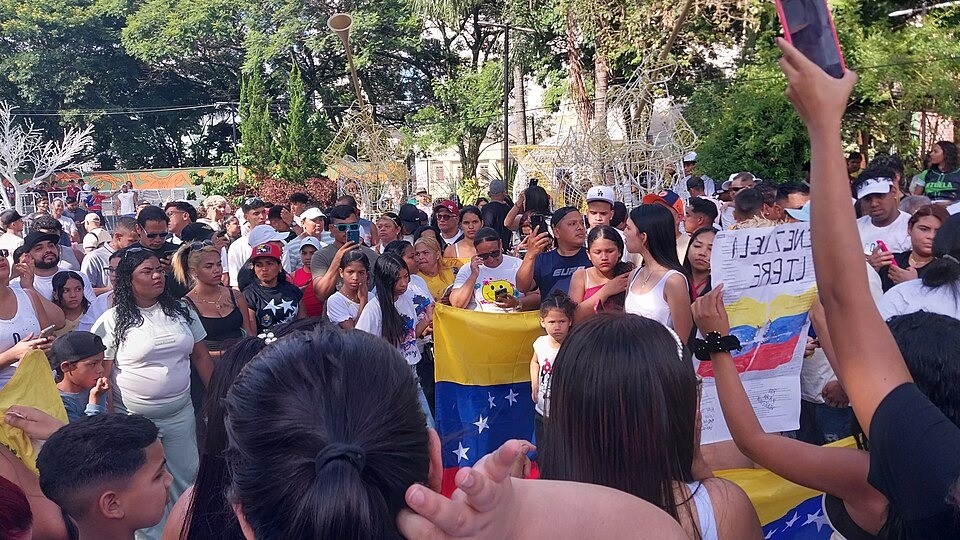
The latest US operation in Venezuela, removing Nicolás Maduro, is arguably one of the most contentious foreign policy choices made by the Trump administration. While the Trump administration justifies their intervention as self-defense, claiming that it was a necessary measure to protect the country from drug trafficking, it opens up the door for a difficult question: Has the United States violated international law by intervening in Venezuela?
By stretching the definition of self-defense and using military force without any evidence of a military attack by Venezuela, the United States has clearly violated one of the most important provisions of the United Nations Charter (UN Charter). If this precedent is allowed to stand, it could have a deep effect on undermining the rule and authority of international law. Furthermore, it can help to create a world where countries with political and military power are free to act without justification in pursuit of their interests.
Background
Before the operation on January 3, 2026, the relationship between the US and Venezuela had been deteriorating for years. Several US administrations placed sanctions on Venezuelan officials and their oil industry [1]. These sanctions severely damaged diplomatic ties and increased economic pressure. Meanwhile, US officials frequently claimed that Maduro and his administration were supporting drug trafficking networks [2]. By late 2025, the US naval presence in the Caribbean grew, and enforcement actions in relation to Venezuelan oil shipments intensified [3]. These actions further escalated military and economic tensions between the two countries.
On January 3, 2026, the United States launched a military operation in Venezuela and captured President Nicólas Maduro and his wife, Cilia Flores [4]. Both were placed in federal jail shortly after their capture, and they face federal charges such as drug trafficking [5]. Not long after the capture, Secretary of State Marco Rubio declared a military quarantine against Venezuelan oil exports [6]. Administration officials showed support for increased American energy investments in the Venezuelan oil industry [7]. Venezuela’s vice president, Delcy Rodríguez, is currently leading Venezuela and cooperating with the Trump Administration [8]. She previously served as Venezuela's oil minister, and was a longtime ally of Maduro. Her presence gives insight to the goals of the US If the US aimed to restructure Venezuela's government, then it would be expected that the US would be working with opposition leaders such as María Machado [9]. The fact that the US is working with Rodríguez suggests that stability in the oil industry is important.
Venezuela holds some of the world’s largest proven oil reserves, estimated at 300 billion barrels, or 17% of the world’s total [10]. After the capture of Maduro, US officials called on American energy executives to take advantage of the newly available Venezuelan oil infrastructure [11]. Secretary of State Marco Rubio announced a military quarantine on Venezuelan oil exports [12], and the administration made it clear that it was seeking access to Venezuelan energy resources [13]. At the end of January, the United States lifted sanctions on Venezuelan oil and issued licenses to allow US companies to obtain Venezuelan oil [14]. On February 11, US Energy Secretary Chris Wright traveled to Caracas, Venezuela, to discuss with authorities about the US’ increased investment in the country’s energy infrastructure [15]. These actions are all aimed at facilitating increased oil sales to allow US energy companies to profit, indicating that military intervention was utilized for the benefit of energy companies in the United States.
The UN Charter
The UN Charter was written and accepted after World War II to prevent a recurrence of aggressive wars [16]. Before 1945, regulation and legal obligations to declare aggressive war were minimal, and the UN Charter aimed to change this norm. Article 2(4), the foundation of international law, states that there is a prohibition on the “threat or use of force against the territorial integrity or political independence of any state” [17]. The only exception to this is in Article 51, which allows the use of force in self-defense “if an armed attack occurs” [18]. These two articles clearly state that countries cannot use the term of self-defense if there is no armed attack, and that force cannot be used against any state. None of this implies that the UN Charter has consistently prevented violations. Countries have overstepped its boundaries numerous times and caused destabilizing effects [19]. Although the UN Charter has never been a perfect enforcement tool, its strength is that it functions as an agreed-upon legal baseline. International law endures not because it is a perfect enforcement tool, but because most countries feel obligated to rationalize their behavior on the basis of international law, which is widely-agreed upon [20].
President Trump’s Defense Claim and Oil
Returning to the current case of the US and Venezuela, the Trump administration claimed that the use of military force was necessary in order to stop drug trafficking and gangs entering the United States [21]. Although these in itself are valid security concerns, it is not considered an armed attack under Article 51 of the UN Charter [22]. Self defense thus must be in response to an armed attack, however Venezuela did not use military force against the United States to provoke an attack [23]. Therefore, Trump’s claim of self defense under Article 51 is not justified. Furthermore, the policy choices made by the US raise questions about the extent to which strategic concerns, particularly the need for Venezuelan oil, have influenced policy as much as, or perhaps even more than, the concern of self defense [24]. After the deposition of Maduro, the Trump administration’s energy policy turned to exploiting Venezuela’s oil resources, which is inconsistent with the claim of self-defense [25]. The aftermath of the intervention appears to have mainly consisted of receiving commercial access to Venezuelan oil [26]. If self-defense were the main purpose, it would logically follow that subsequent policies would aim to mitigate threats or strengthen security, rather than facilitating the financial gain of US corporations and long-term control over oil [27]. The United States’ usage of military action followed by the lifting of oil sanctions, commercial licensing, and diplomatic energy engagement severely undermines the self-defense claim. Therefore, the Trump administration's interest in oil and the economy played the most prominent role in intervening in Venezuela.
Global Consequences
There are great global consequences to this intervention, as a new precedent has been set [28]. If the United States continues to use a poorly misinterpreted definition of self-defense to act as they please, other nations may follow [29]. Looking to history shows how states take note and adjust their own behavior when other states push the boundaries of international law. The 2003 US invasion of Iraq severely damaged US credibility and raised doubts about future security and humanitarian interventions, which were partially justified by broad interpretations of self-defense. Similarly, Russia’s annexation of Crimea in 2014 was denounced as a violation of Article 2(4), but Moscow defended its actions by referring to earlier Western interventions. Other countries watch, modify, and interpret their own actions when leading states push the boundaries of the law [30]. The erosion of international law is not a set action but rather a gradual process. As rules will change incrementally over time, this gradual erosion has consequences. Countries will continuously test the limits of the rules, and accepted behavior will alter as a result. When powerful nations begin to redefine the rules, they send a signal that the law does not apply to them, and that the law is flexible [31]. Over time, actions that would have previously sparked outrage globally would become more normal. The unclear legal authority of the Venezuela operation has the potential to redefine international law and rules of force in the future.
Potential Solutions
Although there is no concrete solution as to what can be done, as the Trump administration has a long pattern of acting without any checks and balances, the United States should maintain the law-based international order. The United States should prioritize diplomacy and humanitarian efforts over the use of excessive military power. The Trump administration’s intervention clearly violates the UN charter, and they need to be held accountable from the courts, Congress, and the UN [32]. Under the War Powers Resolution, Congress has the authority to pass a joint resolution requesting withdrawal or approval, in addition to insisting on expressing approval for prolonged military engagement [33]. Congress’s actions give legal accountability, and this can be a result of pressure from the public and from social groups. Furthermore, despite the Security Council’s lack of cooperation, the UN General Assembly has the authority to formally denounce the US’ use of force on a global scale.
Sources
[1] Council on Foreign Relations, “Instability in Venezuela,” Global Conflict Tracker, https://www.cfr.org/global-conflict-tracker/conflict/instability-venezuela.
[2] Carrie Kahn, “U.S. Interventionism in Venezuela Raises Legal Questions,” NPR, January 2, 2026, https://www.npr.org/2026/01/02/nx-s1-5652133/us-venezuela-interventionism-caribbean-latin-america-history-trump.
[3] Marianna Parraga, “U.S. Sanctions Targeting Venezuela Oil Tankers,” Reuters, December 11, 2025, https://www.reuters.com/business/energy/us-sanctions-maduros-nephews-six-ships-carrying-venezuela-oil-says-axios-2025-12-11/.
[4] Council on Foreign Relations, “Operation Southern Spear: U.S. Military Campaign Targeting Venezuela,” https://www.cfr.org/article/operation-southern-spear-us-military-campaign-targeting-venezuela.
[5] Kahn, “U.S. Interventionism in Venezuela Raises Legal Questions.”
[6] Isaac Chotiner, “The Brazen Illegality of Trump’s Venezuela Operation,” The New Yorker, January 2026, https://www.newyorker.com/news/q-and-a/the-brazen-illegality-of-trumps-venezuela-operation.
[7] Julian E. Barnes and Edward Wong, “Rubio Helped Oust Maduro. Running Venezuela May Prove Trickier,” New York Times, January 6, 2026. https://www.nytimes.com/2026/01/06/us/politics/rubio-venezuela-future.html.
[8] Council on Foreign Relations, “Instability in Venezuela.”
[9] Council on Foreign Relations, “Instability in Venezuela.”
[10] Reuters, “Venezuelan Oil Industry Holds World’s Largest Reserves Despite Decaying Infrastructure,” Reuters, January 3, 2026. https://www.reuters.com/business/energy/venezuelan-oil-industry-worlds-largest-reserves-decaying-infrastructure-2026-01-03/.
[11] Rebecca Elliott, “Trump’s $100 Billion Venezuela Oil Plan Gets a Cool Reception,” New York Times, January 9, 2026, https://www.nytimes.com/2026/01/09/business/energy-environment/trump-venezuela-oil-executives.html.
[12] Edward Wong, “Trump Says U.S. Is ‘In Charge’ of Venezuela, While Rubio Stresses Coercing It,” New York Times, January 4, 2026. https://www.nytimes.com/2026/01/04/us/politics/rubio-military-quarantine-venezuela-oil.html.
[13] Barnes and Wong, “Rubio Helped Oust Maduro. Running Venezuela May Prove Trickier.”
[14] Marianna Parraga and Jarrett Renshaw, “Exclusive: US to issue general license lifting some sanctions on Venezuelan oil industry, sources say,” Reuters, January 27, 2026. https://www.reuters.com/business/energy/us-issue-general-license-soon-lifting-some-sanctions-venezuelan-oil-industry-2026-01-27/.
[15] Timothy Gardner, Sarah Kinosian, and Marianna Parraga, “US Pushes for Venezuela Investment, Energy Secretary Warns About Legitimacy of Chinese Deals,” Reuters, February 11, 2026. https://www.reuters.com/business/energy/us-energy-secretary-set-arrive-venezuela-with-herculean-task-oil-recovery-2026-02-11/.
[16] Marjorie Cohn, “Serial U.S. Violations of the UN Charter,” International Association of Democratic Lawyers, June 2022 https://iadllaw.org/2022/06/serial-us-violations-of-the-un-charter-marjorie-cohn/.
[17] Cohn, “Serial U.S. Violations of the UN Charter.”
[18] Cohn, “Serial U.S. Violations of the UN Charter.”
[19] Chotiner, “The Brazen Illegality of Trump’s Venezuela Operation.”
[20] Brookings Institution. “Making Sense of the U.S. Military Operation in Venezuela.” January 2026.https://www.brookings.edu/articles/making-sense-of-the-us-military-operation-in-venezuela/.
[21] Kahn, “U.S. Interventionism in Venezuela Raises Legal Questions.”
[22] Cohn, “Serial U.S. Violations of the UN Charter.”
[23] Brookings Institution, “Making Sense of the U.S. Military Operation in Venezuela.”
[24] Chotiner, “The Brazen Illegality of Trump’s Venezuela Operation.”
[25] Reuters, “Venezuela's oil and mining sectors: large potential, weak infrastructure.”
[26] Parraga and Renshaw, “Exclusive: US to issue general license lifting some sanctions on Venezuelan oil industry, sources say.”
[27] Gardner, Kinosian, and Parraga, “US Pushes for Venezuela Investment, Energy Secretary Warns About Legitimacy of Chinese Deals.”
[28] Brookings Institution, “Making Sense of the U.S. Military Operation in Venezuela.”
[29] Brookings Institution, “Making Sense of the U.S. Military Operation in Venezuela.”
[30] Cohn, “Serial U.S. Violations of the UN Charter.”
[31] Brookings Institution, “Making Sense of the U.S. Military Operation in Venezuela.”
[32] Cohn, “Serial U.S. Violations of the UN Charter.”
[33] Congressional Research Service, “U.S. Capture of Venezuela’s Nicolás Maduro: Considerations for Congress,” CRS Product IN12618, Congress.gov, https://www.congress.gov/crs-product/IN12618.