
How NATO Can Win the War In Ukraine
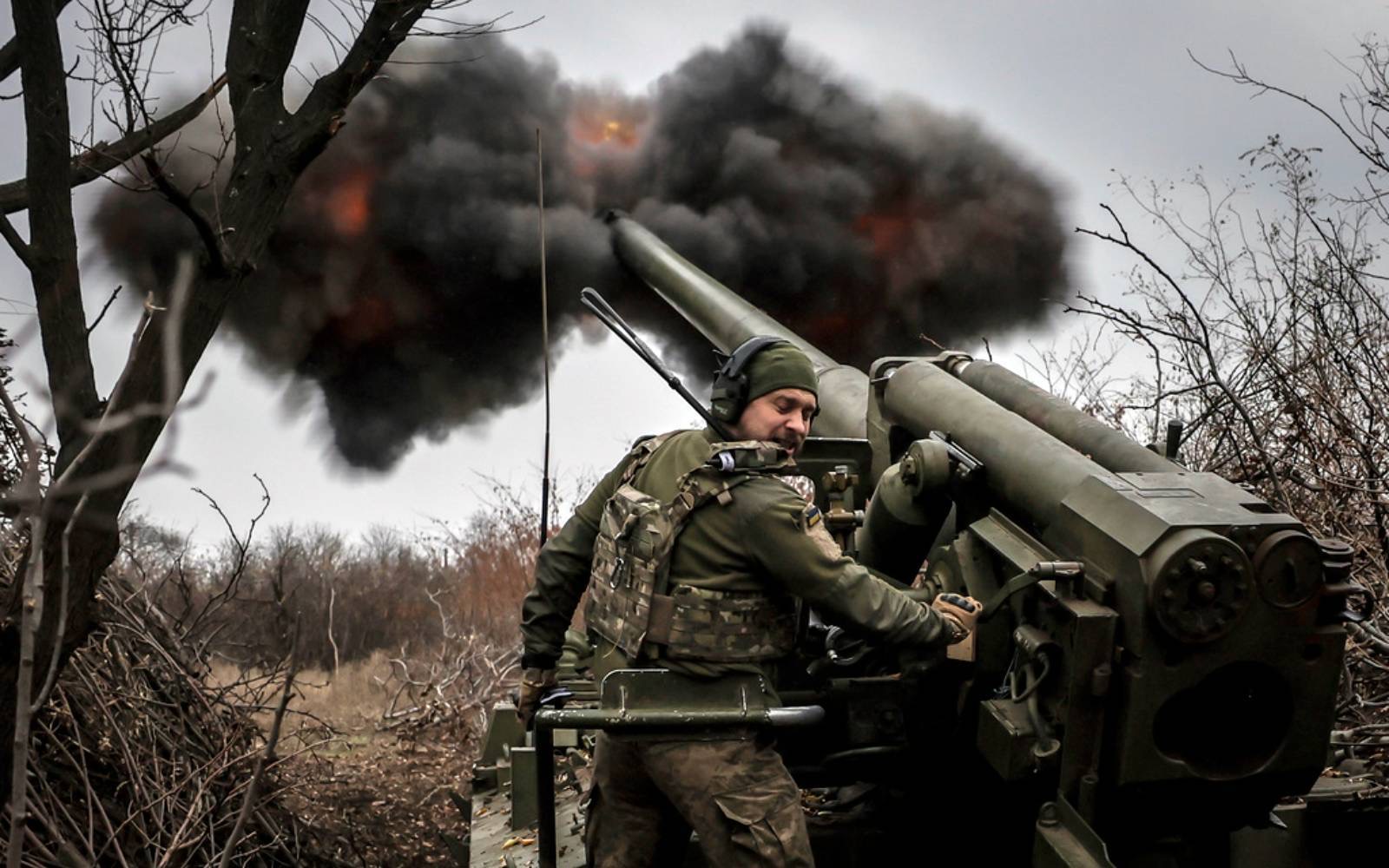
When Russian president Vladimir Putin made the decision to escalate the Russo-Ukrainian War with a full-scale invasion of the country on February 24, 2022, he could not have imagined the stalemate that would emerge more than three years later. The Russian advance was intended as a swift decapitation strike to overrun Kyiv and install a more pliable government [1]. Instead, the initial approach to seize Ukraine’s capital was pushed back, allowing Ukrainian forces to entrench themselves in the east of the country and prepare for a long war. This has had several monumental consequences for Russian decision-making. Although Putin took measures to insulate the Russian economy from the West’s retaliation, which has not gone unnoticed by the People’s Republic of China, the length of the conflict exacerbates the damage of these sanctions because Russia is forced to transform its economy into fueling its war machine. This limits their ability to focus on consumer goods production, which is necessary to maintain a high standard of living for the Russian people. More importantly, the conflict’s length has contributed to the impact of Western support. While the initial invasion may have caught the West by surprise, it has strengthened the unity of the NATO alliance and sparked a massive European remilitarization effort that has seen billions of dollars in aid to Ukraine. American intelligence and coordination with Ukraine, as it develops new forms of drone warfare, have sapped Russian strength and completely changed the paradigm of battle, forcing Russia to fight a very different war than the one it expected [2]. Ukraine’s growing drone and missile programs are now beginning to inflict significant damage on Russian energy infrastructure and are steadily degrading their economic capabilities. Russian offensives have seen little gains at massive costs of personnel and military equipment, and despite some slippage of territory in the East, the fortress belt of cities in Donetsk Oblast is likely to hold for the time being.
This marks a decisive moment—as the Russian economy worsens, the threat to the stability of Putin’s regime grows. Continued and expanded NATO military aid to Ukraine can potentially increase the pressure on Putin to seek a ceasefire or peace settlement. The successful brokering of a just peace would end a conflict that has killed and displaced millions while also reinvigorating confidence in American and European military power. In an increasingly multipolar world, strength and belief in the American ability of deterrence could prove vital to preventing aggression by other countries.
Russia’s Slowing Battlefield Successes
The easternmost regions of Ukraine are predominantly flat plains conducive to rapid advances of mechanized and armored military units because of the lack of defensible terrain. For years, Ukraine had struggled with Russian-sponsored separatist militant groups in these regions that ultimately sought union with Russia. After the full-scale invasion began in February 2022, these regions were among the first to be formally annexed into Russia after their sovereignty was recognized (only) by Russia. Despite several attacks and counterattacks, Russian forces have now largely taken the hardest parts of the country for Ukraine to defend, and are attempting to take more fortified and defensible territory. Russia in 2024 annexed four Ukrainian provinces—Donetsk, Luhansk, Kherson, and Zaporizhzhia—but has been unsuccessful in gaining effective control over the entirety of its new claimed territories. Russia controls around 75 percent of Zaporizhzhia and Kherson, and almost 90 percent of Donetsk and Luhansk Oblasts that collectively make up the Donbas region. The remainder of the Donbas, which Putin has demanded be ceded fully to Russia in any peace deal, is highly industrialized and contains fortified cities that contain some of the strongest defensive lines in Ukraine [3]. To take further territory, Russia must now struggle against well-prepared Ukrainian defenses, forcing advances against an entrenched enemy.
The battlefield conditions have also evolved. One of the greatest takeaways for countries around the world, including non-participants, is the growing importance of drones and the emergence of a new kind of drone warfare being actively developed by Ukraine. Ukraine faces a severe disadvantage in the production of armored vehicles and planes that would be necessary to counter Russia with conventional weapons parity. Instead, Ukraine has employed swarms of cheap drones laden with explosives that can target both personnel and vehicles alike. These drones are orders of magnitude less expensive than the tanks, mechanized equipment, jets, and other vehicles that they threaten. With drones, Ukraine has decimated Russia’s Black Sea naval fleet and inflicted grievous losses on Russian army ground vehicles [4]. The cost asymmetry of drones, rockets, and missiles that can be deployed against Russian aircraft has forced Russia to use longer-distance munitions, such as its own rockets or glide bombs, to carry out long-distance bombardment. Notably, this is very distinct from the highly localized American bombing support stemming from air superiority that characterized the rapid victories of Coalition forces during the Gulf War. The lack of Russian air superiority contributes immensely to the inability of the Russian armed forces to win battles at the pace of previous Western campaigns. To minimize the impacts of drones, battlefield advances look less like the rapid armored and mechanized advances expected of modern warfare, and more like small groups of staggered infantry attempting to move from entrenched positions over small distances before re-establishing cover. This greatly slows the possible rate of advance and makes the idea of a catastrophic breakthrough—in which Russian forces are able to rapidly pour forces through a small gap in Ukrainian defenses—significantly less likely.
Russia’s latest offensive, launched in May 2025, failed to take the key targets ordered by Putin and establish the kind of breakthrough necessary to force Ukraine to cede the Donbas region. With only small gains distributed along the entirety of the frontline, Russia suffered over 100,000 casualties; the rate of Russian gains relative to the costs imposed by Ukrainian defenders is not sustainable even at the short-to-medium term level of strategic planning by Russian military planners [5]. Even if the city of Pokrovsk, whose capture was largely the goal of the offensive, is achieved, its fall still leaves Russia facing down several other well-defended cities in the Donbas region, and Ukraine is unlikely to view Russia’s victory as anything but pyrrhic, given the casualties it managed to inflict. Pokrovsk would be the largest Russian victory over a major population center since Bakhmut fell two years ago, but its strategic value is significantly lower due to Ukraine’s fortifications in other cities and rerouting of logistical networks [6].
Growing Costs and Economic Damage
Russia’s costs are not just rising on the battlefield as a result of new combat. The West has slowly ratcheted up its economic sanctions as a punitive measure against Moscow’s war. The European Union has steadily increased its sanctions packages in tandem with an albeit slow attempt to delink its economy from reliance on Russian oil and natural gas for energy needs. American president Donald Trump, after failed attempts to parley a ceasefire in the war with Putin, finally seems ready to accept that economic sanctions may be necessary to compel Russian willingness to negotiate. The newest wave of American sanctions has finally targeted large energy conglomerates and oil companies that provide significant export revenue to the Russian economy. In coordination with the European Union and partners in the United Kingdom, Trump has also embarked on a campaign to convince countries such as India, China, and Turkey, which purchase significant amounts of Russian oil, to reduce their dependence on Russian energy imports [7]. The latest round of sanctions has also impacted the Russian economy, spurring the Central Bank to cut interest rates. Russia’s economy had appeared to be more resilient than initially expected due to Putin’s proactive moves to diversify currency holdings, coupled with the transition to a war economy, with high salaries for soldiers and military-industrial complex workers. As the war has progressed, increased military expenditures are no longer sufficient to offset the impacts of sanctions and increased consumer goods prices, and, as a result, Russian economic growth is beginning to slow [8]. Most significantly, this has implications for Russian strategic thinking—the economic outlook is unlikely to improve absent an easing of Western pressure. For long-term decision-making, the costs of sanctions will only grow higher as they increase in severity and their impacts are felt as a cumulative drag on the Russian economy.
The dual threat for Russia is a now increasing pressure that Ukraine is bringing via direct strikes on Russian energy infrastructure. Russia has targeted Ukrainian power infrastructure in its attacks against Ukrainian cities, while Ukraine has retaliated by targeting Russian oil refining facilities and ports that serve as an essential link in Russia’s economy. Ukraine launches swarms of drones and missiles that are extremely difficult to produce at a low cost because it has developed an internal drone manufacturing industry. These strikes on refineries, ports, logistics hubs, and pipelines have decreased Russia’s revenue from energy exports, in addition to causing domestic fuel shortages and problems with energy distribution within Russia [9]. This infrastructure is both vital to Russia’s military and economic efforts, as Russia’s energy sector income contributes almost a fifth of the total national GDP. Maintaining continuity of energy exports has been necessary to isolate Russia’s population from the impacts of the conflict, which is an essential element of Putin’s strategy for maintaining popular support for the continuation of the war. The damage from these strikes has been projected to last for over a year, and continual strikes will likely extend the timetable for recovery [10]. In response, Russia has only increased its strikes on Ukrainian targets, including night aerial attacks on cities, but its economy is undeniably feeling the pain, and it is only likely to increase.
Forcing a Peace
Although Ukraine has been able to inflict damage on Russia, it seems unlikely at this point that it will be able to return to pre-2022 borders, let alone recapture Crimea, which was seized in 2014 and annexed in a referendum widely considered illegal. Ukraine’s goal, broadly aligned with Europe and the United States, is to stop fighting at the current frontlines with extremely small territorial swaps along the new borders, along with obtaining security guarantees to prevent a resumption of hostilities. In return, the West would ease sanctions on Russia and allow for a resumption of some degree of economic and diplomatic relations. Russia has largely rejected these terms, instead demanding that Ukraine cede the Donbas region and agree to a wide-ranging degree of restrictions on the Ukrainian military and political position with regard to potential membership in NATO. Russia’s version of security guarantees, instead of NATO membership or the presence of troops from a coalition of the willing, is based on the United Nations Security Council. However, any potential U.N.S.C. response could potentially be vetoed by Russia, making it unpalatable to Ukraine or any of its European allies. This is largely unchanged from Russia’s initial demands at talks held in Istanbul at the war’s outset in March 2022 [11].
Western powers are not necessarily united on the exact forms that security guarantees will look like, ranging from NATO troops positioned as a tripwire force and actively securing the ceasefire lines to explicitly non-American forces from a coalition of the willing placed far away from the frontlines, training Ukrainian troops, and allowing more of Ukraine’s forces to be near the frontlines. The Alaska Summit, hosted by Trump, exposed that there is still a wide gulf between American and Russian visions of any long-term peace deal.
Yet a ceasefire remains in reach. Russia and Putin’s specific decision-making calculus is based on regime stability in addition to the geopolitical considerations of the invasion. As authoritarian elites, they are isolated to a degree from the public pressure that would occur in a democracy. Putin is not going to be voted out of office for continuing an unpopular war. It is clear, however, that he has some measure of fear of public opinion. He has sought to insulate the population from economic consequences and keep the war as far from the population as possible [12]. Ukraine’s growing capacity and willingness to strike deep into Russia risks destabilizing the careful image that Putin has cultivated of a conflict that is occurring firmly at the peripheries of Russian society. The economic transition to a war economy based around the conflict exacerbates the economic impacts of strikes because Russia has a comparatively smaller non-military, non-energy sector of civilian industries to buffer against economic shocks. Combined, this further causes the war to be perceived as a negative factor affecting the lives of everyday Russians. Ukraine’s threat of increasing damage to the economy and endangering the regime is the most likely method to push Russia to accept a ceasefire.
NATO’s best mechanism of doing so is increasing military and economic aid to Ukraine and continuing the cordon sanitaire against Russia. This is not unachievable— Trump has expressed anger at Russia’s refusals to negotiate in what he considers good faith, and has floated the idea of sending Tomahawk missiles to Ukraine. Tomahawks, in conjunction with American-provided ATACMS long-range weapons systems and similar weapons from European allies, will enhance Ukraine’s ability to strike Russian targets. Russia has warned that this will beleaguer Russian-American relations, and has threatened unspecified consequences, but it is unlikely that they have many escalatory options left. While Tomahawks will not immediately win Ukraine the war, they will be instrumental in increasing the range of Ukraine’s potential attacks against Russian infrastructure [13].
Russia may not immediately seek a peace deal, but consistent and continued aid to Ukraine is a realistic path to degrading Russian capabilities and changing the mindset of leadership toward accepting a ceasefire. It is the best option, absent direct intervention, toward ensuring that Ukraine retains its freedom and sovereignty while stopping the fighting that has devastated Ukraine’s land and population.
Consequences, Worldwide
A recent series of airspace incursions by Russian drones and aircraft into NATO nations has provoked concern that Russia could escalate the war into the Baltics, provoking a conflict with NATO [14]. This remains unlikely in the short term because Russian forces are tied down across the Ukrainian front. The incursions have shown the unity of NATO resolve, with consultative Article 4 meetings called by Poland over the extended flight of Russian drones into Polish airspace. Fears of hybrid warfare or grey zone attacks are not unfounded but rather show why keeping Ukraine in the fight is essential to deterring Russian aggression in the long term. Putin’s rhetoric of fighting against the entirety of the West may be designed for a domestic audience, but it is a warning that the West should be prepared for Russia to potentially act aggressively. Maintaining a strong united front is the key to deterrence.
A ceasefire, despite leading to the de facto loss of Ukrainian land, would vindicate NATO’s efforts to successfully deter Russian aggression and prevent them from achieving their goal of dominating Eastern Europe. This ought to be considered a Ukrainian victory because Ukraine will have defended its existence and sovereignty against a nuclear-armed state. The signaling benefits of Western willpower and capacity for deterrence will also be immense. China is studying Russia’s tactics to refine its own plans to attack Taiwan, and buffer its economy against the sanctions that would be imposed by the U.S. and its allies around the world as a result. They have also become significantly materially invested in the Russian economy, serving as a lifeline that purchases oil in exchange for providing technological aid and favorable economic deals. It may give China pause to see that the West can maintain its support to a country under attack from a much larger aggressor for several years. China also fears European participation in any potential conflict with Taiwan, seeing Russia as a useful tool to keep the EU nations distracted [15]. The lessons of the Ukraine war, which can be best accessed when Western militaries can train and learn from the Ukrainian military in peacetime, can teach Taiwan to wage the same kind of asymmetric drone defense that is necessary to raise the potential costs of taking the island so high that an attack becomes undesirable, an extension of their “porcupine” strategy.
Moreover, the vindication of the U.S. strategy in cooperating with European allies will raise confidence in the transatlantic partnership at a time when skepticism of the NATO alliance is rising. The perception of success will stave off calls to reduce commitments to the alliance, increasing its deterrence power against Russia or other enemies. These ramifications serve to defend American and European interests in preventing aggression worldwide.
Sources
[1] Stewart, Phil and Idrees Ali. “Russia Plans to ‘Decapitate’ Ukraine Government-US Defense Official.” Reuters. February 24th, 2022. https://www.reuters.com/world/us-believes-russia-planning-decapitate-ukraines-government-2022-02-24/.
[2] Entous, Adam. “The Partnership: The Secret History of the War in Ukraine.” The New York Times. March 29th, 2025. https://www.nytimes.com/interactive/2025/03/29/world/europe/us-ukraine-military-war-wiesbaden.html.
[3] Faulconbridge, Guy. “Putin’s Demand to Ukraine: Give Up Donbas, No NATO and No Western Troops, Sources Say.” Reuters. August 21st, 2025. https://www.reuters.com/world/china/putins-demand-ukraine-give-up-donbas-no-nato-no-western-troops-sources-say-2025-08-21/.
[4] Chivers, C. J. “How Suicide Drones Transformed the Front Lines in Ukraine.” The New York Times. December 31st, 2024. https://www.nytimes.com/2024/12/31/magazine/drones-weapons-ukraine-war.html.
[5] “Russia’s Latest Big Ukraine Offensive Gains Nothing, Again.” The Economist. October 17th, 2025. https://www.economist.com/interactive/europe/2025/10/17/russia-latest-big-ukraine-offensive-gains-next-to-nothing-again.
[6] Farrell, Francis. “Russian Troops Spotted North of Pokrovsk, Military Confirms.” The Kyiv Independent. November 18th, 2025. https://kyivindependent.com/russian-troops-spotted-north-of-pokrovsk-military-confirms/.
[7] Debusmann, Bernd, Max Matza, and Ian Aikman. “Trump Says Putin Talks ‘Don’t Go Anywhere’ As He Imposes New Sanctions.” BBC. October 23rd, 2025. https://www.bbc.com/news/articles/cd6758pn6ylo.
[8] Hannon, Paul. “Russia’s Central Bank Cuts Key Rate as New Sanctions Loom.” The Wall Street Journal. October 24th, 2025. https://www.wsj.com/articles/russias-central-bank-cuts-key-rate-as-new-sanctions-loom.
[9] Davydov, Vladyslav. “Vladimir Putin’s War Machine May Finally Be Running Out of Fuel.” Atlantic Council. October 21st, 2025. https://www.atlanticcouncil.org/blogs/ukrainealert/vladimir-putins-war-machine-may-finally-be-running-out-of-fuel/.
[10] Epstein, Jake. “Fire, Smoke, and Anti-Drone Nets: Satellite Images Capture Scenes From the Fight Engulfing Russia’s Oil Industry.” Business Insider. October 22nd, 2025. https://www.businessinsider.com/satellite-images-show-anti-drone-netting-damage-russian-oil-sites-2025-10.
[11] Stanovaya, Tatiana. “Tactical Victories in Ukraine Peace Talks Will Only Lead to Strategic Defeat.” Carnegie Politika. August 25th, 2025. https://carnegieendowment.org/russia-eurasia/politika/2025/08/russia-usa-ukraine-alaska-goals?lang=en.
[12] Ryvkin, Andrew. “Putin’s Bread and Circus Had Bread.” The Atlantic. May 6th, 2025. https://www.theatlantic.com/international/archive/2025/05/russia-trump-autocracy-economy/682699/?utm_source=feed.
[13] Cancian, Mark and Chris Park. “Will the Tomahawks Save Ukraine?” Center for Strategic and International Studies. October 17th, 2025. https://www.csis.org/analysis/will-tomahawks-save-ukraine.
[14] Kimmage, Mark. “Europe Is at War.” Foreign Policy. October 20th, 2025. https://foreignpolicy.com/2025/10/20/russia-putin-drones-airspace-europe-nato-war/.
[15] Basmat, Dmytro. “China’s Foreign Minister Tells EU That Beijing Cannot Afford Russia to Lose in Ukraine, Media Reports.” The Kyiv Independent. July 4th, 2025. https://kyivindependent.com/chinas-foreign-minister-tells-eu-that-beijing-cannot-afford-russian-loss-in-ukraine-media-reports-6-2025/.