
Haiti: Government Corruption, Gang Violence, and First-Hand Accounts
Haiti - A Background
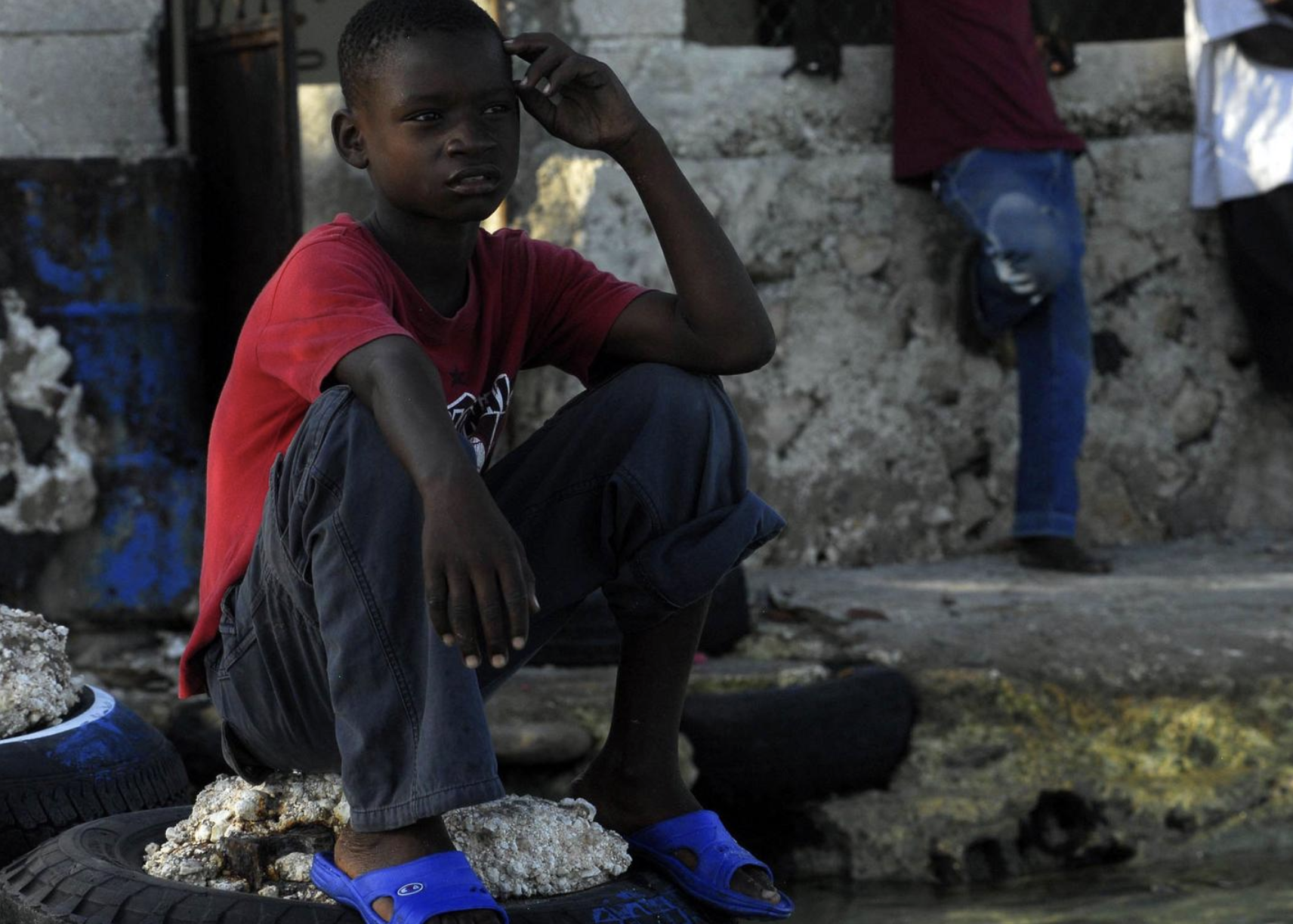
Haiti is a small country located in the Caribbean that shares an island with the Dominican Republic [1]. The capital of the country is Port-au-Prince. Haiti has a population of around 11.5 million. It is a semi-presidential republic in which the president acts as the country’s leader and the prime minister reports to the president [4]. However, Haiti has a deep history of political corruption and has failed to support its people with necessary services, which has contributed to the people’s perception of the government’s illegitimacy. It is also one of the poorest countries in the world; 59 percent of people live below the national poverty line, and nearly 25 percent of people live in extreme poverty [6]. Basic services like clean water, sanitation, and consistent food are hard to access when most of the population lives on less than $2 per day [7]. Currently, the country is in a state of chaos, with the government being weak and corrupt, gangs inflicting their own rule through violence and human rights violations, and innocent people being victims of a failed state. This article explores the factors that have contributed to the current state of Haiti.
The Moral Decay of Government
Corruption has been a persistent issue for decades and has infected all branches of the Haitian government. One of the biggest scandals involving the executive branch was the PetroCaribe scandal. The PetroCaribe program allowed for Haiti to have access to Venezuelan loans in return for preferential oil delivery [8]. While these loans were targeted for projects focused on reducing poverty and improving the lives of the people in Haiti, President Moise misappropriated contracts worth $1.2 million for personal gain [10] By embezzling millions of dollars of Venezuelan aid meant to help better the lives of Haiti’s most vulnerable, Moise effectively defrauded the poor out of billions of dollars [11].
The PetroCaribe scandal also infiltrated the legislative branch. From 2006-2008, three sitting senators received funds for their role in the fraud and used that money for personal gain [12]. While it was promised that this alliance would support economic development, social programs, and infrastructure, the civilians received little gain. This has contributed to the continued increase in wealth inequality and the lack of support people in Haiti receive from their government.
On the judicial level, corruption is demonstrated in the act of bribes and political interference. For example, when Mayor Jean-Morose of Les Irois was tried for murder with enough evidence against him to warrant a conviction, the trial judge did not prosecute him and allowed him to maintain his office [13]. This shows how the judicial system is often unwilling to hold public officials accountable, even if it comes at the cost of justice for the people.
While many cannot understand why people would fall into corruption, as the Anti-Corruption Unit of Haiti (ULCC) said, “how do you expect a child who cannot eat to avoid the temptation of corruption" [14]. In other words, how can you expect someone who has lived in poverty their whole lives not to better their own lives at the cost of others? Regardless, this corruption has perpetuated the continued poverty that many Haitians face and has contributed to the lack of the government’s legitimacy in the eyes of the people. When the government is no longer able to provide essential services, third parties assume that role, leading to further problems.
The Growing Power of Gangs
A corrupt government was the perfect setting for gangs to flourish and exploit the system. Since the 1980s, all presidential administrations and rival politicians have used gangs for personal means, such as intimidating the opposition, justifying their policies, and illegally collecting money and votes [15]. Even previous police commanders have colluded with gangs to collect revenue and promote political objectives. For example, the G9 gang has been linked with the Parti Haitien Tet Kale (P.H.T.K.), the party of President Moise [16]. In return for enforcing political authority, intimidating rivals, and manipulating elections, the gangs received bribes, ranging from motorcycles and computers to immunity from prosecution [17].
However, the biggest turning point in gang influence was the assassination of Haitian President Moise in 2021. This event caused the already unstable country to deteriorate, with Prime Minister Ariel Henry unable to control the violence. After the gangs pledged to remove him, Henry resigned on April 25, 2024 and created a council tasked with choosing a new prime minister and cabinet [18]. Once this action was publicized, the gangs launched a coordinated attack on surrounding areas to storm prisons, seize control of ports, torch shops, and police stations, and lay siege to international airports [19]. In early March, they released 4,000 inmates from Haiti’s two largest prisons [20]. Aided by an unchecked flow of weapons and weak law enforcement, the gangs now control Port-Au-Prince, and have moved on to rural areas. There are two rival coalitions, G9 and Gpep, who fight for control of the capital [21]. In many of these gangs, the main demographic is young men who, based on their current situations, believe that they have no future, no jobs, no education, and no money. Thus, they see violence as the only way to survive, as they cannot rely on the corrupt system that the government has allowed to flourish.
The impact of their actions has rippled throughout the country. With 85 percent of Port-Au-Prince being controlled by gangs, over 1.3 million Haitians have been displaced and many are experiencing famine-like conditions [22]. Hundreds have been injured, kidnapped, raped, and trafficked, and 4,864 have been killed [23]. Large scale human rights abuses have been reported, and there is no check on the gangs’ power. While the UN Security Council mandated operational support for the police and the protection of critical infrastructure in 2023, the mission lacked funding, equipment, and personnel [24]. As of September 2025, the UN Security Council created a new mission, the Gang Suppression Force (G.S.F), to counter gang violence and the humanitarian crisis. However, it will take time to build the force up and establish necessary support.
First Hand Accounts from a Haitian Citizen
A Haitian resident, interviewed for this article on the condition of anonymity, has witnessed firsthand the impacts of political corruption and gang violence. He and others around him believe that “the Haitian people don’t trust their government because they have been unable to protect the nation, create a stable economy, and build necessary infrastructure.” Political scandals have yet to be addressed in the judicial system, and accountability is nonexistent. Secondly, government officials are also responsible for destabilizing the government after the assassination of the President, whom many feel “was doing good work for the country.” And while most people join gangs because of their desire to make money through “abuse, kidnapping, and theft,” there is something that many foreign reporters and news reporters overlook: the lack of opportunity. Regardless of educational status, young people are not given “opportunities to grow, prosper, and achieve their dreams.” This reflects the failure of key institutions like “family, schools, the church, and most importantly, the government.”
Next Steps
While the problems infiltrating key institutions in Haiti seem unsolvable, he believes that three key points will lay the foundation for meaningful progress. Firstly, he believes reforming the justice system, police, and army in order to establish accountability is critical for rebuilding trust in the government. Secondly, developing strong annual audits of the government will reduce the likelihood of government scandals through increased transparency. Thirdly, using robust technology in financial and government structures will reduce human corruption by removing the human variable altogether. Only by implementing changes aligned with these goals can Haiti rise above the ashes of instability towards democracy and freedom.
Sources
[1] Boatner, Kay. “Haiti facts and photos.” National Geographic Kids. November 10th, 2025. https://kids.nationalgeographic.com/geography/countries/article/haiti.
[2] Boatner, “Haiti facts and photos.”
[3] Boatner, “Haiti facts and photos.”
[4] Boatner, “Haiti facts and photos.”
[5] Boatner, “Haiti facts and photos.”
[6] UNICEF. “Humantarian Action for Children: Haiti Appeal.” UNICEF. 2023 https://www.unicef.org/media/132191/file/2023-HAC-Haiti.pdf.
[7] UNICEF, "Humanitarian Action for Children: Haiti Appeal.”
[8] News Wires. “PetroCaribe scandal: Haiti court accuses officials of mismanaging $2 bln in aid.” France 24. August 18th, 2020. https://www.france24.com/en/20200817-petrocaribe-scandal-haiti-court-accuses-officials-of-mismanaging-2-bln-in-aid.
[9] News Wires, “PetroCaribe scandal: Haiti court accuses officials of mismanaging $2 bln in aid.”
[10] Charles, Jacqueline, “Haiti President Accused of Embezzlement Scheme in Government Audit of Venezuela Aid Money.” WLRN. June 5th, 2019. https://www.wlrn.org/news/2019-06-05/haiti-president-accused-of-embezzlement-scheme-in-government-audit-of-venezuela-aid-money.
[11] Charles, “Haiti President Accused of Embezzlement Scheme in Government Audit of Venezuela Aid Money.”
[12] U.S. Department of State. “Appendix C: Developments in Haiti." U.S. Department of State., November 2022. https://www.state.gov/wp-content/uploads/2022/11/Appendix-C-Developments-in-Haiti-004977.pdf.
[13] Joseph, Mario. “Judicial Corruption in Haiti: The Need for Discipline and Civil Society Participation.” UC Law SF International Law Review. Winter 2016. https://repository.uclawsf.edu/cgi/viewcontent.cgi?article=1809&context=hastings_international_comparative_law_review.
[14] Office on Drugs and Crime. “Peace Requires Transformation: The Fight Against Corruption in Haiti.” United Nations. Feburary 2025. https://www.unodc.org/unodc/frontpage/2025/February/peace-requires-transformation_-the-fight-against-corruption-in-haiti.html.
[15] Felbab-Brown, Vanda. “Haiti in 2023: Political abyss and vicious gangs.” Brookings. February 3th, 2023. https://www.brookings.edu/articles/haiti-in-2023-political-abyss-and-vicious-gangs/#:~:text=Since%20the%201980s%2C%20all%20prior%20administrations%2C%20including,their%20policies%2C%20and%20collect%20money%20and%20votes.
[16] Felbab-Brown, “Haiti in 2023: Political abyss and vicious gangs.”
[17] Felbab-Brown, “Haiti in 2023: Political abyss and vicious gangs.”
[18] Coto, Danica, “Ariel Henry resigns as prime minister of Haiti, wracked by gang violence, paving the wave for a new government to take power.” PBS. April 25th, 2024. https://www.pbs.org/newshour/world/ariel-henry-resigns-as-prime-minister-of-haiti-wracked-by-gang-violence-paving-the-way-for-new-government-to-take-power#:~:text=to%2Dtake%2Dpower-,Ariel%20Henry%20resigns%20as%20prime%20minister%20of%20Haiti%2C%20wracked%20by,due%20to%20be%20sworn%20in.
[19] Coto, “Ariel Henry resigns as prime minister of Haiti, wracked by gang violence, paving the wave for a new government to take power.”
[20] Coto, “Ariel Henry resigns as prime minister of Haiti, wracked by gang violence, paving the wave for a new government to take power.”
[21] Phillips, Tom “ Haiti: what caused the gang violence and will it end now the PM has quit?”. The Guardian. March 12th, 2024. https://www.theguardian.com/world/2024/mar/08/haiti-crisis-gang-jailbreak-explained.
[22] UN News. “‘An unending horror story’: Gangs and human rights abuses expand in Haiti.” United Nations. July 11th, 2025. https://news.un.org/en/story/2025/07/1165373.
[23] UN News, “‘An unending horror story’: Gangs and human rights abuses expand in Haiti.”
[24] Roy, Diana, “Haiti’s Troubled Path to Development”. Council on Foreign Relations. November 5th, 2025. https://www.cfr.org/backgrounder/haitis-troubled-path-development.
[25] Roy, “Haiti’s Troubled Path to Development.”