
George Santos’s Lies and the Historical Misuse of the Pardon Power
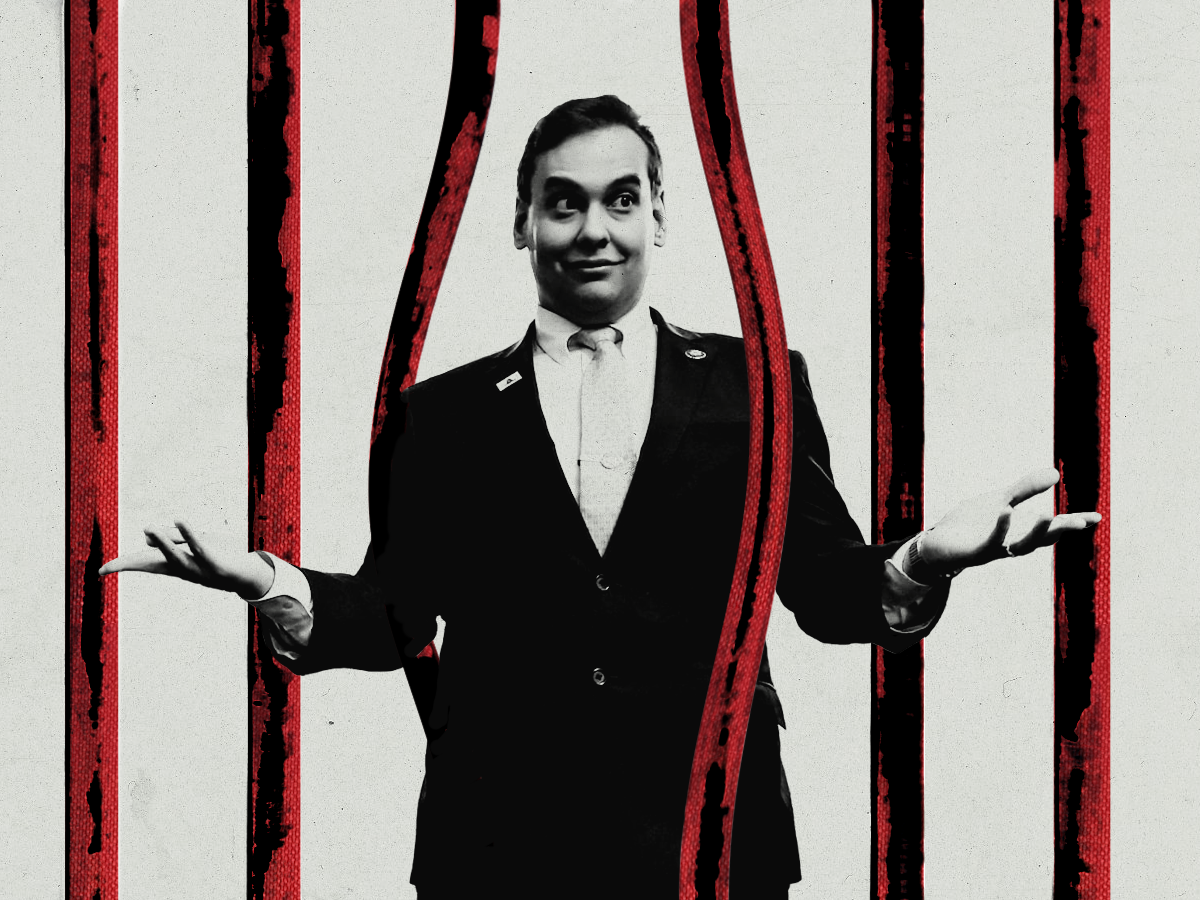
In October 2025, U.S. President Donald Trump commuted former Congressman George Santos’s (R-NY) criminal sentence. After pleading guilty to counts of both aggravated identity theft and wire fraud, Santos was due for a seven-year prison sentence [1]. Just three months in, after being arrested in July, Trump granted him clemency on controversial grounds. The commutation of Santos’s federal sentence reflects a broader transformation of the presidential pardon from a product of moral judgment into a platform to diffuse partisan ideals. While the pardon is a staple of executive power and ought to remain as such, continued misuse threatens the core values of American democracy.
Santos’s term in Congress is marked by its remarkably short length and controversial nature. After flipping a competitive seat, Santos did not make it through his first term before the House Ethics Committee began discovering and exposing fallacies in his educational record, professional history, and more [2]. Specifically, Santos was accused of covering personal expenses like vacations and makeup products with campaign funds, defrauding the government to receive unemployment benefits while serving as the director of an investment firm, fabricating his educational and work experience, and even defrauding fellow members of Congress [3]. After his expulsion from Congress on these grounds, Santos publicly begged Trump for clemency or “whatever” [4]. Trump, ultimately, accepted. In a Truth Social post following the decision, Trump cited that “Santos had the Courage, Conviction, and Intelligence to ALWAYS VOTE REPUBLICAN” as justification [5]. The rhyme and reason of clemency, however, has not always been so overtly partisan.
History of Presidential Clemency
Clemency is an executive power with an extensive history. Enumerated in Article II of the Constitution, the power of clemency can be applied to any federal crime except impeachment. Commutation serves as a particular sub-type of clemency, wherein the sentence an individual faces for a particular crime is reduced or expunged. The first example of presidential clemency was in 1795, when George Washington used the pardon power to extend amnesty to two citizens accused of treason after Pennsylvania’s Whiskey Rebellion [6]. Washington’s decision to pardon the offenders primarily stemmed from Washington’s desire to avoid unnecessary conflict in the future and establish the hegemony of the stable, new American government [7].
However, Margaret Love, the former head of the U.S. Pardon Office of the Department of Justice (DOJ), has observed a problematic trend in the development of the presidential pardon. Love contends that the pardon power has gone “off the rails” since the start of the Clinton administration, and that the pardon was never intended to become a crutch for the President to pass unpopular policy, as it is now. Her particular grievance was that late-term pardons were unprecedentedly based on political motivations rather than justice [8]. Clinton faced particularly harsh criticism for his decision to pardon his own brother for drug-related offenses, including possession of cocaine and trafficking [9]. Clinton marked a strict departure from solely politically motivated clemency. This opened the door for future presidents to use the pardon increasingly personally and partisanly, making for the pardon we know today. While a balance still exists, and Presidents necessarily draw on constitutional imperatives for certain pardon decisions, it is clear that the presidential power of clemency is becoming just another victim of the U.S. polarization crisis.
At the end of his term, President Joe Biden engaged in similar behavior, pardoning his son Hunter Biden on felony gun and tax-related charges. Trump was quick to slam this pardon as unjust and an abuse of power [10]. While Trump may ideologically disagree with Hunter’s pardoning, painting the use of the pardon as unreasonable is hypocritical, especially when examining the pardons made directly before and during Trump’s first term as President.
Trump’s criticism of Biden, however, seems logically antithetical to the pardons he made in his first term. Some of Trump’s most notable past pardons include the organizer of a border wall-building GoFundMe campaign that allegedly scammed donors, and an alleged victim of what the White House declared to be “the greatest witch hunt in American history” [11]. While Trump may never have pardoned a family member or close relative as Biden did, it is clear that his preceding pardons were not exactly constructionist either.
As Trump moves into his second term, the promise of semi-reasonable pardons seems to be fading already. Without the possibility of reelection looming, Trump’s pardons promise to devolve even further.
Future of Clemency
Since returning to the office, Trump has engaged in more pardons than Santos’s. One particular case included an individual who committed fraud on his taxes and was ultimately charged $4.4 million in restitution. After his mother donated $1 million to the President, however, the President waived the charges [12].
Breaking long-standing social, cultural, and governmental norms is legal. Pardoning based on party affiliation is legal. Criticizing another President’s pardons for being unfair and then doing the same yourself is legal. However, none of the above are emblematic of American values or the obligations of the office of the President, nor are they socially acceptable. Calling out the injustice of clemency like that afforded to Santos is imperative, especially in making sure future elected officials do not feel comfortable in engaging in similar behavior.
Pardons are critical to resolving unjust failures of government, working toward social justice, and more. However, the direction pardons have been heading is dangerous for democracy. Returning to the foundational American values of democracy and civic progress is critical to ensuring that this power does not take the government off the deep end.
Sources
[1] Fadel, Leila. “Trump commuted the prison sentence of George Santos. A look at how it happened.” NPR. October 20th, 2025. https://www.npr.org/2025/10/20/nx-s1-5579580/trump-commuted-the-prison-sentence-of-george-santos-a-look-at-how-it-happened
[2] Mediaite Staff. “Trump Got George Santos Out of Prison. New York Might Throw Him Back In.” Mediaite. October 21st, 2025. https://www.yahoo.com/news/articles/trump-got-george-santos-prison-020920243.html?guccounter=1
[3] Rumpf, Sarah. “A Complete-Ish Ranking of the Many, Many Lies and Fabrications of George Santos.” Mediaite. January 20th, 2023. https://www.mediaite.com/opinion/a-complete-ish-ranking-of-the-many-many-lies-and-fabrications-of-george-santos/
[4] Mediaite Staff. “Trump Got George.”
[5] Adamczeski, Ryan. “Trump has commuted George Santos' sentence, saving the disgraced gay Republican from more than seven years in prison.” Advocate. October 20th, 2025. https://www.advocate.com/politics/why-trump-pardon-george-santos#rebelltitem4
[6] Shogan, Colleen. “The History of the Pardon Power.” The White House Historical Association. December 2nd, 2020. https://www.whitehousehistory.org/the-history-of-the-pardon-power
[7] Time Staff. “Whiskey Rebels, 1794.” Time. https://content.time.com/time/specials/packages/article/0,28804,1862257_1862325_1862313,00.html#:~:text=Eventually%2C%20Washington%20pardoned%20those%20who,to%20quell%20its%20own%20citizens.
[8] Love, Margaret. “The Truth About the Presidential Pardon Power With Margaret Love & Mark Allenbaugh.” iHeart Radio. January 5th, 2025. https://www.iheart.com/podcast/263-set-for-sentencing-95884709/episode/the-truth-about-the-presidential-pardon-255044193/
[9] Ranker News Staff. “Every President's Most Controversial Pardon, Ranked.” Ranker News. February 15th, 2025. https://www.ranker.com/list/every-presidents-most-controversial-pardon-ranked/ranker-news
[10] Sarnoff, Leah. “Trump calls Biden pardoning son Hunter a 'miscarriage of justice'.” ABC News. December 1st, 2024. https://abcnews.go.com/Politics/trump-calls-biden-pardoning-son-hunter-miscarriage-justice/story?id=116360980
[11] Kochi, Sudiksha. “Who did Donald Trump pardon? What to know about Charles Kushner, Steve Bannon, other top allies.” USA Today. December 2nd, 2024. https://www.usatoday.com/story/news/politics/elections/2024/12/02/trump-pardoned-during-first-term/76705964007/
[12] Neff, Joseph. “Trump Flouts Pardon Rules — and Costs Victims and Taxpayers More Than $1 Billion.” The Marshall Project. July 28th, 2025. https://www.themarshallproject.org/2025/07/28/trump-pardons-violate-standards
Image: Kiet Huynh (BPR Graphic Designer)