
Financial Power and Foreign Influence: How AIPAC Shapes U.S. Policy Beyond Public Opinion
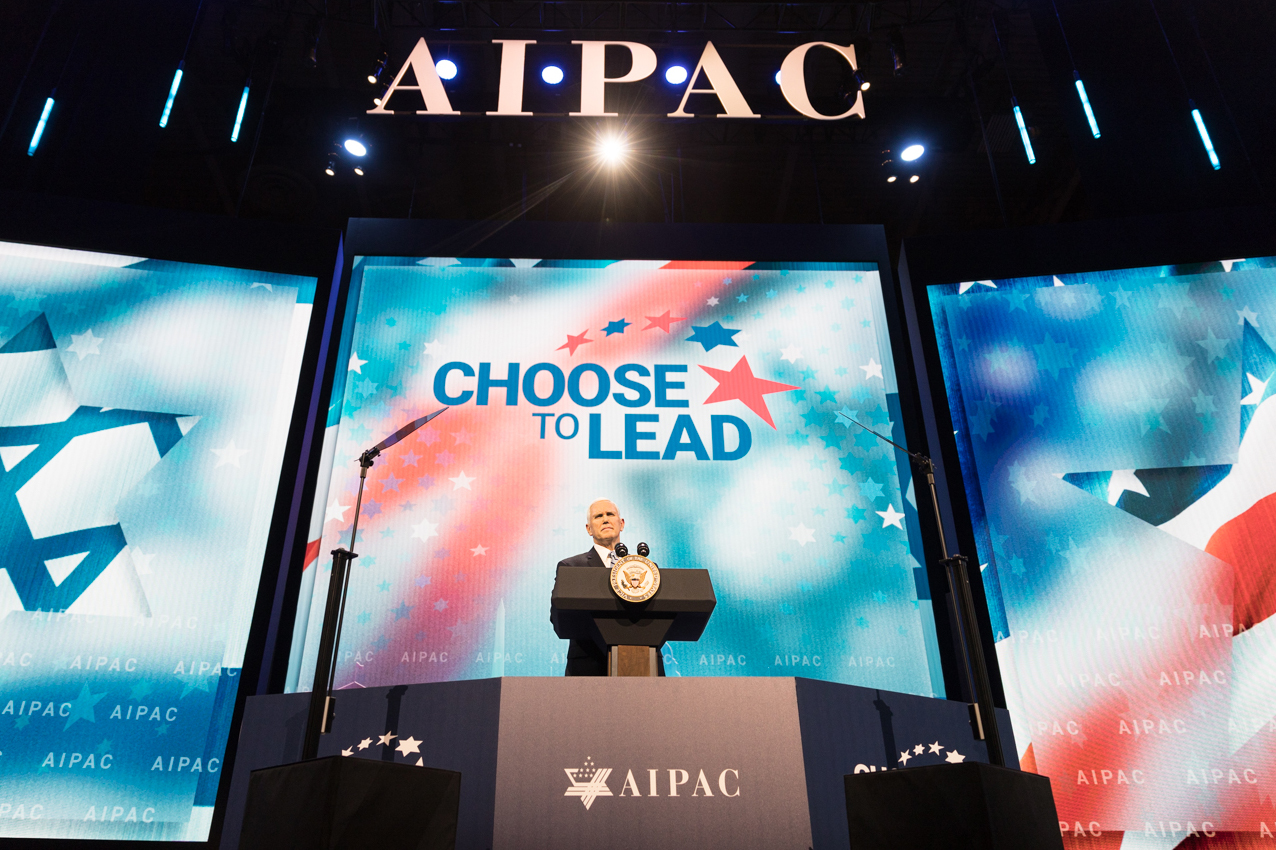
Organized lobbying is a defining feature of American democracy as it ensures a variety of voices within the policymaking process. However, this practice also exposes the tense relationship between influence and dominance, especially when significant financial power has the ability to amplify certain voices over others. Few lobbying organizations highlight this tension more clearly than the American Israel Public Affairs Committee. AIPAC serves as a lobbying group dedicated to strengthening the relationship between Israel and the United States. The organization maintains a bipartisan position in domestic politics and donates to candidates who will ensure Israel’s right to exist. Recently, AIPAC has drawn criticism from the left as the partisan politics around the United States’ unconditional support for Israel have shifted since the start of the 2023 war in Gaza [1].
AIPAC, and its affiliated committees, have exemplified how ethnic lobbying groups disproportionately influence U.S. political decision-making by converting financial power into political loyalty. While AIPAC frames itself as a group working to strengthen U.S.-Israel relations, it has continuously steered America’s foreign policy in the Middle East towards the priorities of the Israeli government, rather than those of the American public [2, 3]. This truth underscores the pressing need for more effective policies regarding groups lobbying on behalf of foreign entities, as well as necessary revisions to the current legislation that governs these groups.
AIPAC’s Origins
AIPAC was originally known as the American Zionist Council and began its operations in 1954, following World War II. Before the war, many Orthodox and conservative Jews were anti-Zionist, meaning they were unsupportive of a Jewish state [4]. However, as a result of the Holocaust, pro-Zionist sentiment was renewed among anti-Zionists who actively began calling on the American public to support Israel’s statehood [5]. Although this movement was important, the most prominent reason for the creation of a U.S.-Israeli lobby was in response to the Qibya Massacre, an event where the Israeli army killed sixty Palestinian villagers in their West Bank homes [6]. American Jews mobilized to create a lobby as a means of defending Israel from criticism during this time of crisis, leading to the renaming of the A.Z.C. to AIPAC, as a means of incorporating all groups supportive of Israel, not just Zionists [7]. Since its rebrand, AIPAC aims to unite both Democrats and Republicans to advance the mission of strengthening the U.S.-Israel relationship [8].
While dedicated to bolstering the relationship between the United States and Israel, AIPAC’s financial arm did not exist before December 2021 and has historically never endorsed or contributed to a candidate [9]. Previously, AIPAC leaders would frequently meet with the chairmen of key congressional committees to either promote or oppose legislation regarding Israel [10]. However, after the decentralization of congressional power in the 1980s, AIPAC began to expand its reach outside of Capitol Hill and into grassroots programs in major U.S. cities [11]. As the organization grew larger over the years, its opposition began to grow as well. J Street, another pro-Israel lobby, was established in 2007 and has since stood by its principles as a moderate organization, critical of Israel’s expansion in the West Bank, unlike AIPAC [12]. In December of 2021, AIPAC expanded its political efforts by launching two bipartisan committees: a federal PAC, the AIPAC PAC, and a super PAC, the United Democracy Project (U.D.P) [13]. Since its inception, the U.D.P. has raised over $100 million allocated towards blocking Democratic and Republican candidates critical of Israel [14]. The U.D.P. is a prime example of how organizations navigate campaigning laws to significantly augment their political reach. While AIPAC itself does not directly donate to candidates, its affiliated networks channel funds into congressional races that constantly shape U.S.-Israel legislative policy [15].
Legal Framework of Lobbying
Under the Lobbying Disclosure Act of 1995, lobbyists must register with the Secretary of the Senate and the Clerk of the House when their total income from lobbying for clients is expected to exceed $3,500 in a given quarter, or if an organization with in-house lobbyists is expected to exceed $16,000 in lobbying expenses during that same period [16]. They also must register if they make any lobbying contact with government officials or federal employees. The law was designed to promote transparency rather than limit advocacy. However, transparency alone does not prevent disproportionate influence, particularly when well-funded organizations dominate access and visibility.
The broader campaign finance environment, however, is governed by the Federal Election Campaign Act, which prohibits corporations and labor unions from making campaign contributions directly from their general treasuries. To work around this, corporations are allowed to establish political action committees as a means of supporting candidates, albeit with strict limitations. These financial limitations were ruled unconstitutional in Citizens United v. FEC as the Supreme Court found that restricting a corporation's ability to spend money hindered their ability to disseminate free speech [17]. This landmark decision paved the way for the creation of super PACs, organizations that can raise and spend unlimited amounts of money on campaigns for candidates, but cannot donate directly to said candidates. This decision has since benefited wealthy organizations and individuals as they can now pour large sums of money into the campaigns of their favorite candidates, effectively diminishing the influence of those with far fewer financial resources.
Lobbying and Public Opinion
As a result of the ongoing war in Gaza, public support for Israel has rapidly declined over the last few years, as shown in a recent Pew Research Center survey that showed a decline in favorability toward Israel within the U.S. since 2022 [18]. This was consistent amongst supporters of both political parties and all age groups surveyed [19]. The same study also revealed that the number of U.S. adults who voiced “very” unfavorable views towards Israel had nearly doubled from 10 percent in 2022 to 19 percent in 2025 [20]. In a similar poll conducted by Gallup in 2024, the organization found that 55 percent of respondents disapproved of Israel’s actions in the Gaza Strip, representing a 10 percent increase from the 45 percent who said they disapproved in November 2023 when Israel began their invasion [21]. In the same report, Gallup revealed that all three major party groups, Republicans, Democrats, and Independents, became less supportive of Israel’s actions since their invasion as well [22]. Unfortunately, public opinion has lacked any significant influence on Congress, as voting records have remained staunchly pro-Israel since the start of the war in Gaza. In 2024, Congress passed Public Laws 118-47 and 118-50, resulting in $18 billion sent to Israel for the specific use of military advancements in the region [23, 24]. However, as the humanitarian situation has worsened in Gaza, many Americans have voiced their declining support for military aid to Israel over the past year [25]. A recent poll published by YouGov reflects this shift in public attitude, showing a 20 percent increase in support for reducing U.S. military aid to Israel since October 7th, alongside a gradual 10 percent decline in support for expanding such aid [26]. Although Congress does not always mirror public opinion due to internal strategic considerations unknown to the public, the sustained divergence between public disapproval and continued legislative support for Israel indicates the influence of powerful intervening actors. These statistics ultimately reveal the disconnect between public opinion and laws being passed by Congress, suggesting that lawmakers are responding to political incentives rather than electoral accountability mechanisms. AIPAC’s demonstrated capacity to reward compliance and punish dissent provides a reasonable explanation for why members of Congress continue to support military aid policies that are increasingly unpopular with their constituents.
The decisive passage of these aid packages was not a simple reflection of long-standing U.S. foreign policy priorities but rather a product of an electoral environment that financially punishes candidates who criticize the actions of Israel and rewards those who support it [27]. In recent years, AIPAC and its affiliated committees have dramatically expanded their role in congressional races, channeling substantial funds towards candidates who maintain strong pro-Israel positions and countering those who diverge from that stance [28]. This strategy gained a renewed urgency during the recent election cycles due to the war in Gaza. In the 2024 election cycle, AIPAC specifically targeted the members of the “Squad,” an informal faction of progressive Democrats in the House of Representatives [29]. Members of the Squad represent the “furthest-left” of lawmakers within the House and advocate for progressive policies within the Democratic party [30]. In the wake of October 7th, the Squad renewed its calls for ceasefires in Gaza and accused Israel of committing an ethnic cleansing of the region, remarks later deemed detrimental to the U.S.-Israel relationship by other Democrats and pro-Israel groups [31]. The Squad’s negative views on Israel have significantly increased their opposition in the 2024 election cycle, as anti-Squad groups largely outspent pro-Squad entities [32]. Both AIPAC and the U.D.P. have contributed over $23 million against members of this faction, as well as in support of their primary challengers [33].
In 2023, the U.D.P. spent nearly $15 million in a New York congressional primary to oppose incumbent Squad member Jamaal Bowman [34]. The super PAC used its funds on both negative advertisements opposing Bowman, as well as in support of Bowman’s opponent, pro-Israel moderate Democrat George Latimer, making it the most expensive primary in the U.D.P.’s history [35]. In contrast, a coalition of ten progressive PACs only spent a combined $3 million in support of Bowman’s campaign [36]. The U.D.P. also targeted incumbent Representative Cori Bush in the 2024 election cycle, as the organization spent more than $8.4 million in the St. Louis primary in an effort to unseat her and elect pro-Israel candidate Wesley Bell [37]. Bush had been an outspoken critic of Israel’s response to Hamas following October 7th, characterizing the Gaza offensive as an “ethnic cleansing” and opposing Republican legislation she believed to be “anti-Palestinian.” [38]. Unfortunately for Bush, her actions made her a prime target for pro-Israel lobbying groups, especially AIPAC and its affiliated PACs. In August of 2024, both Bowman and Bush lost in their respective primaries, leading to the election of two pro-Israel Democrats, backed by one of the largest Jewish lobbies in the United States [39].
In addition to the endorsement of pro-Israel Democrats, AIPAC has maintained its bipartisanship by continuously endorsing Republicans supportive of Israel [40]. In 2022, AIPAC announced its support for over thirty-five Republicans who refused to certify Joe Biden back in 2020, a decision that drew criticism for legitimizing candidates who undermined an essential U.S. democratic process [41]. AIPAC defended these endorsements by insisting that its mission is singularly focused on supporting politicians who “stand with Israel,” regardless of their broader political or ethical positions [42]. This stance reveals AIPAC’s hierarchy of values, one in which alignment with the Israeli government outweighs a candidate’s commitment to foundational democratic principles. By directing substantial political capital towards candidates who reject democratic norms, AIPAC reinforces a political environment where foreign policy alignment supersedes domestic accountability. This practice, when combined with its aggressive spending against anti-Israel Democrats, reveals that its political interventions are not merely about policy but rather about constructing an electoral landscape that maintains unwavering support for Israel.
Collectively, these patterns demonstrate that AIPAC’s growing electoral influence is reshaping the boundaries of acceptable political discourse surrounding Israel. Even as public opinion has shifted in response to the war in Gaza, congressional action has remained insulated from these changes, owing in large part to the financial power AIPAC wields over our legislators [43]. Through the systematic targeting of dissent, AIPAC effectively narrows the range of perspectives represented in Congress and undermines key democratic institutions. Ultimately, the widening gap between public sentiment and congressional action reflects not a genuine consensus but rather the influence a lobbying organization has over who is elected into office.
The Foreign Agent Registration Act
Under the Foreign Agent Registration Act of 1938, any person or entity of foreign principals who are engaged in political activities must disclose their relationship with the foreign principal to the Department of Justice [44]. The D.O.J. states that FARA neither prohibits nor prevents representation of foreign interests in the United States. Simply, the act serves as a transparency mechanism for the U.S. populace to ensure foreign-linked lobbying is publicly identified. While AIPAC itself has never registered under FARA, the D.O.J. required its predecessor, the A.Z.C., to register itself as a foreign agent in 1963 [45]. This order came after the revelation that the organization had received almost all its operating funds from the Jewish Agency for Israel, a quasi-governmental agency funded in part by the Israeli government [46]. However, the A.Z.C. soon disbanded after the order, and the D.O.J. later withdrew its demand, leading to the reorganization of the A.Z.C. into what is now AIPAC[47].
Since its rebrand, AIPAC has maintained its stance that it is an American organization representing the interests of American citizens, rather than those of a foreign government [48]. Legally, this argument is crucial in AIPAC’s distinction as an American entity. FARA only applies when an entity acts at the “order, request, or under direction or control” of a foreign principal [49]. However, AIPAC's close alignment with Israeli policy positions and its facilitation of congressional trips to Israel highlight how the current FARA framework may not fully capture modern forms of indirect influence [50]. As international politics become increasingly interconnected, the distinction between foreign and domestic advocacy grows harder to define. These practices fall into a gray zone that FARA, which was written in 1938, is ill-equipped to regulate.
It is important, however, to distinguish AIPAC’s influence from that of a conventional domestic interest group that advocates for a set of publicly unpopular policies. In a pluralist system, interest groups are not expected to conform to the majority opinion but rather advance their particular preferences within the U.S. electorate. AIPAC, however, differs from these conventional groups in that its advocacy centers on foreign policy positions closely aligned with the strategic preferences of a foreign government. Where domestic interest groups advocate for policies that primarily redistribute costs and benefits within American society, AIPAC’s advocacy often affects issues of national security and international obligation, where the consequences often extend beyond domestic governance and potentially jeopardize U.S. sovereignty itself.
The ambiguity of FARA’s language is central to understanding AIPAC’s broader influence on the U.S. government. Even without formal foreign-principal status, AIPAC effectively channels Israeli strategic priorities into U.S. policymaking. Its advocacy system, campaign finance networks, and congressional relationships collectively ensure that U.S. foreign policy remains aligned with Israeli government positions, even when that alignment diverges from American public opinion [51, 52, 53]. In essence, AIPAC occupies a space in our government where it can legally claim domestic legitimacy while functionally monopolizing U.S. foreign policy to serve the interests of a foreign government. The gap between FARA’s legal categories and AIPAC’s practical influence highlights how foreign policy is driven not by transparent debate or popular preference but by well-resourced interest groups who push the limits of domestic and foreign advocacy.
The concern, therefore, is not that AIPAC advances a minority viewpoint, but that the existing legal framework fails to adequately account for organizations that claim domestic status while consistently adhering to priorities of a foreign entity. This does not suggest that all international advocacy should fall under FARA, but that its distinction between foreign agents and domestic actors no longer captures the spectrum of influence modern lobbying groups can exert. As global politics become increasingly interconnected, these limits grow weaker, thus highlighting the importance of reexamining FARA’s language. The act's outdated assumptions regarding foreign policy are not built to handle modern spheres of influence, and revision is therefore essential if the U.S. seeks to ensure that its policies reflect the will of its citizens, rather than the will of a foreign government. Because the current statute focuses almost exclusively on disclosure rather than limitations, its regulatory power is ultimately minimal. Updating FARA to include tailored restrictions on the scope of political engagement could help to close this gap. Revisions regarding enforcement mechanisms, limitations on Congressional lobbying, and clarifying definitions of a “foreign agent” would better align the law with contemporary geopolitics and reduce opportunities for foreign-directed influence to shape U.S. policy.
AIPAC’s role in American politics reflects both the strengths and vulnerabilities of the nation’s democratic system. The organization demonstrates the immense power organized advocacy can have in our system; however, it also reveals the detriments financial influence can have over political outcomes, which often outpace public opinion. While the organization operates lawfully and transparently, the current laws that govern these lobbying groups warrant renewed scrutiny. The challenge for policymakers is to ensure that lobbying remains a vehicle for democratic participation rather than a channel for disproportionate influence. By strengthening transparency laws and modernizing the legal boundaries that govern political advocacy, the U.S. campaigning system can be preserved to guarantee a healthy balance between free speech and accountable governance in the modern day.
Sources
[1] Harb, Ali. “Centrist US Democrat says he returned AIPAC donations, cites Netanyahu ties.” Al Jazeera. October 16th, 2025. https://www.aljazeera.com/news/2025/10/16/centrist-us-democrat-says-he-returned-aipac-donations-cites-netanyahu-ties
[2] Beinart, Peter. “AIPAC Refuses to Learn From Its Mistakes on Iran.” Jewish Currents. January 31st, 2022. https://jewishcurrents.org/aipac-refuses-to-learn-from-its-mistakes-on-iran
[3] Clifton, Eli. “AIPAC, FDD Websites Erase All Evidence Of Their Iraq War Cheerleading. March 20th, 2023. https://responsiblestatecraft.org/2023/03/20/aipac-fdd-websites-erase-all-evidence-of-their-iraq-war-cheerleading/
[4] Lorber, Ben. “Jewish Alternatives to Zionism: A Partial History.” Jewish Voice for Peace. January 12th, 2019. https://www.jewishvoiceforpeace.org/2019/01/12/a-partial-history-of-jewish-alternatives/
[5] Rossinow, Doug.“‘The Edge of the Abyss:’ The Origins of the Israel Lobby, 1949-154.” Modern American History. March 8th, 2018. https://www.cambridge.org/core/journals/modern-american-history/article/edge-of-the-abyss-the-origins-of-the-israel-lobby-19491954/E1690BDB5CA87C66B2B65D12CA1D716A
[6] Rossinow, “‘The Edge of the Abyss.’”
[7] Rossinow, “‘The Edge of the Abyss.’”
[8] “Who We Are.” AIPAC. December 5th, 2025. https://www.aipac.org/about
[9] Ben-David, Lenny. “The Evolution of AIPAC’s Political Operation in Washington over 50 Years - An Eyewitness Perspective.” Jerusalem Center for Pubic Affairs. December 12th, 2022. https://jcfa.org/article/the-evolution-of-aipacs-political-operation-in-washington-over-50-years-an-eyewitness-perspective/
[10] Ben-David, “The Evolution of AIPAC.”
[11] Ben-David, “The Evolution of AIPAC.”
[12] Tracy, Marc. “J Street Seeks a Middle Path on Gaza. Is That Possible Anymore?” The New York Times. April 8th, 2024. https://www.nytimes.com/2024/04/08/us/j-street-lobby-israel-gaza.html#:~:text=With%20the%20pro%2DIsrael%20lobbying%20group%20AIPAC%20increasingly,of%20Palestinians%20and%20Israelis%20in%20two%20states.
[13] Schneider, Elena. “AIPAC launches super PAC” Politico. December 16th, 2021. https://www.politico.com/news/2021/12/16/aipac-launches-super-pac-525092
[14] Greve, Joan E., Alice Herman, and Will Craft. “Pro-Israel US groups plan $100m effort to unseat progressives over Gaza.” The Guardian. April 20th, 2024. https://www.theguardian.com/us-news/2024/apr/20/pro-israel-groups-gaza-us-elections
[15] Schumer, Mat. “Pro-Israel PACs poised to spend big to unseat progressive members of Congress in 2024 election cycle.” OpenSecrets. December 7th, 2023. https://www.opensecrets.org/news/2023/12/pro-israel-pacs-poised-to-spend-big-to-unseat-progressive-members-of-congress-in-2024-election-cycle
[16] “Lobbying Disclosure Act.” Office of the Clerk, U.S. House of Representatives. December 5th, 2025. https://lobbyingdisclosure.house.gov/lda.html
[17] Weiner, Daniel. “Citizens United, Explained.” Brennan Center for Justice. December 12th, 2019. https://www.brennancenter.org/our-work/research-reports/citizens-united-explained
[18] Silver, Laura. “How Americans view Israel and the Israel-Hamas War at the start of Trump’s second term.” Pew Research Center. April 8th, 2025. https://www.pewresearch.org/short-reads/2025/04/08/how-americans-view-israel-and-the-israel-hamas-war-at-the-start-of-trumps-second-term/
[19] Silver. “How Americans view.”
[20] Silver. “How Americans view.”
[21] Jones, Jefferey. “Majority in U.S. Now Disapprove of Israeli Action in Gaza.” Gallup. March 27th, 2024. https://news.gallup.com/poll/642695/majority-disapprove-israeli-action-gaza.aspx
[22] Jefferey. “Majority in U.S.”
[23] Rep. Ciscomani, Juan. “H.R.2882 - Further Consolidated Appropriations Act, 2024.” Congress.gov. March 23rd, 2024. https://www.congress.gov/bill/118th-congress/house-bill/2882
[24] Rep. McMorris Rodgers, Cathy. “H.R.815 - Making emergency supplemental appropriations for the fiscal year ending September 30, 2024, and for other purposes.” Congress.gov. April 24th, 2024. https://www.congress.gov/bill/118th-congress/house-bill/815
[25] Orth, Taylor, and David Montgomery. “Unemployment concerns, Gaza, Epstein, trust and medicine, guns, and team names: August 1-4, 2025 Economist/YouGov Poll.” YouGov. August 5th, 2025. https://today.yougov.com/politics/articles/52716-unemployment-concerns-gaza-israelis-palestinians-jeffrey-epstein-investigation-trust-medicine-health-vaccines-guns-team-names-nfl-mlb-commanders-guardians-august-1-4-2025-economist-yougov-poll
[26] Orth and Montgomery. “Unemployment concerns, Gaza, Epstein”
[27] Zhang, Sharon. “Israel Lobby Has Given $58M to Congress, Which Overwhelmingly Backs Gaza Assault.” Truthout. January 10th, 2024. https://truthout.org/articles/israel-lobby-has-given-58m-to-congress-which-overwhelmingly-backs-gaza-assault/?utm_source=chatgpt.com
[28] Beggin, Riley, and Erin Mansfield. “With swollen war chests, AIPAC-backed pro-Israel candidates are winning primaries.” USA Today. May 22nd, 2024. https://www.usatoday.com/story/news/politics/elections/2024/05/22/aipac-pro-israel-groups-winning-elections/73786784007/
[29] Greve, Herman, and Craft. “Pro-Israel US groups.”
[30] Metzger, Bryan. “How vulnerable is ‘The Squad?’ What to watch as several progressives battle a wave of pro-Israel money in the next several months.” Business Insider. February 22nd, 2024. https://www.businessinsider.com/the-squad-primary-challengers-dates-races-israel-progressives-2024-2
[31] Rosenbaum, Jason. “Rep. Bush’s Israel criticism has drawn attention and provoked a primary challenge. NPR. November 9th, 2023. https://www.stlpr.org/government-politics-issues/2023-11-09/u-s-rep-cori-bushs-israel-criticism-draws-attention-and-a-primary-challenge
[32] Skelley, Geoffrey. “Pro-Israel groups spent big to oust two Squad members in primaries.” ABC News. September 17th, 2024. https://abcnews.go.com/538/pro-israel-groups-spent-big-oust-squad-members/story?id=113675889
[33] Skelley. “Pro-Israel groups spent.”
[34] Gabbat, Adam. “Progressive ‘Squad’ member Jamaal Bowman loses New York House primary.” June 25th, 2024. The Guardian. https://www.theguardian.com/us-news/article/2024/jun/25/new-york-democratic-primary-jamaal-bowman
[35] Herman, Alice, and Will Craft. “Race to unseat New York progressive ‘most expensive House primary ever.’” The Guardian. June 20th, 2024. https://www.theguardian.com/us-news/article/2024/jun/20/jamaal-bowman-george-latimer-primary
[36] Herman and Craft. “Race to unseat.”
[37] McGreal, Chris. “Cori Bush loses primary after pro-Israel groups spend millions to oust ‘Squad’ member.” The Guardian. August 6th, 2024. https://www.theguardian.com/us-news/article/2024/aug/06/missouri-cori-bush-primary-bell-aipac-israel
[38] Rosenbaum, Jason. “Missouri Rep. Cori Bush is ousted by a primary challenger backed by pro-Israel groups.” NPR. August 6th, 2024. https://www.npr.org/2024/08/06/nx-s1-5064639/missouri-congresswoman-cori-bush-faces-a-primary-challenger-backed-by-pro-israel-groups#:~:text=She%20is%20also%20an%20abortion,among%20noncombatants%20while%20waging%20war.&text=As%20she%20tried%20to%20prevail,see%20them%20harmed%20as%20well.%22
[39] Skelley. “Pro-Israel groups spent.”
[40] “Who We Are.” AIPAC.
[41] McGreal, Chris. “‘Morally bankrupt:’ outrage after pro-Israel group backs insurrectionist Republicans.” The Guardian. March 23rd, 2022. https://www.theguardian.com/us-news/2022/mar/23/aipac-pro-israel-group-backs-insurrectionist-republicans
[42] McGreal. “‘Morally bankrupt’”
[43] Lacy, Akela. “How Does AIPAC Shape Washington? We Tracked Every Dollar.” The Intercept. October 24th, 2024. https://theintercept.com/2024/10/24/aipac-spending-congress-elections-israel/
[44] “Foreign Agents Registration Act.” U.S. Department of Justice. December 5th, 2025. https://www.justice.gov/nsd-fara
[45] “DOJ orders the AZC to Register as a Foreign Agent.” The Israel Lobby Archive. December 5th, 2025. https://www.israellobby.org/azcdoj/?
[46] Phillips, Cabell. “Fulbright Scores Agency of Israel; Its Use of U.S. Zionist Body Is Said to Skirt Statute.” August 2nd, 1963. The New York Times. https://www.nytimes.com/1963/08/02/archives/fulbright-scores-agency-of-israel-its-use-of-us-zionist-body-is.html
[47] Brownfeld, Allan. “AIPAC Election Role Raises Question of Foreign Agent Registration.” Washington Report on Middle East Affairs. November 2022. https://www.wrmea.org/north-america/aipac-election-role-raises-question-of-foreign-agent-registration.html?utm_source=chatgpt.com
[48] “Who We Are.” AIPAC.
[49] “Foreign Agents Registration Act.” U.S. Department of Justice.
[50] Hughes, Aidan, and Cait Kelley. “Members of Congress have taken hundreds of AIPAC-funded trips to Israel in the past decade.” Politico. October 30th, 2024. https://www.politico.com/news/2024/10/30/israel-aipac-funded-congress-travel-00185167
[51] Silver. “How Americans view.”
[52] Jefferey. “Majority in U.S.”
[53] Orth and Montgomery. “Unemployment concerns, Gaza, Epstein.”