
Doomed to Fail? Why anti-elite movements struggle in the Philippines
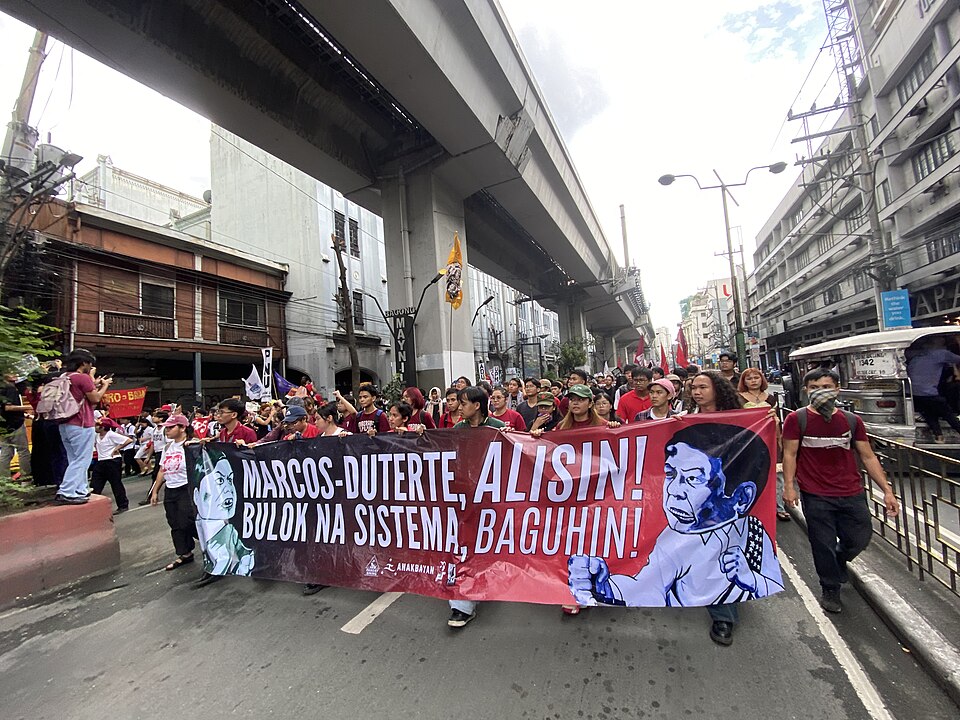
On September 21, 2025, tens of thousands of Filipinos took to the streets in one of the largest waves of protests the country had seen in years. The protesters directed their anger toward a massive corruption scandal involving the mismanagement of billion-dollar flood control projects, which left millions of storm-impacted Filipinos wading through waist-deep water and despair. Across social media, netizens turned their pitchforks toward elite families who hosted Gatsby-esque parties while the rest of the country struggled. Yet, despite the outpouring of outrage, the protests achieved little.
For Filipinos, this cycle is achingly familiar. Each generation has lived through its own moment of political awakening—whether it was the 1986 People Power Revolution, the 2013 Million People March, or the 2020 Sonagkaisa protests against President Rodrigo Duterte—yet each has ultimately been absorbed, deflected, or co-opted by the very system it sought to transform. Even the People Power Revolution, which toppled a sitting dictator in a feat no other mass protest has since replicated, delivered only limited structural change. Within a year, demonstrators were back in the streets, this time demanding an end to extractive land policies and long-delayed agrarian reform [1]. Decades later, those same issues remain unresolved. In this way, the Philippines has become a graveyard of anti-elite movements, with a new headstone erected every couple of years.
It is tempting to attribute these failures to a so-called culture of corruption. Indeed, corruption in the Philippines permeates from the barangay to the bureau, with patronage, nepotism, and “utang na loob” (debt of gratitude) shaping political relationships. Many civil servants often act less as public stewards than as extensions of dynastic political families, securing votes and favors for their patrons in exchange for protection and promotion.
Yet to frame corruption as cultural, or the result of some inherent moral failure of the Filipino people, is to be historically myopic. Corruption did not arise spontaneously from Filipino society– it was institutionalized through colonial governance. American administrators in the early 20th century deliberately built a political system reliant on local political elites to maintain order and loyalty [2]. They selectively cultivated relationships with English-educated and reliably Westernized Filipino families. In exchange for enforcing pro-American policies and quelling nationalist resistance, the American administrators rewarded these elites with access to limited local political office. This template survived independence, and as the U.S.’s role in direct governance diminished, these political elites rose to prominence, solidifying dynastic control over their respective state and federal jurisdictions.
The power of elite families extends beyond just the political; it permeates into the economic structure, which guarantees the endurance of elite rule. The Ayalas, Cojuangcos, Sys, Villars, Gokongweis, and Marcoses dominate the Philippine economy and form a corporate aristocracy whose interests are woven into the fabric of governance. These families bankroll political campaigns, dictate labor and tax policy, and often own the very media outlets that shape public discourse. Their conglomerates employ millions of Filipinos, granting them leverage over unions and local governments. This economic oligarchy is not unique to the Philippines—various parts of East and South-East Asia operate on a similar model—but its entrenchment is exceptional. The wealthiest one percent of Filipinos control over 50 percent of national wealth [3].
This system, once again, did not emerge by accident. Under both Spanish and American colonial rule, land ownership became the core currency of wealth and political power. Colonial authorities rewarded cooperative families with land and stripped it from those who opposed them, entrenching a hierarchy that would long outlive colonial rule. Even reforms that appeared progressive on paper often reproduced the same inequalities. The 1902 Land Act introduced by U.S. authorities, for instance, claimed to limit monopolies by capping public land acquisitions, yet it was riddled with loopholes that allowed elites to expand their holdings [4]. Meanwhile, ordinary rural Filipinos who lacked literacy, legal representation, and political leverage had no meaningful way to challenge fraudulent claims or defend the land inhabited by their ancestors. Patronage, not justice, determined ownership.
This legacy remains brutally intact. Rural poverty persists because an archaic land-tenancy system continues to bind landless peasants to powerful landlords [5]. In many provinces, families depend on these landowners for employment, food, housing, and credit. Such dependence makes resistance perilously costly: challenging the local elite can mean losing one’s livelihood, home, or even personal safety. Post-independence governments repeatedly promised agrarian reform but failed to dismantle this feudal order. Programs like the 1988 Comprehensive Agrarian Reform Program were riddled with exemptions, delayed implementation, and fierce elite obstruction. This ensured that genuine redistribution never materialized.
In many cases, this land monopoly sustained the aforementioned political monopoly. Families that control vast agricultural estates also dominate provincial politics, turning governorships and congressional seats into hereditary positions. These same elites use their political power to protect their economic interests, creating a vicious cycle that ensures reform remains perpetually out of reach.
Even after formal independence in 1946, the United States remained deeply entwined in the Philippines’ political and economic structures. First, the Cold War mindset caused successive U.S. administrations to support Filipino leaders who upheld pro-American policies, from trade agreements to military-basing rights in the region, irrespective of the blatant disregard for democratic norms [6]. The Marcos dictatorship serves as a case in point. Ferdinand Marcos Sr. positioned himself as a staunch anti-communist ally, earning American military and financial support even as he declared martial law, curtailed civil liberties, and looted billions. When his regime finally fell in 1986, it was also the U.S. that granted him and his family asylum in Hawaii, furthering their practice of elite shielding.
That the September 2025 protests against Marcos Jr. occurred exactly 43 years after Marcos Sr.’s declaration of martial law is no coincidence. The irony is bitter: the son of the dictator once toppled by people power now occupies Malacañang Palace. President Marcos Jr. has positioned himself as a reformist, promising to “end elite patronage” and “restore fairness” in governance [7]. Yet his rhetoric rings hollow against the backdrop of his own lineage. His family’s wealth remains largely unaudited, though it is known that at least 10 billion USD were plundered from state coffers during his father’s reign [8]. His political survival depends on alliances with other dynasties and on avoiding the alienation of provincial power brokers who deliver votes. When senators were accused of siphoning funds from flood control projects in August this year, the administration’s response was tepid.
One of the most dramatic episodes in this unfolding saga involves Zaldy Co, a contractor and former member of the House of Representatives. In November, the Office of the Ombudsman—an independent agency—filed embezzlement charges against him, and a special court issued a warrant for his arrest. Yet Mr. Co remains at large. From hiding, he released a series of video messages accusing Marcos Jr. and people close to him of benefiting from the corruption. These revelations have further eroded the administration’s credibility and encapsulate the tragedy of the Filipino political cycle: those who promise to dismantle elite rule are often themselves its beneficiaries.
If anti-elite movements in the Philippines are to achieve more than symbolic victories, they must go beyond calls for transparency or moral renewal. The issue is not merely corruption; it is the structure of power itself. First, genuine land reform must be aggressively implemented through enforceable legal mechanisms and participatory oversight. This includes establishing citizen-led monitoring committees to ensure compliance with agrarian laws, improving access to judicial processes to address land disputes, and creating transparent registries of land ownership. Redistributing land is not only an economic necessity but a democratic one. Without land ownership, rural Filipinos remain trapped in dependency, unable to organize politically or economically.
Second, democratizing the economy is essential. Concrete legislative reforms must break up monopolies, enforce anti-trust regulations, and incentivize cooperative ownership models through tax benefits and public funding. Regulatory agencies should be accountable to the people and operate under transparent, independent oversight, ensuring industries that affect public welfare prioritize community needs over their bottom line. Concurrently, wealth concentration can be countered through progressive tax reforms and stricter inheritance taxes.
Finally, empowering grassroots political organizations is the key to countering elite capture and ensuring that all aforementioned reforms are followed through on. Grassroots organizations should receive resources and training for advocacy, monitoring, and negotiation, transforming activism into tangible political influence. This would allow protests to integrate strategic policy demands with coordinated lobbying, leveraging both mass mobilization and formal legislative channels. Meaningful change will not come from the top. It will come from the ground up: from farmers reclaiming their fields, workers demanding fair wages, youths questioning inherited norms, and citizens refusing to forget.
Sources
[1] Amnesty International Philippines, “POST EDSA,” Amnesty International Philippines, 3 July ,2022. https://www.amnesty.org.ph/2022/07/protestph-post-edsa/.
[2] Marc Paniza, “The Legacy of American Imperialism in the Philippines: From Colonisation to Modern-Day Neocolonialism,” Honi Soit, 4 September 2024. https://honisoit.com/2024/09/the-legacy-of-american-imperialism-in-the-philippines-from-colonisation-to-modern-day-neocolonialism/.
[3] Mercado, Rogelio V., Cyn-Young Park, and Juzhong Zhuang, Trends and Drivers of Income Inequality in the Philippines, Thailand, and Viet Nam: A Decomposition Analysis. Asian Development Bank Economics Working Paper Series No. 692, 11 August, 2023. https://www.adb.org/publications/trends-drivers-income-inequality-philippines-thailand-viet-nam.
[4] Ateneo de Manila University Archives. Philippine Studies Article. https://archium.ateneo.edu/cgi/viewcontent.cgi?params=/context/phstudies/article/4455/&path_info=506.pdf.
[5] Peter Goodman, “Philippine Economy, Colonial Legacy, and Modern Challenges,” The New York Times, 30 December, 2023, https://www.nytimes.com/2023/12/30/business/philippine-economy-colonial-legacy.html.
[6] Gary Hawes, “United States Support for the Marcos Administration and the Pressures that made for Change,” JSTOR Stable 25797880, https://www.jstor.org/stable/25797880?seq=9.
[7] Andreo Calonzo and Cliff Venzon. “Marcos Turns Corruption Buster, Taps Anger Over Philippine Elite,” Bloomberg, 9 September, 2025. https://www.bloomberg.com/news/articles/2025-09-09/marcos-turns-corruption-buster-taps-anger-over-philippine-elite.
[8] Mynardo Macaraig, “Marcos: a US-Backed Dictator With Charisma,” ABS-CBN News, 8 November, 2016, https://www.abs-cbn.com/news/11/08/16/marcos-a-us-backed-dictator-with-charisma.
Image: Kej Andrés, “National Day of Action against Corruption by Youth 1,“ Wikimedia Commons, October 17, 2025, https://commons.wikimedia.org/wiki/File:National_Day_of_Action_against_Corruption_by_Youth_1.jpg