
After a Year of Deference: Are Western Leaders Finally Standing Up to Trump?
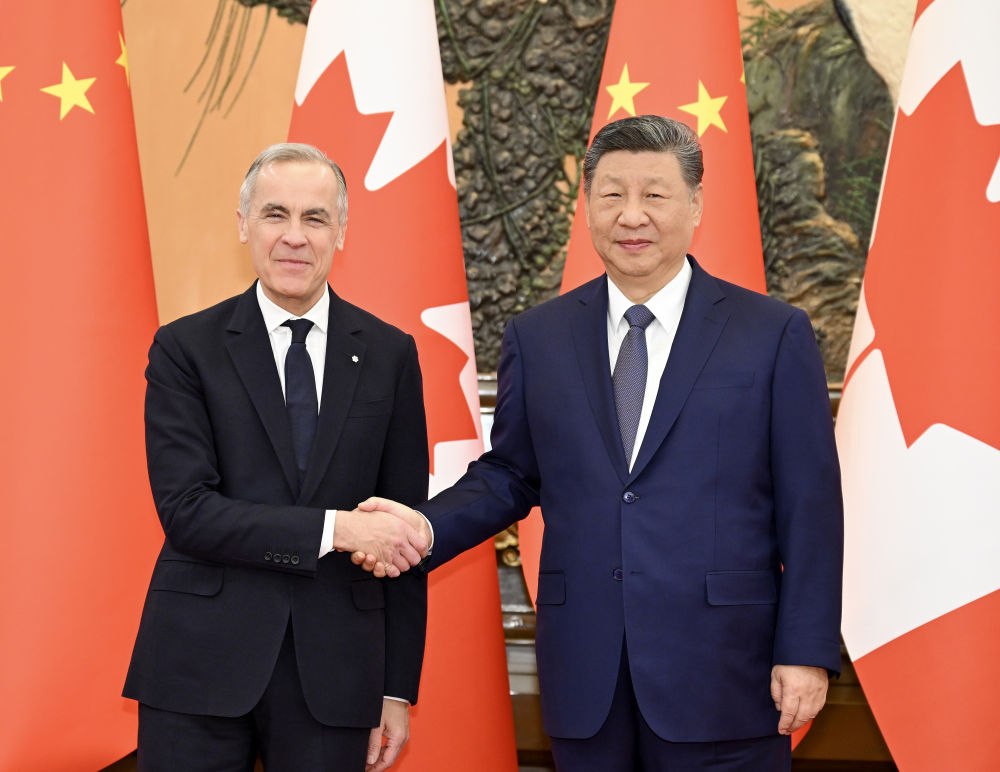
Since President Trump took office on January 20, 2025, he uprooted America’s position in the world almost overnight [1]. Faced with renewed American unilateralism, trade pressure, and rhetorical volatility, many allied leaders initially prioritized stability over confrontation. Quickly, certain actions by Trump on the world stage gave leaders reason to worry. For instance, on February 28, 2025, Trump publicly berated Ukrainian President Volodymyr Zelenskyy in the White House, leaving other Western leaders scrambling to both ensure continued support for Ukraine and contend with a potential change in their relationships with the US [2].
Nearly one year later, in January 2026, Western leaders were faced with a new difficult choice over the future of Greenland. Trump’s threats—backed by recent decisive and unprecedented military action in Venezuela—represented an existential threat to the NATO alliance that has provided security and stability to Europe and its allies for multiple generations. In large part, Europe banded together against Trump, spurring further resistance [3]. This was led by Canadian Prime Minister Mark Carney, who, in a speech at the World Economic Forum in Davos exactly one year after Trump’s inauguration, challenged the prevailing posture of Western deference toward President Donald Trump. Carney did not name Trump directly, however, but warned that the rules-based international order has fractured and urged “middle powers” to coordinate rather than comply. He stressed the need for values-based but pragmatic partnerships between middle powers, taking the time to emphasize all that Canada has to offer [4].
The speech received a standing ovation, was praised by international commentators, and was quickly rebuked by Trump. But beyond the headlines lies a more important question: Does Carney’s intervention represent a real strategic shift among Western leaders, or is it merely symbolic resistance undertaken primarily in response to the Greenland crisis? Furthermore, is this a strategic shift that Canada will pursue alone, or will other Western leaders follow Carney’s lead? On the whole, Carney’s speech is consistent with a slight escalation in Canada’s approach to US and international relations over the past year. However, it would constitute a serious escalation if fully adopted by other Western leaders. Economic and military choices by leading Western countries in the weeks following Davos demonstrate that leaders are acting in some ways and not others, showcasing the power and limitations of Europe in terms of a military and economic response to a growingly belligerent United States. While geopolitical volatility combined with Trump’s unpredictability makes an overall definitive stance on the best way to approach him impossible, standing up to Trump in some areas is largely a necessity for most countries at this point.
Deference: The Natural, Rational First Response
From Trump’s initial berating of President Zelenskyy in the Oval Office to his delight at being invited for an unprecedented second state visit to the UK, world leaders could see all too clearly the initial benefits of deference and catering to Trump. Trump signaled very early that he would treat allies transactionally, making “don’t provoke” a defensible initial response. It encouraged allies to offer Trump what cost them little: compliments, honors, and headlines. Furthermore, a cautious posture bought time for leaders to assess what was bluster, what was policy, and what retaliation would look like as Trump repeatedly changed his stance on tariff threats and other international policy [5].
UK Prime Minister Keir Starmer led this charge on February 27, 2025, when he hand-delivered a letter from King Charles to Trump in the increasingly gilded Oval Office, remarking on the historic nature of the invitation, playing into Trump’s long love for the British monarchy, and mimicking Trump’s own rhetoric by proclaiming, “This has never happened before. It’s so incredible, it will be historic” [6]. This deferential, yet somewhat Trumpian and extraordinarily complimentary posture—combined even with his choice of Peter Mandelson as Ambassador to the United States—worked exceedingly well for Starmer at the time. He was preceded just days earlier by French President Emmanuel Macron, who developed a relationship with Trump during his first term. Macron, sometimes known as the “Trump whisperer,” stood up to certain points Trump made in public conversations, such as his claim that Europe was only making loans to Ukraine, but generally complimented him and leaned on their longstanding relationship [7].
After Zelenskyy visited the White House and the threatened “Liberation Day” tariffs—which Trump later rolled back—European leaders began to grasp the limits of ceremonial diplomacy. In the United Kingdom, for instance, the fiscal and business effects of Trump’s newly imposed tariffs on British exports—and the official analysis showing potential damage to GDP—made clear that deference alone would not safeguard national economic interests [8]. Deference had bought them access, but not predictability, and no preferential trade deals. It only produced partial tariff relief, reinforcing the need to consider a more assertive, unified European response.
How and when Western countries began to push back
Canada and the EU provide two contrasting case studies in how Western countries may push back. Trump’s treatment of former Canadian Prime Minister Justin Trudeau, combined with his economically based threats towards Canada early in his presidency, pushed an early Canadian response. Trump first called Trudeau “Governor Trudeau” in a Truth Social post in December 2024, over a month before taking office [9]. While certainly not signaling any imminent plan to annex Canada, this jest did much to challenge Canadian sovereignty and strength. Trump’s bluster continued; in early March 2025, he announced sweeping 25 percent tariffs on Canada and Mexico [10]. This threatened to devastate Canada, whose economy is uniquely intertwined with the United States. While these tariffs were postponed and lessened, the markets and the Canadian public had no choice but to take Trump at his word. Compared to other Western countries with economies far less integrated—albeit still highly integrated—with the US, threats of tariffs and the like were far less existential.
In fact, this unique threat to Canada spurred Canadian politics to change nearly overnight. After 10 years under Trudeau’s Liberal Party, Pierre Poilievre’s Conservative Party was leading by over 20 points in the polls. After Carney took over as party leader, his background and stance against Trump galvanized support for his party [11]. Canadians saw Trump as a potential threat to their sovereignty, and Carney led the Liberal Party to victory in the April 2025 snap election [12]. For his part, Carney has stuck by the mandate to stand up to Trump. On his visit to the White House, Carney stood up directly to Trump, making clear that Canada would never be for sale [13]. More significantly, in his victory speech, he declared an end to the deepening economic and security integration between the two countries, and he has acted upon it [14]. This public rhetoric climaxed with Carney’s Davos speech.
Carney’s Davos Speech
In front of a worldwide audience, Carney voiced his belief in the “rupture” of the rules-based order that has provided stability to Western countries for decades. He stated what other leaders had yet to say so explicitly: the old American-supported world order had “ruptured.” Via the metaphor of a sign in a storefront, his speech argued that nations around the world—particularly “middle powers”—need to take the metaphorical sign down. Careful not to say the US by name, he stated that “great powers” use “tariffs as leverage, financial infrastructure as coercion, and supply chains as vulnerabilities to be exploited.” He claimed that middle powers should coordinate rather than wait for a restoration of the old order, which he argued would not come. Further, they should build institutions that actually function as advertised [15].
He includes important caveats, however. He emphasizes the need for pragmatism in terms of collaboration while, for his part, maintaining Canadian values in said collaboration. In doing this, he cited the term “value-based realism” coined by Alexander Stubb, the President of Finland. At the same time, he articulates a positive vision of what Canada has to offer the world, particularly to other middle powers seeking strong, mutually beneficial relationships. This allowed him to directly justify his choice of signing trade deals with China and Qatar, along with plans to do so with India, ASEAN, Thailand, the Philippines, and Mercosur [16].
What makes this speech so unique is how it recognizes what leaders and many people around the world already know. The US-led world order that had benefitted many smaller countries—particularly Western ones—is no longer dependable. Carney’s simple claim is that other nations should embrace reality and follow Canada’s lead willingly into the future. Yet, since Trump’s election, since the loss of absolute global hegemony with the rise of China, no leader had yet said these realities aloud. The fact that this speech comes from Canada’s leader—historically the most closely tied country to the US—is all the more striking.
His speech prompted immediate backlash from US officials and tepid praise from some foreign leaders. He received a rare standing ovation at the culmination of his speech. Shortly thereafter, Trump suggested Carney and Canada “should be grateful” to the US [17]. Macron and the President of the European Commission, Ursula von der Leyen, echoed the need for European collaboration, independence, and distaste for bullies [18]. Similarly, German Chancellor Merz echoed Carney in his own Davos speech, referencing the speech himself [19]. However, Starmer distanced himself from Carney, calling himself a “British pragmatist” and expressing satisfaction with the UK’s relationship with the United States [20]. As a whole, the speech shook the political landscape and left open the question of who would act following Carney’s words—no matter their own rhetoric.
Canada’s Position and Actions
Canada has been doing everything it can to follow what commentators have dubbed the “Carney Doctrine” for much of the last year. Since his election, Carney has positioned himself to be tough on Trump, making deliberate statements that Canadians have rights and freedoms that Americans no longer possess. Canada has both the power and the greatest need to act. It has concrete assets—energy, critical minerals, Arctic geography—while being the most deeply exposed to U.S. pressure. This combination of leverage and vulnerability is precisely what makes Canada’s pivot so significant.
In October 2025, Carney announced that Canada would double its non-US exports, particularly by engaging with India and China. The US generally makes up 75 percent of Canada’s current exports [21]. In December 2025, it was announced that Canada’s share of exports to the US dropped to 67.4 percent, the lowest outside of the pandemic, while exports outside the US reached a new high [22]. Moreover, Canada has already begun making trade deals with foreign nations and creating other pragmatic relationships. Just a week before his Davos speech, Carney traveled to China and formed a new bilateral trade agreement. It was a major resolution to trade disputes, greatly lessening tariffs on Canadian exports like canola, seafood, and other agricultural goods while providing a pathway for Chinese electric vehicles to enter the Canadian market. It also allows Canadians to enter China visa-free [23]. At Davos, Carney emphasized that Canada had already signed twelve trade and security agreements across four continents in six months.
Since Davos, Carney has made similar deals with a wide variety of countries, traveling to each. On March 1, Carney and India’s Narendra Modi attempted to reset ties after a strain going back to 2023 [24]. On March 4, the Australian and Canadian governments announced a new critical minerals partnership, following Carney’s address to the Australian Parliament—the first such address by a Canadian Prime Minister since 2007 [25]. On March 6, Japan and Canada announced a new strategic partnership [26]. On the whole, Carney has been working with haste to implement his vision for a Canada with many strong bilateral trade agreements with a variety of middle powers. So far, he has clearly stuck by his word.
Domestically, this has worked extremely well for Carney. He holds some of the highest approval ratings from the Canadian people on record, with a nearly two-thirds approval rating. This is also unheard of in a modern Western country and particularly striking given the Liberals’ low approval rating just as far back as 2024 [27]. In light of increasing geopolitical turmoil, in particular the war in Iran, having bilateral relations with numerous powers may provide Canada with insulation from economic shocks and supply chain disruptions. On the whole, Carney’s approach has been notable for its simplicity and pragmatism, though its long-term success will depend on whether these new relationships prove durable under sustained geopolitical pressure.
Europe’s Position and Actions
By contrast, Europe has made few hard stances against Trump. Greenland is the first such unilateral stance. While the EU is often perceived as comparatively weak, it has a diverse and highly educated workforce with one of the strongest combined economies in the world. The European Union’s economy is roughly $22 trillion—making it the second-largest economy globally and accounting for roughly one-sixth of global output [28]. Thus, Europe does have strong economic leverage when it acts in unison. Its posture, however, is constrained by internal divisions and governance. On certain smaller points, European leaders have and will continue to stand up. Just days after Carney’s speech in Davos, Starmer demanded an apology from Trump over his comments about British soldiers [29]. Trump ultimately relented insofar as he ever apologizes—with a deliberate Truth Social post complimenting British soldiers who served [30].
On the whole, however, Europe’s response has been both slower and less theatrical than Canada’s, but not nonexistent. Because trade policy is negotiated at the EU level rather than by individual member states, Europe’s response has taken the form of slow-moving but potentially more significant bloc-level agreements. This is epitomized by the EU’s approval of a new free-trade agreement with the Mercosur countries—Brazil, Argentina, Paraguay, and Uruguay—creating a market of more than 700 million people and signaling a strong push for deeper global cooperation without the United States [31]. This was initially slowed by a referral to the European Court of Justice, which had the potential to delay the agreement for two years. On Friday, February 27, Ursula von der Leyen announced that the deal would be put into effect provisionally [32]. This is emblematic of the EU heeding Carney’s advice and forming large-scale trade agreements that do not involve the United States by default. Moreover, given the size of the EU, this bloc agreement arguably has a similar scale and somewhat similar economic diversity to many of the agreements Carney’s Canada is implementing. This is particularly symbolic given some of the backlash the deal has faced, including from President Macron, who called the announcement an “unpleasant surprise” and “bad manners.” The fact that geopolitical urgency was the stated reason for this push illustrates the extent to which Carney’s message is being heeded by Europe. Furthermore, exactly one week after Carney’s speech, the EU announced a trade agreement with India after nearly two decades of negotiations [33]. This further underscores the collective urgency to act, compromise, and make pragmatic economic decisions. It is also yet another trade deal that connects Europe to a large market.
However, while the EU has been listening to Carney and feeling the growing geopolitical pressure spurred by the US to diversify economically, it has not been acting as quickly as Carney by any means. Most importantly, Europe’s strategic posture remains deeply tied to the United States through NATO and American military guarantees. As a result, European leaders face a difficult balancing act—seeking economic independence while still relying on American security infrastructure.
Military Dependence & The War in Iran
While Carney’s speech and especially his actions since have honed in on the need for many strong trade deals between middle powers to provide economic resilience, the focus on defense and military ties was still a central theme, particularly with the backdrop of Trump’s threats to Greenland. There have been a few notable examples since of leaders taking action. Macron announced a plan to increase France’s nuclear arsenal and further expand its cooperation with European countries on nuclear-related military exercises [34]. Carney, for his part, has joined the Security Action for Europe (SAFE) program, the first non-European country to join the program, which offers loans to invest in defense capabilities [35]. Furthermore, the strategic partnerships Carney signed with Australia and Japan both had a defense component. For Europe as a whole, at the Munich Security Conference in February, Chancellor Merz and President Macron emphasized the need for a strong, independent Europe alongside a NATO that the US recognizes as an important strategic asset [36].
On February 28, the US and Israel launched a joint strike on Iran that has since spilled out into a regional war, with multiple American soldiers lost, hundreds of Iranians killed, and a serious lack of clear justification from the American government [37]. This has led to an outcry from some in the American public and around the world, even as others celebrate Trump over the death of Supreme Leader Ayatollah Ali Khamenei.
The way in which Western leaders have responded to the conflict has been varied and telling. Notably, Starmer has been a preeminent voice in pushing back against Trump, explicitly declining to endorse the strikes, delaying before letting the US use UK bases for so-called defensive purposes, and enduring verbal attacks from Trump himself for not supporting the strikes [38]. Carney, by contrast, has received substantial criticism for seemingly fully backing the United States in his initial comments—though he walked back the media’s initial interpretation [39]. Similarly, Macron straddled a difficult line in the first few days, citing Iranian provocations as context for the American strike while simultaneously questioning the war’s legality. He also deployed significant French forces to the region [40].
While the outcome and trajectory of the war are far from decided at the time of writing, it has the potential to split Western leaders between those in the Trump camp and those who are not. Starmer, who has faced attacks from both Trump and Senator John Kennedy over his response [41], initially appears to be benefitting domestically from his careful, measured, defensive posture—particularly in comparison to the leaders of the major right-wing parties in Britain, Reform UK and the Tories [42].
Carney's Davos speech laid the groundwork and gave clear justification for Western leaders to act decisively, potentially against the interests of the United States, and for pragmatic trade and security alliances with almost any country. Carney has done this in earnest, and, in one of the few metrics to judge his choice, domestic polling approves. Volatility worldwide—which increased tenfold with the outbreak of war in Iran—leaves room for Western leaders to make similar pragmatic choices. It is ultimately impossible to truly judge the efficacy and effectiveness of standing up to Trump and taking Carney's approach to foreign policy. The United States could continue to leverage its many economic and military advantages and take aim at nearly any given country over nearly any domestic or international action. Yet, the past year has shown that deference carries its own costs, and that the countries most exposed to American pressure are often the first to find that resistance is not just brave but necessary. It is clear that standing up to Trump—and, by extension, the United States—takes a certain bravery until it becomes forced. Canada was forced into standing up to Trump first, and the Canadian people support it. If leaders worldwide do it too, perhaps they'll all have less to be scared of.
Sources
[1] Trump, Donald. “The Inaugural Address.” The White House. January 20, 2025. https://www.whitehouse.gov/remarks/2025/01/the-inaugural-address/.
[2] Madhani, Aamer, Zeke Miller, and Matthew Lee. “Zelenskyy Leaves White House Without Signing Minerals Deal After Oval Office Blowup.” Associated Press. February 28, 2025. https://apnews.com/article/trump-zelenskyy-oval-office-ukraine-russia-blowup-8aa63e55c859e8fea963911478c376ee.
[3] “Europe Voices Solidarity with Greenland After Trump's Latest Threat.” Arctic Today. January 6, 2026. https://www.arctictoday.com/europe-voices-solidarity-with-greenland-after-trumps-latest-threat/.
[4] Carney, Mark. “Principled and Pragmatic: Canada's Path.” Office of the Prime Minister of Canada. January 20, 2026. https://www.pm.gc.ca/en/news/speeches/2026/01/20/principled-and-pragmatic-canadas-path-prime-minister-carney-addresses.
[5] “EU Leaders Vow to Fight Back if Trump Imposes Tariffs.” Euronews. February 3, 2025. https://www.euronews.com/2025/02/03/eu-leaders-vow-to-fight-back-if-trump-imposes-tariffs.
[6] Mason, Rowena. “Keir Starmer Meets Trump at White House in Bid to Strengthen Relations.” The Guardian. February 27, 2025. https://www.theguardian.com/us-news/2025/feb/27/keir-starmer-trump-visit-relations.
[7] Willsher, Kim. “Emmanuel Macron: The 'Trump Whisperer' Walks a Fine Line.” The Guardian. February 25, 2025. https://www.theguardian.com/world/2025/feb/25/emmanuel-macron-donald-trump-whisperer-us-europe-relations.
[8] “US Reciprocal Tariffs Could Cut British Economic Growth by 1%, OBR Says.” Investing.com. 2025. https://www.investing.com/news/economy-news/us-reciprocal-tariffs-could-cut-british-economic-growth-by-1-obr-says-3949572.
[9] “Trump Insults Canadian Prime Minister Trudeau as ‘Governor.’” Anadolu Agency. December 2024. https://www.aa.com.tr/en/americas/trump-insults-canadian-prime-minister-trudeau-as-governor-/3420495.
[10] Fromer, Frederic. “Trump Dashes Hope for Last-Minute Canada and Mexico Deal Ahead of 25% Tariffs.” CNBC. March 3, 2025. https://www.cnbc.com/2025/03/03/trump-dashes-hope-for-last-minute-canada-and-mexico-deal-ahead-of-25percent-tariffs.html.
[11] “Liberals Hold Six-Point Lead over Conservatives: Léger Poll.” Montreal CityNews. March 25, 2025. https://montreal.citynews.ca/2025/03/25/liberals-hold-six-point-lead-over-conservatives-leger-poll/.
[12] “Canada Election Results 2025.” BBC News. April 2025. https://www.bbc.com/news/articles/c4g2y7969gyo.
[13] “Carney Meets Trump in Bid to Reset Strained Canada-US Relations.” Reuters. May 6, 2025. https://www.reuters.com/world/us/carney-meets-trump-bid-reset-strained-canada-us-relations-2025-05-06/.
[14] “Trump, Mark Carney Canada Meeting.” CBS News. 2025. https://www.cbsnews.com/news/trump-mark-carney-canada-meeting/.
[15] Carney, “Principled and Pragmatic.”
[16] Carney, “Principled and Pragmatic.”
[17] “Trump Chides Carney at Davos, Says Canada ‘Should Be Grateful.’” Reuters. January 21, 2026. https://www.reuters.com/world/trump-chides-carney-davos-says-canada-should-be-grateful-2026-01-21/.
[18] “‘Rupture’in the World Order: Speeches by Carney, World Leaders at Davos.” Al Jazeera. January 21, 2026. https://www.aljazeera.com/economy/2026/1/21/rupture-in-the-world-order-speeches-by-carney-world-leaders-at-davos.
[19] “Special Address by Friedrich Merz, Federal Chancellor of Germany.” World Economic Forum. January 2026. https://www.weforum.org/stories/2026/01/special-address-by-friedrich-merz-federal-chancellor-of-germany/.
[20] “Keir Starmer Distances Himself from Mark Carney.” Yahoo News Canada. January 2026. https://ca.news.yahoo.com/keir-starmer-distances-himself-mark-175143343.html.
[21] “Canada's Carney Unveils Budget Focused on Non-US Exports.” Associated Press. October 2025. https://apnews.com/article/canada-carney-trump-budget-exports-c78a41c00167bc1d8177d5d74e34d09f.
[22] “Canada's Trade Deficit Narrows in December; Share of Exports to US Shrinks Further.” Reuters. February 19, 2026. https://www.reuters.com/world/americas/canadas-trade-deficit-narrows-december-share-exports-us-shrinks-further-2026-02-19/.
[23] “Canada-China Bilateral Trade Agreement.” Global Affairs Canada. January 16, 2026. https://www.international.gc.ca/news-nouvelles/2026/2026-01-16-china-chine.aspx?lang=eng.
[24] “Carney and Modi Attempt to Reset Canada-India Ties.” BBC News. March 1, 2026. https://www.bbc.com/news/live/cwy9lq3q962t.
[25] “Australia, Canada Sign New Deals on Critical Minerals.” Reuters. March 5, 2026. https://www.reuters.com/world/americas/australia-canada-sign-new-deals-critical-minerals-2026-03-05/.
[26] “Japan, Canada Announce Defense and Economic Security Partnership.” Associated Press. March 6, 2026.
https://apnews.com/article/japan-canada-defense-economic-security-6498f3fe3d3a4804f8ce0165b4eebd51.
[27] “A Large Majority of Canadians Approve of Mark Carney.” Cult MTL. March 2026. https://cultmtl.com/2026/03/a-large-majority-of-canadians-approve-of-mark-carney/.
[28] “Economy of the European Union.” Wikipedia. https://en.wikipedia.org/wiki/Economy_of_the_European_Union.
[29] “Trump Comments on NATO, UK, Afghanistan, Denmark, and Greenland.” Associated Press. January 2026. https://apnews.com/article/trump-nato-uk-afghanistan-denmark-greenland-f5975e87928696edf41085821f7d0b01.
[30] “Trump Backs Down on UK Troops Comments After Starmer Demands Apology.” CNN. January 24, 2026. https://www.cnn.com/2026/01/24/europe/trump-uk-troops-nato-afghanistan-latam-intl.
[31] “European Union and Mercosur Trade Deal.” The New York Times. January 9, 2026. https://www.nytimes.com/2026/01/09/business/economy/european-union-mercosur-trade.html.
[32] “EU Mercosur Trade Deal to Take Effect Provisionally.” The New York Times. February 27, 2026. https://www.nytimes.com/2026/02/27/business/eu-mercosur-trade.html.
[33] “India-Europe Trade Agreement After Decades of Negotiations.” The New York Times. January 27, 2026. https://www.nytimes.com/2026/01/27/business/india-europe-trade-tariffs-trump.html.
[34] “Macron Says France Will Increase Size of Its Nuclear Arsenal.” Reuters. March 2, 2026. https://www.reuters.com/world/europe/macron-says-france-will-increase-size-its-nuclear-arsenal-2026-03-02/.
[35] “Canada Joins EU SAFE Agreement for Defence Loans and Weapons.” CBC News. 2026. https://www.cbc.ca/news/politics/canada-eu-safe-agreement-defence-loans-weapons-9.7090635.
[36] Wark, Wesley, Liana Fix, and Riccardo Alcaro. “Munich Security Conference Marked by Rocky Transatlantic Relations.” Council on Foreign Relations, Council of Councils Global Memo. February 23, 2026. https://www.cfr.org/councilofcouncils/global-memo/munich-security-conference-marked-by-rocky-transatlantic-relations/.
[37] “Washington Policy Weekly: Trump Launches War on Iran Without Congressional Approval.” Arab Center Washington DC. February 2026. https://arabcenterdc.org/resource/washington-policy-weekly-trump-launches-war-on-iran-without-congressional-approval/.
[38] “Starmer Speaks with Trump After President Criticises Lack of UK Support for Iran Strikes.” The Guardian. March 8, 2026. https://www.theguardian.com/politics/2026/mar/08/starmer-speaks-with-trump-after-president-criticises-lack-of-uk-support-for-iran-strikes.
[39] “Carney Confirms: When Washington Whistles, Ottawa Salutes.” Al Jazeera. March 9, 2026. https://www.aljazeera.com/opinions/2026/3/9/carney-confirms-when-washington-whistles-ottawa-salutes.
[40] “France Walks a Fine Line as US-Israel War on Iran Escalates.” Al Jazeera. March 12, 2026. https://www.aljazeera.com/news/2026/3/12/france-walks-a-fine-line-as-war-in-us-israel-war-on-iran-escalates.
[41] “US Senator John Kennedy Tears into Starmer over UK's Iran Response.” Times of India. March 2026. https://timesofindia.indiatimes.com/videos/international/shameful-us-senator-john-kennedy-tears-into-idiot-starmer-over-uks-foolish-iran-move/videoshow/129472997.cms.
[42] “Politics, Parties, and Britain's Voters on Iran.” The Guardian. March 8, 2026. https://www.theguardian.com/world/2026/mar/08/politics-parties-britain-voters-iran.